
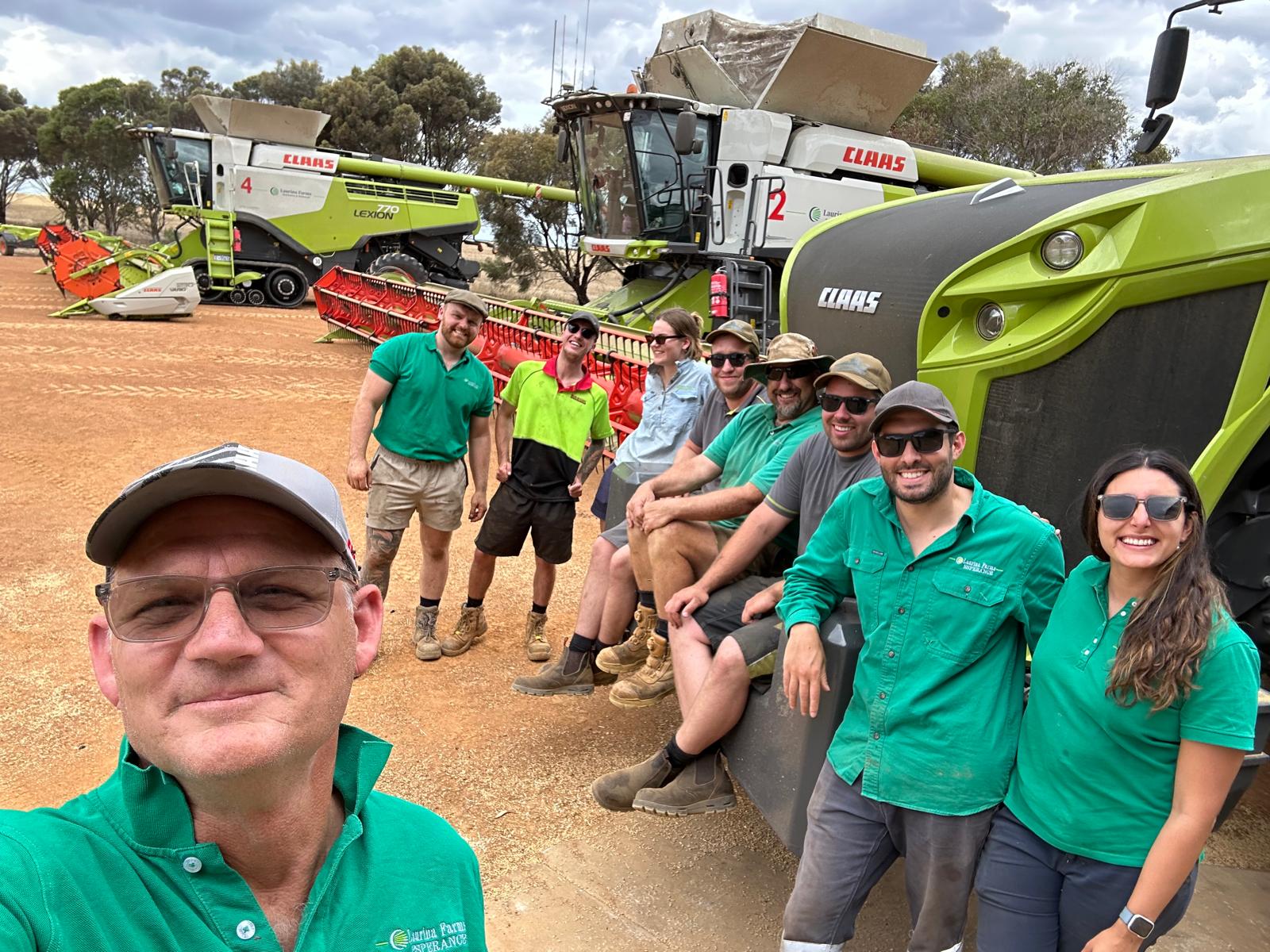
Ash Reichstein with the Laurina Farms, Esperance 2025 international harvest crew including one German and one Italian 417 visa holder. Photo: Laurina Farms
TIME is running out for scores of visa applications to be processed by the Federal Government ahead of this year’s harvest.
In Western Australia, it means growers and their families will either have to work longer hours themselves, employ unskilled labour, or both to harvest and store a winter crop estimated at 23.1 million tonnes, or 38 percent of the national total.
Apart from 2020 to 2022, when COVID-19 restrictions limited the number of visa holders able to work on Australian farms, WA growers have regularly engaged a large number of skilled machinery operators from the Northern Hemisphere over harvest.
However, Grain Central understands less than half the applicants applying for subclass 417 Working Holiday visas have been granted approval, leaving both the applicants and the farmers they intend to work for in the lurch.
The slow processing has come as part of a change in priorities for the Federal Government under Ministerial Direction 119 dated July 24, and superseded by Directions 121 and 122, signed on Friday by Immigration Minister Tony Burke.
In line with Mr Burke’s National Press Club address last week, Ministerial Direction 121’s preamble states priority processing of temporary visas now includes agriculture, including “the cultivation, production or harvesting of crops”.
However, it appears to be relevant only for onshore applications with regard to subclasses including 482 for skills in demand and temporary skills shortages.
For Esperance farmer Megan McDowall and York-based 2 Workin Oz proprietor Ley Webster, time is running out to get skilled Northern Hemisphere workers on to farms in time for harvest 2026.
Both have expressed exasperation at a lack of support from both the Federal Government and Opposition around what they see as a broadside to farm safety and productivity through a push to lower Net Overseas Migration which has cut harvest-available labour.
“People are saying ‘this feels like COVID 2.0’,” Ms McDowall said.
2 Workin Oz placed more than 100 workers last harvest, including around 20 Australians and 20 New Zealanders, with the rest primarily subclass 417 visa holders.
Ms Webster said up to 30 were approved prior to the slowdown in government approvals, and close to 40 are still in the queue, with only three approved between late July and now.
A message on the relevant Department of Home Affairs page throws out little hope for 417 applicants.
“We are prioritising onshore Working Holiday Maker visa applications. Therefore, offshore applications may take several months. Do not book flights or make travel commitments until your visa has been granted.”
The visa covers skilled harvest operators from countries including Belgium, Canada, Denmark, France, Germany, The Netherlands and the United Kingdom.
Ms Webster can see the shortage of skilled labour increasing the burden on WA farmers and permanent staff this harvest.
“During COVID, farming got unsafe because farmers didn’t have the capacity to train people, and some of the older farmers especially were fatigued, and working with multiple unskilled people.”
“We’ve still got backpackers in the country, so that means unskilled people are applying for the jobs.”
| WA | Deaths | Non-fatal injuries | Crop size |
| 2019 | 4 | 2 | 12.2Mt 2019-20 |
| 2020 | 5 | 1 | 16.5Mt 2020-21 |
| 2021 | 5 | 2 | 23.4Mt 2021-22 |
| 2022 | 11 | 4 | 26.5Mt 2022-23 |
| 2023 | 2 | 1 | 14.8Mt 2023-24 |
Table 1: AgHealth Australia data for WA farm deaths and non-fatal injuries by calendar year, and estimated WA winter crop size covering the key harvest months of Sep-Jan. Source: Farmsafe Australia and ABARES
While a concrete link between labour shortages and death and injury cannot be proven, AgHealth Australia figures for WA farm fatalities and injuries certainly seem to have peaked in the years impacted by COVID restrictions which stretched from 2020 to 2022.
“Through COVID, we couldn’t have backpackers and our safety record significantly changed,” Ms McDowall said.
She and husband Ashley Reichstein own and operate Laurina Farms, a large-scale cropping and sheep enterprise, and are sweating on visa approvals for four German nationals.
“There’s a safety consequence to this, and we saw it in the incident figures for the WA workforce during COVID.”
Outside help essential
COVID years aside, Laurina Farms each harvest employs some backpackers with extensive machinery operation skills, mostly on 417 visas, and this year, the family business has teed up four young and skilled drivers, two male and two female, from Germany.
“They are still waiting for their visa approvals,” Ms McDowall said.
The farm has four headers and three permanent staff, and usually at least one of the couple’s four children is home to help their parents with harvest.
In order to keep on top of maintenance, driving of headers and chaser bins, carting to on or off-farm storage, and meal preparation, Ms McDowall said imported labour is essential to get the crop off because the task is too big for the family and permanents.
“This is a very specific window which does not wait for visa hold-ups or government policy changes.
“This is also our entire annual cropping income at stake over an eight to 12-week window.
“Being near the south coast, rain at harvest and subsequent crop downgrades are our biggest production risks, and we absolutely must have somebody sitting in our four headers and two chaser bins when the crop is ready to harvest.”
“We aim to have people here by October 5 so we can complete inductions and safety training such as fire awareness, familiarise them with our systems, and do our final prestart jobs.”
WA feels the pinch
Growers and harvest contractors in eastern and South Australia are also feeling the pinch from a lack of visa approvals, but the unusually small Queensland and northern New South Wales harvest means some labour will free up as action moves south.
WA is a different scenario because harvest has considerable overlap across WA’s five port zones, including Geraldton in the north, where CBH Group this week received its first load for harvest 2026.
It makes WA a big and regular user of visa holders from overseas, other states, and WA’s pastoral areas chasing work in the south.
“We normally have 3000 people come into the Esperance district at harvest.”
It has Ms McDowall, among others, emphasising that those chasing visas for harvest are not looking for accommodation in the wider market.
“They are, almost to the last one, housed on farm.
“We’ve made significant investments on-farm in purpose-arranged accommodation, and lots of other farms have done the same.”
Ms McDowall said picking up local labour is not an option.
“Unemployment in Esperance has been at 2.9-3pc in the past five or more years, so we do not have a surplus workforce ready to step into short-term roles.”
“The backpackers are taking no-one’s job and they’re not putting any extra pressure on housing; it’s a bewildering move by the Federal Government.”
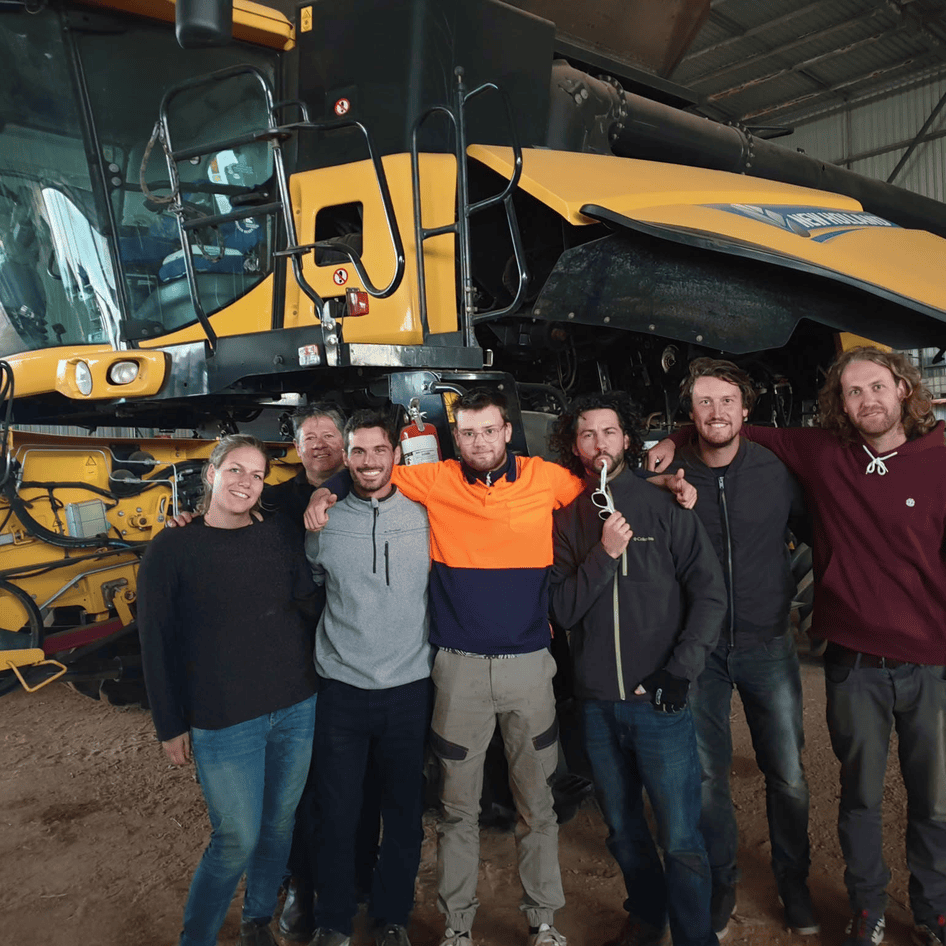
WA farms use visa holders to help supplement local labour from farming families and permanent staff. Photo: 2 Workin Oz
Under the 417 visa, approved applicants can do up to three Australian harvests, and Ms McDowall said the arrangement works well for those who operate machines in the Northern Hemisphere identical to the ones used on Australian farms.
“We have tapped into this stream because we need the skilled staff, and because it fits in beautifully with their off season.
“The pattern they tend to do is harvest in southern Australia, something fun over Christmas and New Year, and then cotton or hay, before picking up again back home.
“One young German guy we hope to see is finishing the corn harvest and has planned to step on a plane and come here.”
While Laurina Farms would love to have Northern Hemisphere help at seeding, Ms McDowall said visa-holders tend to head home for work spraying or top-dressing winter crops, and planting spring ones before moving into their own harvest.
She said their maximum six-month visits make the Federal Government’s move even harder to fathom.
“This slowdown that Tony Burke has brought about is talking about Net Overseas Migration.
“I’m told that 82.5 percent of all Working Holiday visa holders don’t make it past 12 months, and the subset we’re talking about is this skilled stream of young people, so the number of those staying on would be miniscule.
“This policy that Tony Burke has applied that affects us serves no purpose in bringing down net migration.”
Troubling time for applicants
Ms Webster said 2 Workin Oz proposed placements have sent in their visa applications with letters confirming employment, and her business has forwarded the list to government in the hope that they can be approved ahead of harvest.
WA’s 2026 harvest is officially under way, with CBH Group yesterday receiving its first load, 63 tonnes of canola from Yamma Holdings which was sampled at Yuna and delivered to the Geraldton Port Terminal. Photo: CBH Group
“I’ve got a list of people we have waiting for visas, and a list of farms that need them, and I submitted that to the Minister for Home Affairs on September 2; I haven’t heard back.
“Some needed to arrive for the hay season, but they haven’t been able to this year.
Ms Webster has been doing harvest and other placements for around 16 years and, apart from when COVID closed borders due to public health concerns, has not had problems with applying in July and being approved in plenty of time for September or October arrivals.
She said visas for skilled harvest workers are normally approved “within minutes if not days”.
“These are all skilled workers, and 95pc of them will leave around February, they’ll just come for harvest and do a little extra, then go home.”
Ms Webster said many of the harvest applicants are coming to Australia as part of their tertiary education, which calls for in-the-field experience sandwiched between blocks of classroom education.
“They now can’t complete their education within the schedule.
“Some have paid for their visas and paid for their flights, and they’ve given up winter job opportunities, and housing to move back in with their parents or wherever they can find for the months they thought they’d be out of the country.”
Application fees for 12-month Working Holiday visas are $840 for the first year, and $1000 for the second and third year.
“They’re leaving not just our farmers in the lurch,” Ms Webster said of the Federal Government’s changed priorities for visa assessment and approvals.
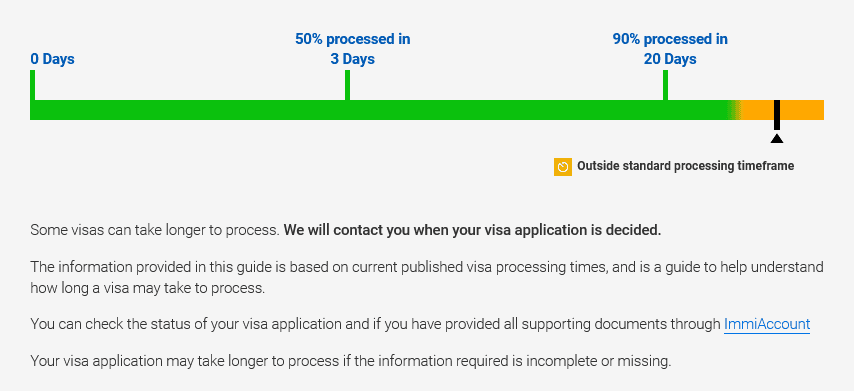
The Home Affairs website interactive tool Visa processing times guide indicated finalisation of 90 percent of Working Holiday subclass 417 visa applications lodged as of 2 July 2026 within 20 days. Source: Department of Home Affairs
Since a drop in priority for offshore visa applications was enacted in late July, the government has subsequently said the Working Holiday visa application processing times will stabilise to three months.
However, the Home Affairs website does not indicate that has taken place.
“Everyone is holding their breath and hoping they honour that promise,” Ms Webster said.
“If you’re going to sit on this for three months, harvest will be done.”
“By the end of this week, it might be too late; we’ve got people starting harvest next week who have swathed and desiccated canola.
Grain Central: Get our free news straight to your inbox – Click here
HAVE YOUR SAY