
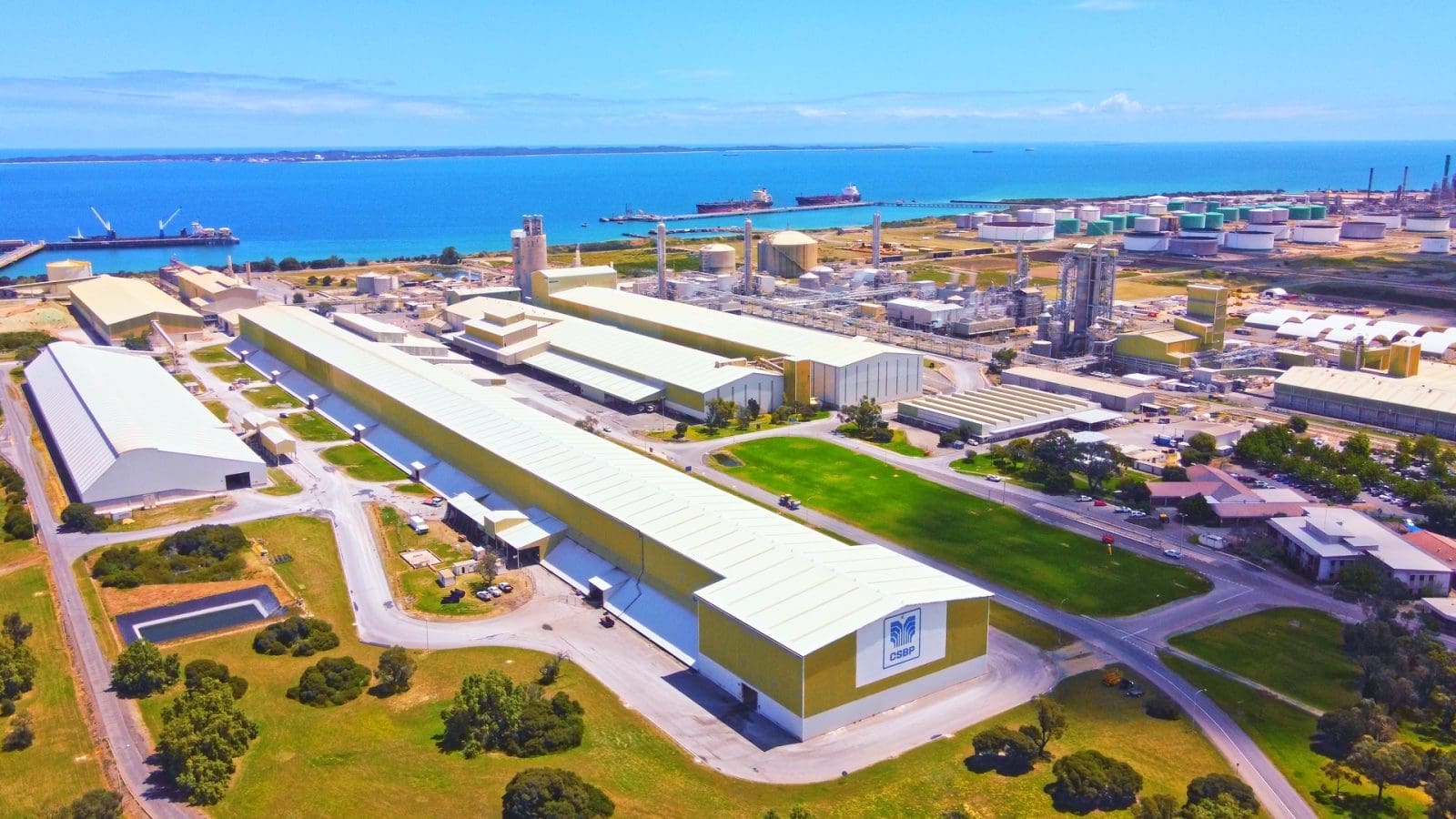
CSBP Fertilisers’ Kwinana facility. Photo: CSBP Fertilisers
WESTERN Australian fertiliser manufacturer CSBP has declared force majeure on some Flexi-N supply contracts, saying events beyond its control have affected its ability to supply growers.
Flexi-N is a liquid nitrogen fertiliser manufactured and imported by CSBP using urea-ammonium nitrate (UAN).
Force majeure is defined as an unforeseen circumstance that prevents a business or individual from fulfilling a contract.
It may include events such as war, embargo or acts of government provided they are beyond the control of the parties and not due to their own acts or negligence.
CSBP said Flexi-N contracts for March and April should not be affected, but impacts could be felt between May and June.
Grain Central understands growers are being supplied with 40-60 percent of their contracted UAN tonnages.
“For March and April, we are currently forecasting 100-percent fulfilment of contracted Flexi-N volumes, recognising the critical importance of supply during seeding,” CSBP Fertilisers general manager Ryan Lamp said in a statement.
“We are being transparent with our customers about anticipated shortfalls in Flexi-N product volumes for the May to July period and are in direct communication with all affected, providing specific details on anticipated delivery timeframes.
“The situation continues to evolve rapidly, and we are monitoring developments closely and communicating directly with customers as further information becomes available.”
Mr Lamp said the decision was “a measure of last resort” and was not one “taken lightly”.
He cited events outside the company’s control including export restrictions introduced by the Chinese Government which had “led Chinese UAN suppliers to cancel significant CSBP shipments” as well as the impact of the unexpected outage at the Yara Pilbara plant, “limiting availability of ammonia”.
“While these events are outside CSBP’s control, we are taking all reasonable steps to reduce the impact on WA growers, including:
- Actively pursuing supply of alternative products from a range of international producers and trading partners as market conditions evolve;
- Exploring options to increase local Flexi-N manufacture where feasible, while actively seeking alternative sources of critical feedstock impacted by third-party disruptions;
- Engaging directly with upstream suppliers who have declared force majeure, requiring them to take all reasonable steps to meet their obligations and provide clarity on their mitigation actions;
- Continuing discussions with Chinese suppliers to pursue the release of contracted cargoes and to better understand the regulatory constraints currently affecting supply; and,
- Working with industry bodies and the Federal Government to support efforts to improve import access, restore more reliable fertiliser supply chains and relax some of Australia’s trade settings.”
Grower concerns
CSBP is a subsidiary of Wesfarmers Chemicals, Energy and Fertilisers, or WesCEF, a division of ASX-listed company Wesfarmers.
CSBP manufactures liquid fertiliser using ammonia produced in WA and offshore, and imports urea and phosphates.
CSBP supplies about 40pc of the WA market.
Grain Central understands that the company also delivers to other fertiliser companies in the state.
However, it has not been confirmed if grower contracts with these companies have been impacted by the reduction in UAN supply.
WA Farmers grains president Mark Fowler said this move puts all the burden on growers, despite CSBP’s years of experience operating in the fertiliser supply chain.
“It is CSBP that is in the business of importing fertiliser,” Mr Fowler said.
“CSBP will know the Australia buys fertiliser from unstable and unreliable markets and they should take account of that and manage that risk.”
Mr Fowler said the costs of replacing the product lost under the CSBP product could run into “the hundreds of thousands of dollars”.
“If [growers] can get a replacement product, they will have lost the price protection that they previously had and will be required to pay the now exorbitant market price, which is as much as 100pc higher.”
Mr Fowler said WAFarmers urged growers impacted by this event to seek legal advice.
He said the organisation was working as a “mustering point” to assist growers to access this information.
“If CSBP thought that growers were just going to accept this, then they were mistaken.
“The sheer magnitude of these extra costs and the strategic importance of nitrogen to our business models leave growers with little choice but to seek advice about the correctness and validity of this move by CSBP.”
GTA message
Earlier this week, Grain Trade Australia issued guidance to members on the application of the force majeure clause.
The peak body cited that it had received inquiries from members about whether the clause was relevant under GTA contracts.
They stated awareness that force majeure had been cited in the current environment.
While not commenting on specific situations, GTA told members that they should be aware that force majeure only applies where the event directly causes the delay and that price movements or adverse market conditions weren’t relevant.
They said invoking parties must provide evidence and demonstrate best endeavours to perform the contract.
GTA recommended members review contracts carefully, ensure strict compliance with notice and evidence requirements, maintain clear records of communication and events and seek legal advice where necessary.
Grain Central: Get our free news straight to your inbox – Click here
HAVE YOUR SAY