THE GRAINS Research and Development Corporation has completed a round of industry consultation as it weighs how to invest up to $600 million over the next decade.
In July last year, the organisation flagged plans to engage with industry on “blue sky” research, with GRDC’s cash reserves then sitting at $680M.
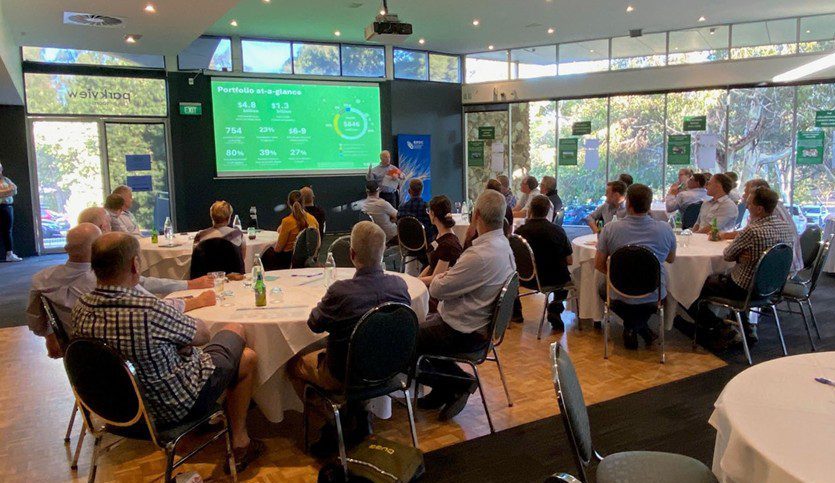
More than 500 people contributed between November 2025 and now through six Grainstorming forums and an online survey.
The results have been published in a recently released report: GRDC New Frontiers Grainstorming Combined 2026 Workshops and Your Priorities Report.
Participants were asked to rank and then brainstorm issues across 10 previously identified challenges facing the grains industry.
They included: Nitrogen Challenge; Decision-Making Challenge; Ancient Hostile Soils; Low-cost, Sustainable Crop Protection Challenge; Crop and Market Diversity Challenge; Collaboration and Capacity Building Challenge; Seasonal Variability Challenge; Water Productivity Challenge; Fossil Fuel Challenge; and On-farm Labour Challenge.
| Workshops growers | Workshops non-growers | Online participants | |
| Nitrogen Challenge | 1st | 5th | 2nd |
| Decision-Making Challenge | 2nd | 7th | =6th |
| Ancient Hostile Soils | 3rd | 6th | 3rd |
| Low-cost, Sust Crop Protection Challenge | 4th | 3rd | 9th |
| Crop and Market Diversity Challenge | 5th | 8th | 8th |
| Collab and Capacity Building Challenge | 6th | =1st | =4th |
| Seasonal Variability Challenge | 7th | 4th | =6th |
| Water Productivity Challenge | 8th | =1st | 1st |
| Fossil Fuel Challenge | 9th | 10th | 10th |
| On-farm Labour Challenge | 10th | 9th | =4th |
The results varied across workshopped growers and non-growers and those polled online; however, the Nitrogen Challenge, was top of the list for growers, and second for online participants.
This result was notable given the engagement was completed before the Middle East conflict hit fertiliser imports.
Industry feedback called on GRDC to invest in wheat varieties capable of fixing their own nitrogen, alongside further research into biological alternatives and a better understanding of how and when crops use nitrogen.
Several suggestions included supporting industry to produce fertilisers domestically, with the Goondiwindi, Perth and Adelaide sessions all mentioning this topic.
In the online portal, there was a suggestion to “work with private industry to develop local nitrogen production technology”.
Although ranked the lowest priority across all groups, the Fossil Fuel Challenge stood out as another issue for prompting discussion around “sovereignty” and “domestic production and security”.
Potential blue-sky research in this space involved investing in crops varieties designed for biofuels and hydrogen fuel-cell technology.
Additional value for growers
A number of the challenges identified possible research priorities to boost value or cut costs for growers.
Under the Crop and Market Diversity Challenge, growers suggested GRDC invest in “value adding of grains” and local processing capacity to stabilise pricing and production.
These also included promoting human-consumption markets for traditional feed crops, like “cocoa faba pops for breakfast”, and expanding domestic maize markets.
Crop breeding featured in several investment suggestions, with participants open to genetically modified and CRISPR approaches to develop crops that are more resistant to disease and pests, more drought-resilient, and higher yielding.
Tech, data for decision-making
The Decision-Making Challenge came in second place for workshopped growers, with participants highlighting the “the need for more accessible, integrated data, opportunities for AI to tailor insights and modelling tools to support their farm systems”.
Growers said decision-making was “not always easy” and highlighted the need for investment in data tools and trustworthy AI systems.
The issues of “data overload” and “data for data’s sake” came up in the engagement.
One online participant called for GRDC to invest in a “fully integrated intelligence ecosystem that unites on-farm data, satellite insights and AI into clear, confident, decision-ready tools”.
“This platform would ingest diverse datasets imagery, sensor data, climate models, machinery log, soil scan and deliver output in farmer-friendly format,” the participant said.
“By improving data accuracy, usability and farmer skills, we can deliver faster decisions, reduce costs, boost sustainability and create new rural industries built on smart, connected agricultural technology.”
It remains unclear whether any of the feedback gathered through the engagement will translate into investment by GRDC.
However, GRDC stated on its website that following the Grainstorming exercise it “will now work internally to analyse and develop business cases for potential additional investment in some of the key areas identified by growers through our normal investment process”.
The full GRDC New Frontiers Grainstorming Combined 2026 Workshops and Your Priorities Report can be downloaded here.
Source: GRDC
HAVE YOUR SAY