
THE FEDERAL Government has announced it will halve the fuel and petrol excise as well as reduce the heavy vehicle road user charge (RUC) to zero from Wednesday.
The announcement comes following a National Cabinet meeting held this morning.
The government says this reduction will cut the cost of fuel by 26.3 cents per litre.
The heavy vehicle RUC on diesel currently sits at 32.4c/l.
In addition, the government will delay a scheduled increase in the heavy vehicle RUC, due to be raised six percent from July 1, for six months.
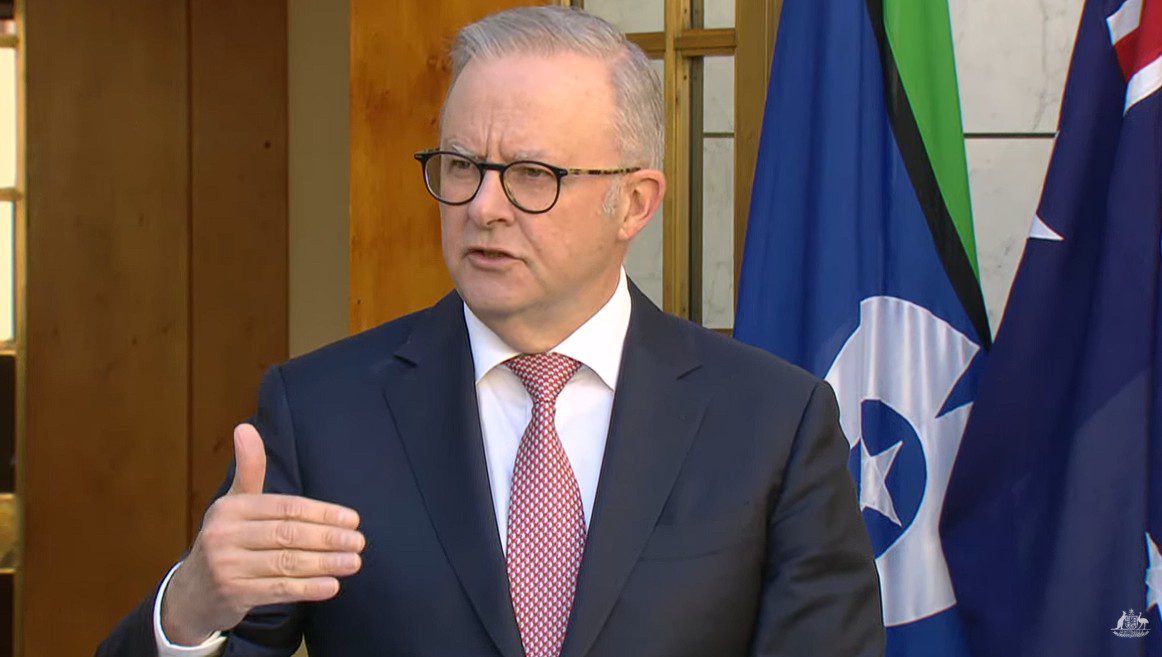
Prime Minister Anthony Albanese made the announcement, and confirmed all states and territories had agreed to a National Fuel Security Plan to co-ordinate a consistent response.
“The plan outlines how governments will work together to keep Australia open and keep our economy going,” Mr Albanese said at today’s press conference.
“Early voluntary action coupled with new supply measures will make a difference and will make sure fuel continues to get to those who need it most.
“What we want to do is ensure that Australians can be confident that governments at all levels have a plan to deal with whatever comes at us.”
Mr Albanese said the government acknowledged the significant impact the fuel price rises were having on heavy vehicle industries.
“We understand, in particular, that the heavy vehicle industry is under real pressure for many trucking companies that are small, they rely on a cash flow which is under pressure because they pay for their fuel and then they get paid down the track in 30, 60 or 90 days, depending upon the contractual arrangements that they have.
“This is about taking pressure off them…”
Mr Albanese said the state and territory governments had also agreed and were “finalising a proposal to ensure that they won’t benefit from the elevated prices that are occurring because of the GST”.
“We are working through the mechanisms with states and territories, and we will have more to say about that in a short period of time.”
Federal Treasurer Jim Chalmers said the announcements would cost $2.55 billion over the three months based on current demand expectations.
“The revenue forgone by delaying the increase in the heavy vehicle road use charge is about another $53 million,” Mr Chalmers said.
“The steps that we are announcing today are all about taking some of the sting out of these higher petrol and diesel prices.
“This relief is timely, it’s temporary and it’s responsible.”
Supply focus
Mr Albanese said that ensuring supply of petrol to all consumers was “our focus, overwhelmingly”.
He said the supply of fuel appeared secure for the coming month.
“What we know is that every ship that [was] due to come here up to this point…has arrived.
“We know in April, the 81 ships that were due, six haven’t come but they have been more than replaced.
“There are nine in addition.”
Federal Minister for Energy Chris Bowen said the government was confident in supplies from now “until May”.
“We are seeing very big increases in fuel deliveries to the regions, at the moment focusing on farmers,” Mr Bowen said.
He said these were “going to farmers and fuel distributors who are selling direct to farmers because they’re seeding and that’s very important for the country.
“That is happening, and I think that’s the right approach by the companies.”
VFF response
The Victorian Farmers Federation said today’s National Cabinet outcomes fall short of delivering the certainty farmers need and warning that more must be done to give farmers confidence.
VFF pPresident Brett Hosking said while the Federal Government’s temporary fuel excise cut may provide some relief for consumers, it does little to address the unique and massive impacts being felt at the farm gate.
“Farmers are among the hardest hit by fuel and fertiliser price spikes, yet today’s announcements contain no clarity on how fuel will be prioritised if the crisis deepens,” Mr Hosking said.
“Farmers are telling me they are facing a real make-or-break moment.
“They can’t keep absorbing skyrocketing input costs without a plan to at least break even in months ahead.”
The VFF expressed concern that, despite ongoing calls from industry, National Cabinet failed to commit to a clear framework that prioritises fuel access for critical industries such as agriculture, particularly in regional and rural communities already experiencing supply disruptions.
“We’ve consistently called for a system that recognises agriculture as an essential service in times of shortage.
“That means guaranteed access to fuel so farmers can plant, harvest and transport food and fibre.
“We’re seeing patchy shortages and growing uncertainty.
“Without explicit prioritisation, farmers risk being left at the back of the queue, and many will be forced to look after their bottom line.”
While efforts to stabilise national fuel supply are welcome, the VFF says they must be matched with practical, on-the-ground measures that support those most exposed to volatility.
HAVE YOUR SAY