
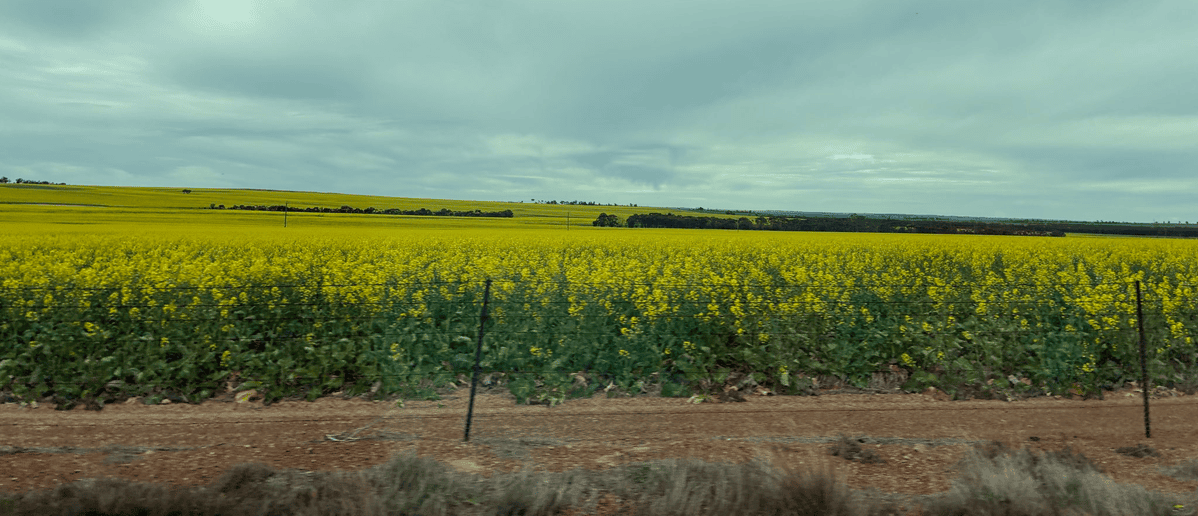
A canola crop east of Dowerin close to full flower. Photo: Meredith Guthrie, WA DPIRD
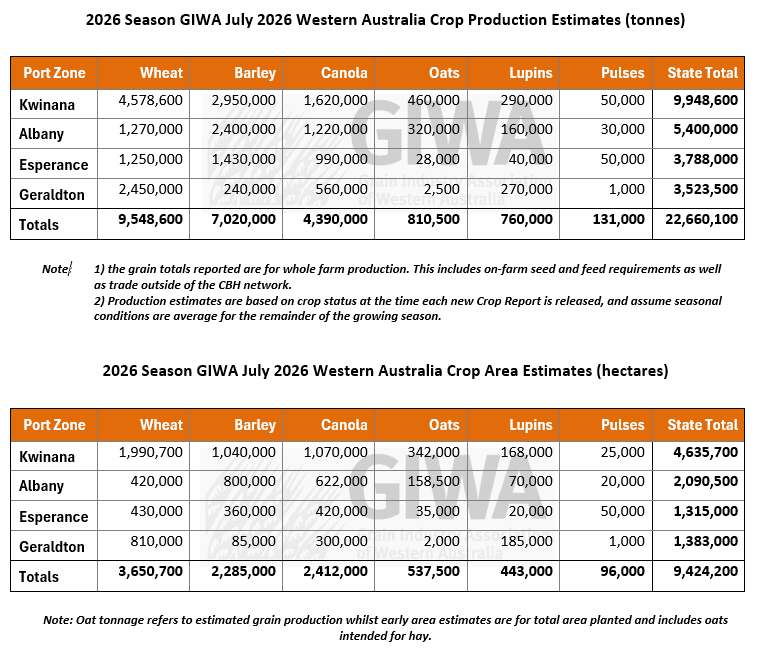
WESTERN Australia is forecast to harvest a winter crop of 22.7 million tonnes (Mt), according to the Grain Industry Association of WA’s first production estimate for the current season released today in its July crop report.
It includes an area estimate of 9,424,200ha, up 30,200ha from the June forecast.
GIWA report author Michael Lamond has issued the production outlook with some caution.
“Crops look exceptionally good and you could be deceived that we are on track for another massive year of grain production,” Mr Lamond said in the report, adding that variance could be plus or minus 20 percent.
“The niggling prospect of a drier and hotter spring that has been forecast by global climate models for most of the year is strengthening rather than going away.
“This could swing the crop potential negatively very quickly if the forecasts end up being correct.
“Most crops are carrying a lot of top growth and sub-optimal subsoil moisture reserves at the moment, which means that they will transpire themselves to death if the heat is turned up early and there is not enough rainfall to support this biomass.”
On the upside, Mr Lamond said the crop could at least equal last year’s record production year of 27.3Mt, 2Mt more than the previous record set in 2022.
“To hit this, most regions that are currently in good shape will need to receive another 50mm of rain and the areas that experienced a later start will need another 100mm of rain.”
As is typical for this time of year, Mr Lamond said production potential is “in the balance”, and the swing in variance could be huge because the “exceptionally well set-up crop” needs more rain than is forecast to fall to fulfil its potential.
“This potential for quite a high variance between upper and lower production estimates has become a reoccurring theme in recent years, with growers seemingly being able to set high crop-yield potential in a range of physical and geopolitical environments.
“The advanced stages of most of the crops this year means potentially less heat-shock risk and less reliance on finishing rains, although crops will be at vulnerable frost-risk stages for longer.
“Considering what we were faced with at the start of the growing season no one could have foreseen that we now are potentially looking at another record production year if things go our way from now on.”
Crop advanced
The GIWA report said crop stages in all areas except patches of the Great Southern and some areas southeast of Merredin are one month ahead of where they normally are due to the early start and, up until recently, unusually warm temperatures.
Total crop area is similar to 2025, although the canola area is 400,000ha above last year’s, largely replacing wheat area which usually yields about twice that of canola.
“Even though this year has a large total area of crop planted, the large area of canola will tend to keep a lid on total tonnage.
“To counter this, the barley area has increased by 15pc from 2025.”
As barley generally outyields wheat, Mr Lamond said this should help maintain total grain tonnage.
“In addition, the barley crop is more advanced than wheat and is in sensational shape, reducing the risk that it will crash.”
Mr Lamond said the WA crop’s total nitrogen use this year is down 10-15pc per hectare from previous high production years, and while soil organic nitrogen was much higher than normal at the start of the year, the total nitrogen pool to fuel high yields is down.
He said this will effectively cap potential top-end production.
“All crops have come through to now with little weed pressure and leaf diseases are just starting to build up in the southern regions.”
Insects in canola have been identified as a risk moving into spring, with crop observations already indicating Diamond Back Moth and aphid numbers are much higher than normal for this time of the year.
The report shows lupin area is down from 2025, although the crops have benefited from the unseasonably warm conditions during May and June with most having very good canopy cover.
“The drop in total oat area from 2025 was mostly influenced by a reduction in oats planted for hay, with the area of oats planted for grain increasing slightly, mostly in the low-rainfall areas from the early sowing opportunity.
Early-sown oat crops in the low-rainfall regions suffered a little until rain arrived last month, and they are now in very good shape.
Pulse crop plantings are similar to 2025 and those that were sown early, particularly the faba beans, have better growth than in recent years which should support good grain yields.
Further detail on crop conditions in individual WA port zones can be found as part of the full report on the GIWA website.
Source: GIWA
HAVE YOUR SAY