

GRDC managing director Nigel Hart appear at a late-night session of Senate Estimates on Tuesday.
GRAINS Research and Development Corporation managing director Nigel Hart has revealed that the organisation’s reserves are forecast to grow by $50-70 million, despite a boost to spending introduced as part of last year’s investment review.
Mr Hart and GRDC chair Sharon Starick answered questions about the organisation’s income and expenditure at yesterday’s Senate Estimates hearing.
The hearings also suggested efforts by Grain Producers Australia to reduce grower levies paid to GRDC may have stalled.
Department of Agriculture, Forestry and Fisheries officials told senators that Federal Minister Julie Collins had not yet responded to the proposal and there was no timeframe for a decision.
Mr Hart said the reserves would grow thanks to strong seasonal conditions.
“Income will vary by season and I think this year the forecast range for us is around about $365-390 million,” Mr Hart said.
He said this will be offset by the R&D program costs of “around $250-270 million”, as well as undisclosed operating costs.
“Our projected addition to reserves this year is somewhere between $50-70 million.”
Mr Hart was not asked what the projected reserves would be for this year; however, Ms Starick said the 2024-25 GRDC annual report had last financial year’s figure at $728.5M.
Ms Starick confirmed that this was cash reserves.
Queensland Senator Matt Canavan asked whether these funds were currently being invested.
“We have that money sitting with a managed investment fund…but we also have some available working capital,” Ms Starick said.
Mr Hart said Macquarie managed the investments, which were restricted to interest-bearing deposits and government bonds.
Mr Canavan noted that it was a “fair amount” of money “to be sitting on” that was “getting close to the Future Fund” in scale.
“What’s the point of collecting so many levies above and beyond your costs when you’re already sitting on over $700m?”
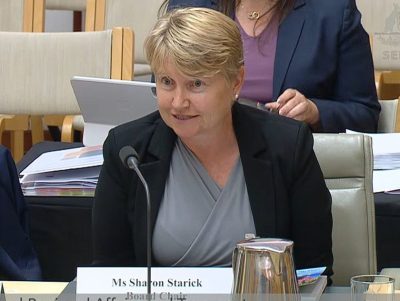
GRDC chair Sharon Starick.
Case for levy change
GPA and GrainGrowers Limited are both official representative organisations for the industry.
Last year, GPA surveyed growers on whether levies should be reduced or restructured.
For the majority of leviable grain crops, current component rates are:
- 0.99 percent of its value for R&D;
- 0.01pc of its value for biosecurity activity;
- 0.005pc of the value for biosecurity response; and,
- 0.015pc of the value for the National Residue Survey.
The GPA proposal put to the minister would leave the biosecurity response and National Residue Survey components unchanged, while cutting the R&D levy to 0.79pc and increasing the biosecurity activity component to 0.07pc.
During a session with DAFF officials, Western Australian Senator Slade Brockman asked if there was an update with the proposal.
DAFF first assistant secretary agricultural policy Joanna Stanion confirmed that Ms Collins had received the proposal, but had not responded to GPA.
She said there was no timeframe for a response and the proposal would be considered “on advice from the department”.
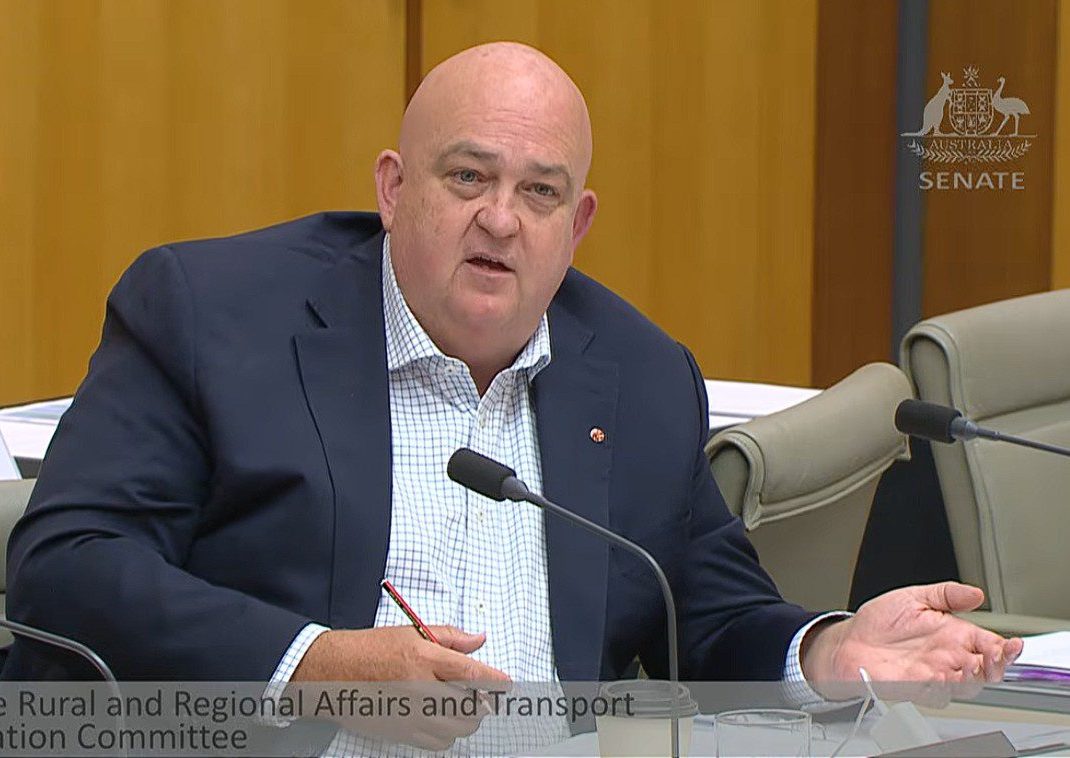
WA senator Slade Brockman.
Mr Brockman said he had been told by “numerous” grain producers and agronomists in WA about the state of GRDC’s reserves.
“Effectively, you’ve got reserves equaling three or four years of spending on R&D with not another dollar coming in,” Mr Brockman said.
“At some point, that level of reserve should trigger some reconsideration of the level of R&D levy borne by industry.
“Yes, there are farmers doing really well, we’ve had record crops in Western Australia, but there are farmers going out of business where a change to the levy could make a material impact on their ability to stay in business, their ability to send kids to school, their ability to refinance, replan, restructure their farm business.”
Ms Stanion said it was up to the ROs to consult with industry and develop a proposal to put before the Minister.
She said the proponent has to “show that they have broadly consulted with industry, to demonstrate that there is overwhelming industry support for a change to the levy”.
“[T]hen the Minister takes that proposal with advice from us, consults with GRDC and the other representative organisation – if there is more than one – and then makes a decision,” Ms Stanion said.
Both ROs consulted
Mr Brockman queried officials on the process when the two ROs have conflicting positions.
“What is the trigger mechanism in this case where you’ve got two representative organisations, one of whom has said the levy should be reconsidered and one of which has said it shouldn’t?”
He also asked whether GrainGrowers Limited could “effectively act as a block” to any change proposed by GPA.
Ms Stanion reiterated that any proposal needed to have “broad, significant industry support for a change”.
“Both organisations need to be consulted.”
GrainGrowers response
A GrainGrowers spokesperson said they are not opposed to changing the current levy situation.
“GrainGrowers has been in communication with Grain Producers Australia, State Farming Organisations, the Department and the Minister in its representative organisation capacity, to communicate grower perspectives on the grains levy,” the spokesperson said.
“Grain Producers Australia has a proposal before the Minister to reduce the grains levy and to increase the biosecurity levy to Plant Health Australia.
“GrainGrowers is waiting on the Minister’s reply.
“GrainGrowers does not support or oppose a levy reduction.
“It is a critical issue and from GrainGrowers consultation with growers nationally and other grower organisations, more information to assist decision making is required.
“GrainGrowers believes all levy payers should have the opportunity to voice their opinions on their levy, and that a formal mechanism like the levy payer register should be utilised in this process.”
Grain Central: Get our free news straight to your inbox – Click here
HAVE YOUR SAY