

Plenty of growers were on site to see Nicola Centofanti officially open Agfert’s Cowell facility on January 20. Photo: Agfert
GROWERS across Australia are booking loads of ammonium phosphate in the lead-up to planting, despite the firming market.
The stronger pricing reflects pent-up demand for a finite amount of mono and diammonium phosphate, MAP and DAP, already coming into the country at prices which cannot capitalise on the Australian dollar which this week hit two-year highs.
After a late harvest for south-eastern Australia, and limited selling of cereals off the header due to historically low wheat and barley prices, out-turn of imported MAP and DAP is yet to start in earnest.
New-crop demand kicks in Cowell
Agfert Fertilizers on January 20 officially opened its Eyre Peninsula distribution facility at Cowell, strengthening supply options for growers across the region.
This follows a soft launch in February 2025, which allowed more than 150 EP growers to source from the facility last year.
The site was officially opened by South Australian Shadow Minister for Primary Industries, Regional Development and Water Nicola Centofanti in an event well attended by the region’s growers.
Agfert sources imported fertiliser unloaded from cargoes which berth at Whyalla, and trucks it to Cowell to offer Central and Upper EP growers an alternative distribution point to Port Lincoln, on the peninsula’s southern tip.
“It’s pleasing to see EP growers supporting more choice in the marketplace,” Agfert chief officer business growth and relations Tim Gurney said.
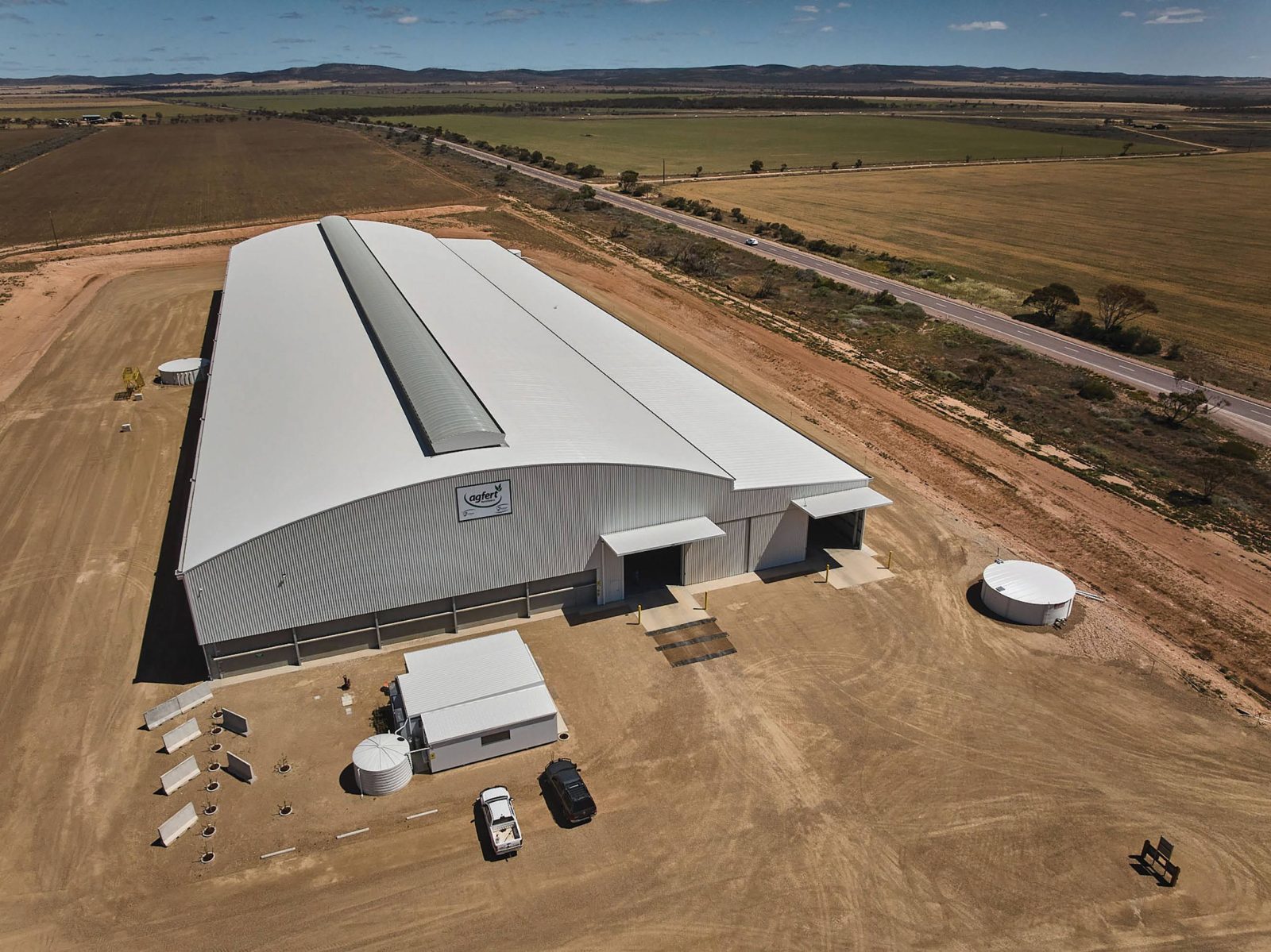
Agfert’s Eyre Peninsula facility at Cowell includes a vehicle hygiene facility that allows growers to remove residue from grain in tippers prior to backloading with fertiliser. Photo: Agfert
The Cowell facility complements Agfert’s Balaklava facility in SA’s Mid North, which has been servicing growers since 1975, and is located only around 10km from T-Ports’ Lucky Bay port facility.
EP growers traditionally dry-sow their winter crops, and after a late harvest, are expected to start sourcing backloads of fertiliser from next month.
“It’s probably in February that people will start to look at bringing grain to port and backloading fertiliser.”
“We’ve got boats on the water, and we’ll be unloading in coming weeks.”
This will give Agfert customers access to MAP and DAP for planting, with urea demand expected to kick in once crops have emerged.
Phosphate supply tight
Marnco is an importer and distributor of fertiliser, and its Melbourne-based managing director Mark Been said China’s restriction of phosphate fertiliser exports has limited what is available in the lead-up to planting this autumn.
“There’s been demand…but affordability is a concern, because grain prices aren’t that hot,” Mr Been said.
“Unfortunately, the supply of phosphate is tight.”
With Russia largely out of the picture because of sanctions, Morocco and Saudi Arabia have become the global market’s major suppliers, and Mr Been said Morocco is focusing more on triple superphosphate, or TSP.
“All the MAP that’s coming is locked in; it’s either in the country, or on the way.”
“The main message with phosphates is there’s no downside.”
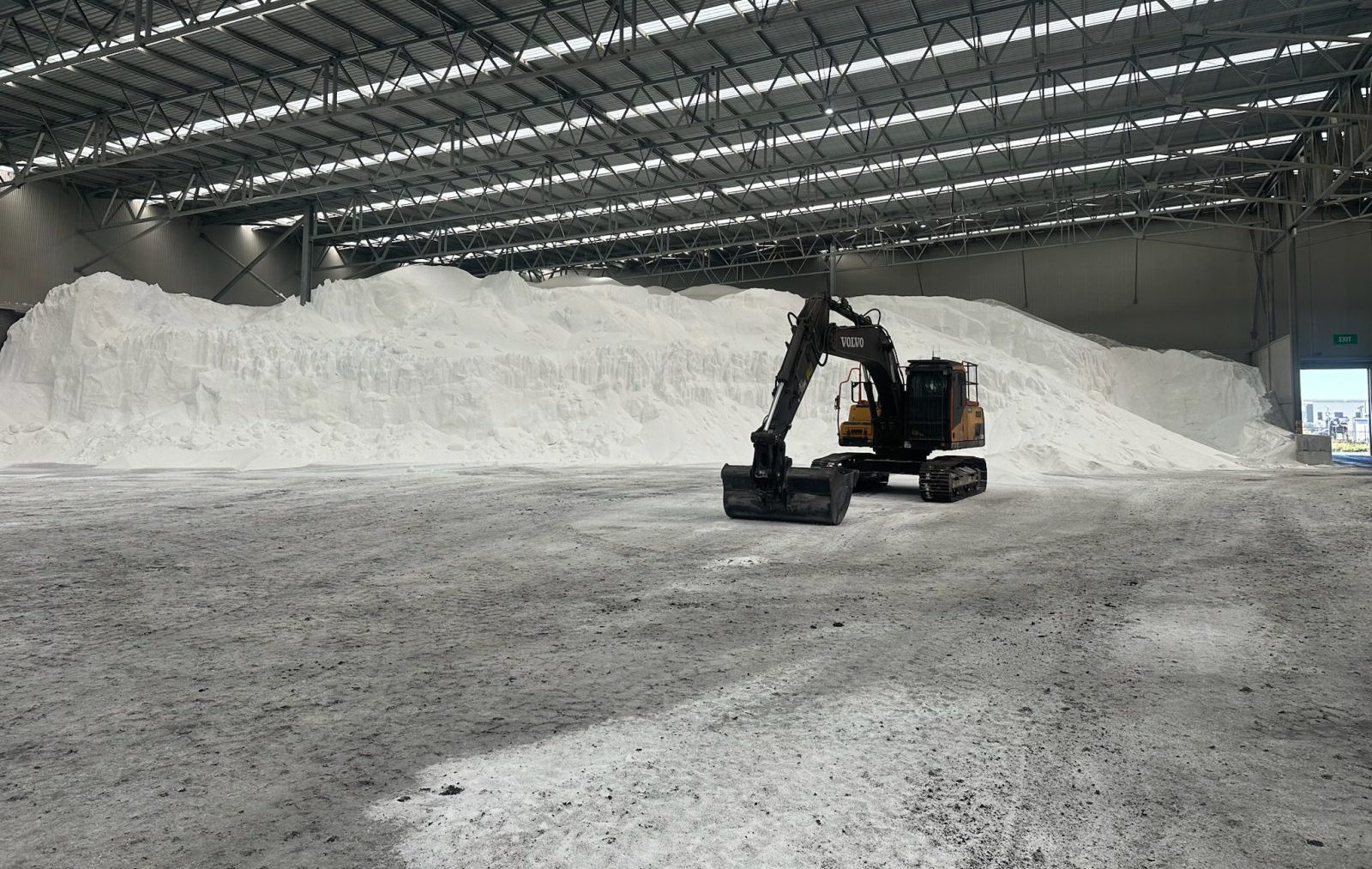
Imported phosphate fertiliser is going into warehouses at port, like this Marnco facility at Geelong, ahead of out-turn for the winter crop to be planted in autumn. Photo: Marnco
Founded in 2019, Marnco has warehouses in Geelong and Port Adelaide, and five warehouses in New Zealand.
With MAP and DAP around $100/t more than it was this time last year, Mr Been said growers have not been big on forward purchasing.
“When the price of the product is more than it was last season, they’re inclined not to purchase; if it’s cheaper, they’ll purchase.”
In contrast to MAP and DAP, Mr Been said urea pricing may well have some downside, especially if geopolitical tensions settle in gas producers Iran and Venezuela, and once near-term Indian buying through tenders is completed.
“Urea is the one probably where in April, May, June and July there is opportunity for downside; it has a premium on it currently.”
Growers weigh up options
Riverina-based Peter Gerhardy trades fertiliser as well as grain in his role with Peters Commodities, and said growers normally book a proportion of MAP and DAP needed for planting the next crop during harvest.
“Growers have been nervous about fertiliser this year,” Mr Gerhardy said.
“Normally, 80pc of my sales are on at the minute; it’s about 30 now.”
“They’re uncertain about the price, and looking at other options.”
That includes rotations that include more pulses — faba beans, field peas, lentils, lupins, and vetch — over wider areas on their mixed farms.
“With lupins and peas, a lot of growers when they sow those don’t use MAP; they’ll use single super instead.”
Current pricing has single super at roughly $550-$560/t versus MAP in the high $1200s.
Mr Gerhardy said strength in livestock markets means some growers are also looking at pulling some of their paddocks out of cash cropping.
“Sheep and cattle markets are very good, and the grower may not have paddocks sown down to pasture; they’re looking at other options that include that.”
Unlike cereals and canola, pulses do not have an appetite for urea, and fix nitrogen in the soil to reduce the following crop’s applied N requirement, while pastures can be fed with single super at roughly one third less than urea.
Mr Gerhardy said growers are crunching the numbers on what looks like the best option for planting when the autumn break shows up.
“Can they afford to pay $870-$880/t on-farm for urea and get only $300/t for their wheat?”
The other limiter has been low yields in the harvest just gone on the outer slopes and plains of southern NSW.
Limited in-crop rain meant wheat and barley growers who can normally expect to harvest 5-6t/ha got only around 3t/ha.
Grain Central: Get our free news straight to your inbox – Click here
HAVE YOUR SAY