
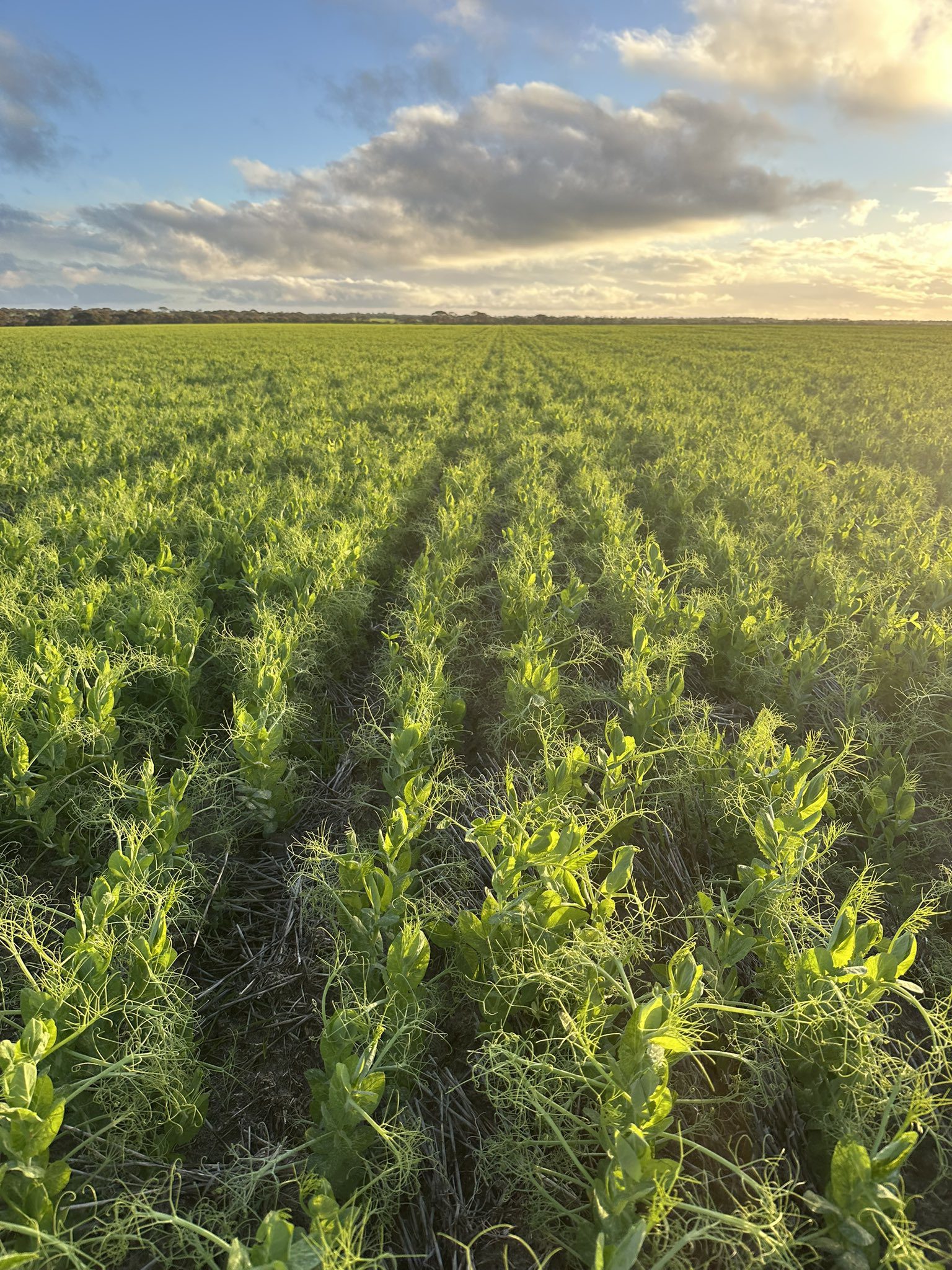
A thriving crop of field peas growing at Salmon Gums in the Esperance zone. Photo: Tim Starcevich
WESTERN Australia’s winter crop is seen as 21.9 million tonnes (Mt), up markedly from 19.3Mt forecast last month, according to the Grain Industry Association of WA report out today.
Report author Michael Lamond said WA’s grain belt now has few areas with less than 200mm of year-to-date rainfall, and with growing-season rainfall sitting at decile five or greater for most regions, WA once again has potential to harvest a crop of 20Mt plus.
“If recent history of water-use efficiency is anything to go by and conditions in spring remain favourable, crops will easily convert this rainfall to another near-record grain production year.
Mr Lamond said a few pockets of the WA grainbelt have had below decile five growing-season rainfall in the medium-to-low rainfall regions, and the uptick in July and early August rain has come too late for substantial recovery in those areas.
“However, areas closer to the central west coast that still sit below decile five have time on their side and with an average spring forecast firming, crops could hit very good grain yields, despite rainfall to date being below average.”
Mr Lamond said the west coastal, south coastal, and southern Esperance zones were now overly wet in places, and this will impact on whole-paddock averages.
“Crops in these regions mostly emerged early and their growth stage is more advanced than normal for this time of the year and their biomass will help them combat transient waterlogging.
“Crops away from the coastal strips where rainfall in the last six weeks has been less are now in very good shape as they are currently in that sweet spot of biomass accumulation without the waterlogging.”
Mr Lamond said final grain yield in those areas will be highly dependent on the finish to the season, as subsoil-moisture reserves are low heading into spring, and the crops are relatively late in development.
“These crops will need a mild finish to dodge heat shock, and rainfall totals will need to be at least average from now on to hit current grain yield potential.
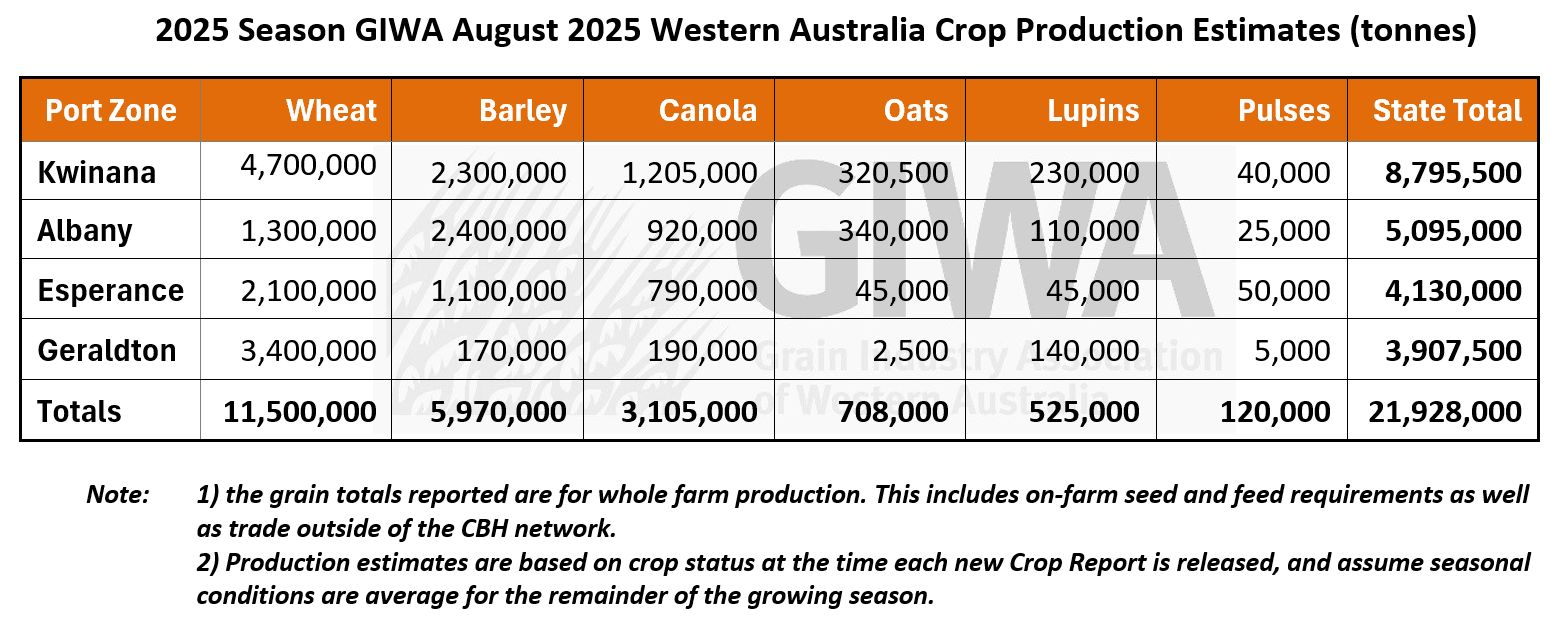
Mr Lamond said an average finish to the season should will see WA wheat production exceed 10Mt.
This is despite the area planted to wheat being down by around 700,000ha from 2024 due to wheat being substituted for barley in the southern and south-western regions where the break to the season was earlier.
Barley production is seen at more than 5Mt, and canola is expected to exceed 3Mt.
“The three major crops all show real potential to hit recent five-year averages of 11.2Mt for wheat, 5.2Mt for barley and 2.8Mt for canola.”
Mr Lamond said oat plantings are up from 2024, with most of the extra area intended for grain at planting.
“Current grain-yield potential looks similar to last year, which could push production over 700,000t, depending on the split between oats for grain and oats cut for hay.”
He said lupin crops were very good in the north, but decline progressively as you go further south, where cold growing conditions have held them back.
“The slight increase in pulse plantings, particularly lentils and chickpeas, will result in higher tonnages than in recent years as most are growing well and have good grain yield potential.”
GIWA estimates put WA’s biggest winter crop ever at 26.1Mt in 2022-23, followed by the preceeding crop of 24Mt.
Source: GIWA
Further detail on crop conditions in individual WA port zones can be found as part of the full report on the GIWA website.
HAVE YOUR SAY