
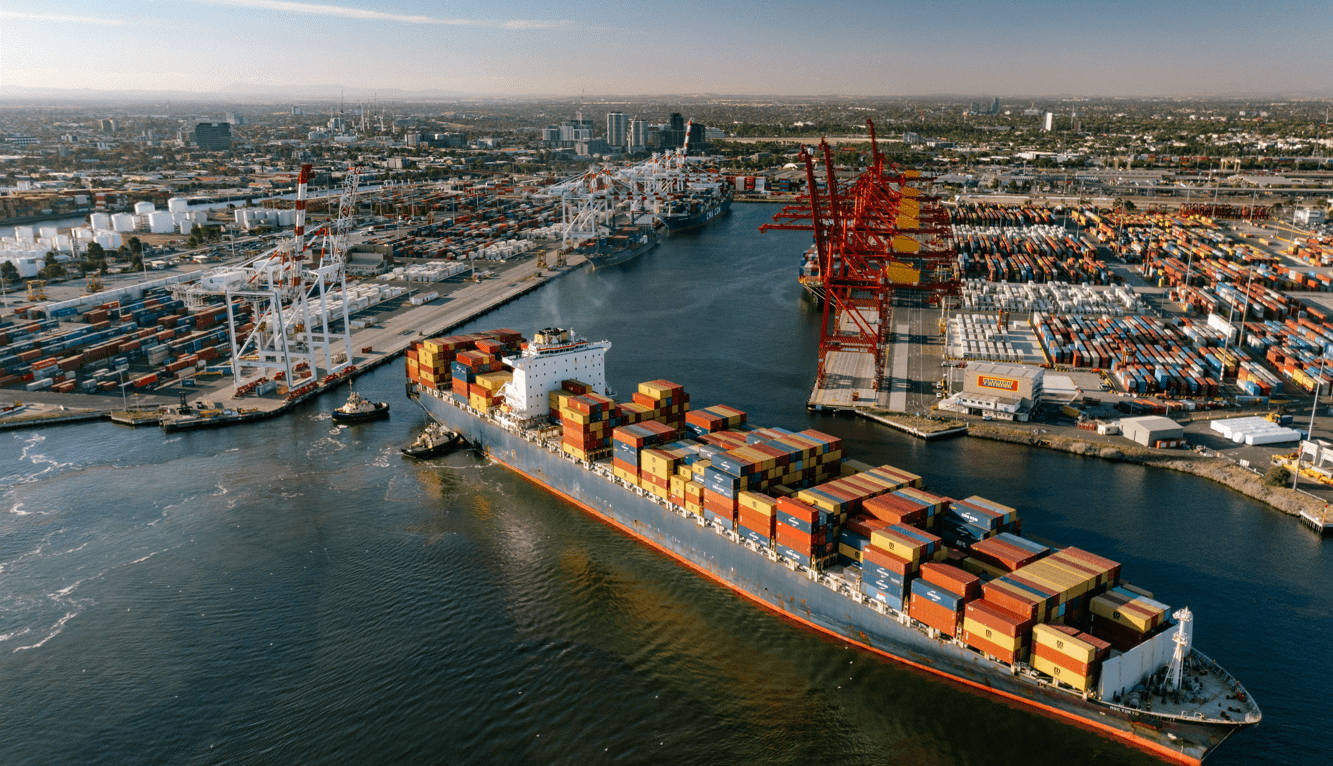
Port of Melbourne is the leading exporter of containerised grain and pulses. Photo: Port of Melbourne.
THE FEDERAL Government has released the finalised grains export Cost Recovery Implementation Statements (CRIS), with industry welcoming a 12-month deferral of the changes, but raising concerns about higher costs and the expanded scope of activities due to be included from 2027-28.
The draft statements, released for consultation earlier this year, attracted widespread criticism from across the agricultural sector, with concerns the scheme could become a form of “revenue raising” and that there was insufficient oversight of how the Department of Agriculture, Fisheries and Forestry spent the funds.
The new CRIS was due to take effect on July 1 and transition to full cost recovery for grains export activities by 2029-30, but the government has delayed implementation until 2027-28 in response to the impacts of the conflict in the Middle East.
The finalised document revised down its estimated cost-recovery revenue for 2026-27, reflecting updated grain production forecasts, with the figure falling from $16.24 million in the draft version to $15.3M.
The expenses have also been updated, with the final document reporting $17.55M, above the draft figure of $17.17M.
This would leave the industry with a deficit of $2.25M; notable after recording surpluses in the last five financial years.
Both documents still have the industry fully cost recovered by 2029-30 with estimated revenue of $19.29M matching DAFF expenditure.
GPA response
While supporting the deferring of cost increases until 2027-28, Grain Producers Australia has raised concerns about the contents of the CRIS.
“[GPA] welcomes the Federal Government’s decision to delay increased export cost recovery charges and provide additional funding support, delivering important short-term relief for grain exporters and growers,” GPA chair Barry Large said in a statement.
“However, GPA remains concerned significant export system costs are still scheduled to be transferred to industry from 2027–28.
“The government has listened on timing, but it has not changed the underlying direction of the reforms.”
Mr Large said the government had not listened to industry feedback questioning why certain activities were added to the cost-recovery framework.
“The final Cost Recovery Implementation Statement continues to shift a range of export system costs on to industry, including activities such as MICOR maintenance, fit and proper person assessments, non-compliance functions and regulatory efficiency activities,” Mr Large said.
“For GPA, the key issue remains that many of these functions support Australia’s broader export framework and market-access system and should not simply be transferred to exporters and, ultimately, grain growers.
“We will continue working with the Federal Government to ensure future charging arrangements do not undermine the competitiveness of Australian grain exports.”
Collins points to consultation
Minister for Agriculture, Forestry and Fisheries Julie Collins said the finalised CRIS was a result of “more than 12 months” of consultation with industry.
She said the decision to delay the implementation was because of this stakeholder feedback.
“What we’ve done since the outbreak of the war in the Middle East, after discussions with industry, is we have deferred the implementation of that,” Ms Collins said in an interview with the ABC NT Country Hour on Monday.
“What we have done is we’ve worked with industry to make sure that they’re aware of the cost recovery process. I have been involved in briefings directly with all the different industry groups and certainly, we have provided additional funding and supplementation over that period of time of well over $138M.
“[W]e continue to work with industry in relation to the cost recovery process.”
A statement released by Ms Collins on Friday said the updated CRIS would ensure “vital export services are sustainably funded and continue to meet industry needs”.
“Agricultural, fisheries and forestry exports are forecast to reach a record value of around $86 billion in 2025-26, with this growth in trade backed by essential export services delivered by [DAFF],” the statement said.
“The cost of delivering these services has outstripped the value recovered from industry for 16 of the last 20 years, with the Albanese Labor Government providing $138 million in supplementation measures from 2023-24 to 2025-26.”
She said the government was delivering close to $57M in supplementation funding from 2026-27 to 2028-29 to ensure these vital services continued while a phased return to full cost recovery took place.
Opposition slams cost increases
Shadow Agriculture Minister Darren Chester said despite the deferral, the cost increases would have a significant impact on farmers and exporters.
He said these increases equated to rises of up to 183 percent for grain and horticulture exports, 384pc for meat exports, 280pc for egg exports, 184pc for livestock exports, and 184pc for dairy exports.
“Labor’s agricultural export fees, which have more than doubled or tripled in some sectors, will have a major impact on Australian exporters, businesses, and farmers, but Labor saw fit to try and sneak this through without anyone noticing,” Mr Chester said.
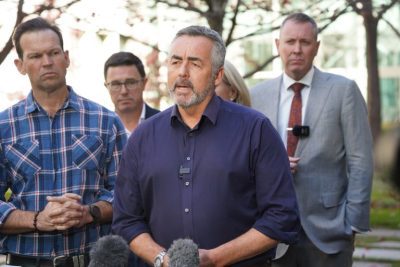
Darren Chester
“Labor is making it harder to farm, harder to operate and now harder to export.
“After the biggest tax raid on agriculture in a generation and a disastrous EU trade deal, these export fee hikes are yet another attack on farming families and regional businesses.
“Labor’s answer to every problem is another tax, another fee and another burden on the people who actually produce things in this country.”
Mr Chester added it was also extremely concerning that the Federal Government allowed DAFF costs to blow out, and now expects the agricultural industry to pay.
“Agriculture Minister Julie Collins continually ignored questions on whether increased export fees will fund broader government costs, rather than just export services, as the government moves to a fully cost-recovered agriculture export model.
“The National Farmers’ Federation previously expressed concerns that increased fees may be used to unreasonably support the broader departmental cost base.
“At a time when farmers and exporters are dealing with rising costs and growing uncertainty in international markets, the last thing they need is another increase in government charges.”
Grain Central: Get our free news straight to your inbox – Click here
HAVE YOUR SAY