
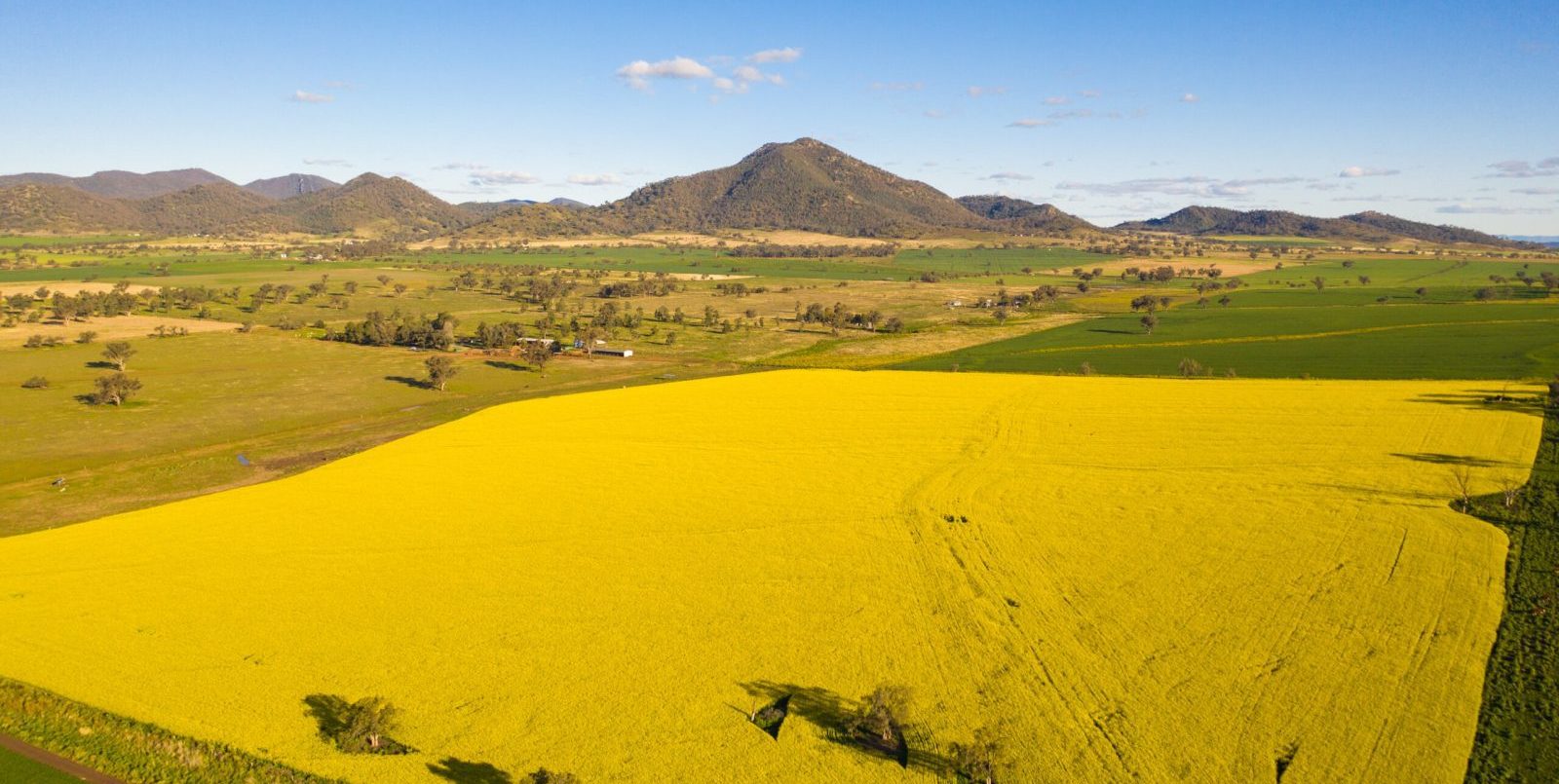
The strategy identified existing feedstocks, such as canola, as being well placed to meet early demand. Photo: GrainCorp
THE FEDERAL Government has launched a National Bioenergy Feedstock Strategy aimed at helping agricultural and forestry industries seize economic opportunities from producing crops and raw materials suited to the production of low-carbon liquid fuels.
The National Bioenergy Feedstock Strategy recognises Australia’s comparative advantage in agricultural and forestry systems, the potential to significantly increase the scale of feedstock production to meet growing demand, and the significant economic opportunity for producers and regional Australia.
Minister for Agriculture, Fisheries and Forestry Julie Collins said Australia produces world-class commodities such as canola and sugar that already go into offshore bioenergy production.
“Australia already produces and exports around $6 billion of high-quality feedstocks each year that support bioenergy production overseas,” Ms Collins said.
“A strong bioenergy feedstock sector can support Australia’s emissions-reduction ambitions, strengthen fuel security and deliver economic benefits across the country.
“We heard from farmers and producers across the supply chain about the need for a clear national direction for Australia’s bioenergy feedstock sector and this new strategy responds to that call with a clear framework for sustainable growth.”
Strategy priority areas
The strategy identified priority areas where collective effort would enable the development of a sustainable and competitive bioenergy feedstock industry, namely:
- Data to underpin investment;
- Innovation to advance feedstock readiness;
- Regional supply chain development;
- Sustainability and certification; and,
- Building sector capability.
It stated that by 2050, “the feedstock component of the bioenergy value chain could be worth up to $15 billion annually” and a mature domestic LCLF industry could “supply over 40 percent of Australia’s projected liquid fuel demand”.
While not favouring any particular feedstock, the strategy suggested existing feedstocks such as canola, sugar and tallow would be the first to meet growing demand.
“Some are already produced and traded at scale, such as canola and sugar, and have established supply chains and compatibility with mature technology conversion pathways,” the strategy said.
“These established feedstocks are well placed to meet early demand, expand their production and benefit from further investments in improved yields and supply chain improvements.”
Certification scheme
A priority area of particular interest to grain growers is the strategy’s discussion of certification schemes that allow feedstocks to demonstrate “carbon abatement and sustainability credentials”.
The strategy said a certification scheme was “increasingly a prerequisite for value creation and recognition”.
“Close engagement with feedstock producers will be important as the Australian Government considers the appropriate policy and regulatory settings for our domestic bioenergy market, as the design of these frameworks can directly affect the relative competitiveness of feedstocks.”
The strategy highlighted that “maintaining alignment and interoperability (where possible)” between Australian schemes and international frameworks was “a priority”.
It said the Federal Government-developed Guarantee of Origin (GO) Scheme would be “Australia’s primary mechanism for measuring and recognising the emissions intensity of LCLF and low-carbon gases”.
“Product Guarantee of Origin (PGO) certificates provide a foundation for linking certified emissions intensity attributes to the eligibility requirements of future domestic policy frameworks, including a demand-side measure.
“The expansion and refinement of the scheme will, over time, provide opportunities for feedstock industry input and help it to meet both international and domestic market requirements
“The continuing expansion of the GO Scheme provides a mechanism to incorporate data specific to Australian systems and best-practice carbon accounting.”
Thumbs up from GrainCorp, GrainGrowers
Leading Australian canola crusher and tallow merchantGrainCorp, as well as national organisation GrainGrowers have welcomed the strategy, independently describing it as an important step towards developing Australia’s bioenergy feedstock industry.
GrainCorp managing director and chief executive officer Robert Spurway said the strategy reinforces the important role Australian agriculture can play in strengthening the nation’s fuel resilience, while creating new opportunities for growers and regional communities.
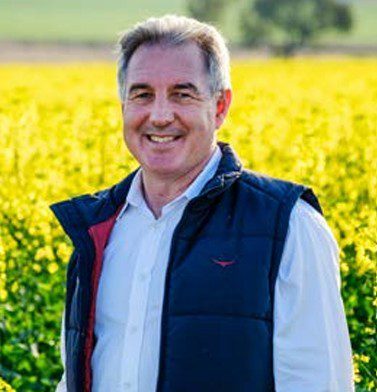
GrainCorp’s Robert Spurway.
“More than 90 percent of Australia’s liquid fuel is imported or derived from imported crude, leaving our economy exposed to global disruption,” Mr Spurway said.
“Australia already has the feedstocks, agricultural capacity and supply chains to reduce that reliance.
“The opportunity now is to translate those strengths into greater domestic processing, manufacturing and fuel production.”
GrainGrowers CEO Shona Gawel said the development of the LCLF sector represented “a major opportunity for Australia’s grains sector, provided growers are supported and empowered to participate, and the strategy recognises this”.
“Leveraging Australia’s abundant feedstock resources presents a significant opportunity to support Australia’s decarbonisation, strengthen fuel security, drive domestic manufacturing and deliver economic growth in regional communities,” Ms Gawel said.
“Enabling grower participation must be a central focus of industry development, recognising that long-term success depends on strong grower engagement and confidence.
“Ongoing collaboration between growers, industry, researchers and government will be critical to unlocking the full potential of Australia’s LCLF industry.”
Next steps
GrainCorp is already working with Ampol and IFM Investors to explore the development of an integrated Australian renewable fuels supply chain, including a proposed canola-processing facility and a renewable fuels manufacturing facility at Ampol’s Lytton Refinery in Brisbane.
The refinery would have the potential to produce up to 750 million litres of SAF and renewable diesel annually using Australian feedstocks, including canola oil, tallow, and used cooking oil.
Mr Spurway said the strategy provided “a strong foundation and a shared direction for government and industry”, but cautioned that the work was not over.
“The next step is ensuring an integrated policy framework that connects feedstock development with the Cleaner Fuels Program, well-designed demand measures and credible sustainability frameworks that give industry the confidence to invest and scale.
“By working together, we can build a globally competitive bioenergy feedstock industry and a LCLF fuels sector that supports Australian growers, strengthens regional communities and improves our national resilience.”
Click here to access the Federal Government’s National Bioenergy Feedstock Strategy.
Grain Central: Get our free news straight to your inbox – Click here
HAVE YOUR SAY