
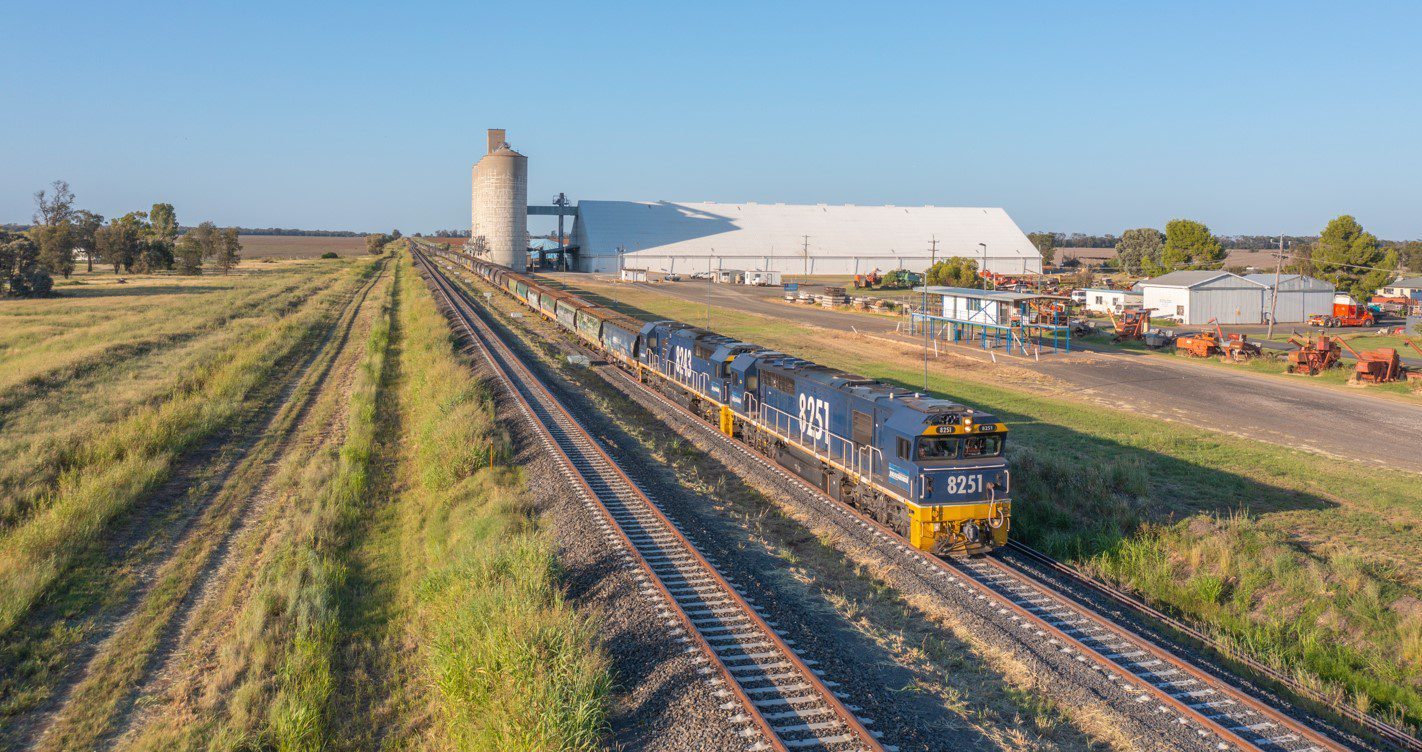
Inland Rail Narrabri to North Star section. Photo: GrainCorp
LAST month’s decision to abandon the Inland Rail project north of Parkes has come as a shock to many regional communities along the route, despite the project’s original 2015 and 2016 business cases indicating it faced challenges in achieving its stated objectives.
Following the unexpected decision, regional communities led by mayors have called on the federal government to reverse the move and work with agricultural groups to revive the project.
Moree Plains Mayor Cr Susannah Pearce said the region had been long-term supporters of the project.
“A decision to not proceed with the 23km remaining section in the Moree Plains would not only leave our businesses and people behind, but also our $1B of agricultural production per year,” Cr Pearce said.
“It is short sighted and we encourage the Australian Government to meet with our shires and work with us to get this nation building project back on track.”
Narrabri Shire Mayor Darrell Tiemens said Council and local business had already heavily invested in the project continuing north to Brisbane.
“Billions of dollars have already been committed by businesses that would have played a role in its delivery and long-term operation,” Mr Tiemens said.
“To walk away now represents an extraordinary waste of opportunity and investment.”
Initial business cases
Australian Rail Track Corporation completed a business case for the project in August 2015, with Infrastructure Australia following with its own study in May 2016.
These came after a 2010 report by the ARTC that broadly supported the project’s viability.
ARTC estimated the project would cost $10.7B to complete, while Infrastructure Australia put the figure at $9.9B, with both assuming a 10-year delivery period.
The earlier report, at almost 400 pages, was more comprehensive and also estimated that the Melbourne-to-Brisbane Inland Rail route could freight about 5.8 million tonnes of grain by 2049-50.
It was the more marginal of the two reports, with a benefit-cost ratio (BCR) of 1.02, meaning every dollar invested was expected to generate $1.02 in benefits.
This fell to 0.96 when the report included the cost of an extension to the Port of Brisbane.
The IA report concluded that the Inland Rail had a slightly higher BCR of 1.1.
The IA report noted the project’s marginal BCR, and warned any significant cost overruns could materially erode its economic case.
“Given the marginal nature of the BCR, an increase in project cost could have a significant impact on the final BCR,” the report said.
The report warned that several risks to Inland Rail’s economic viability, if realised together, would have reduced the BCR to 0.9.
The risks included a lower rate of freight moving from road to rail than expected, and the potential absence of an “ongoing stream of benefits” after 50 years of operation.
However, the report did conclude that “in most circumstances” the BCR would be above 1.
It did find the Inland Rail would improve “productivity and economic efficiency as a result of operating cost savings, shorter transit times, improved reliability, improved availability, avoided incidents on the coastal route and an additional north–south rail option to avoid incidents”.
This was accompanied by increased safety benefits from fewer heavy vehicles on roads, as well as community benefits from reduced emissions, congestion and noise.
Known risks
About a decade later, an ACIL Allen report on the scope, design, delivery schedule and cost estimates for Inland Rail found the project would cost at least $45.6B to complete and be finished by 2036 at the earliest.
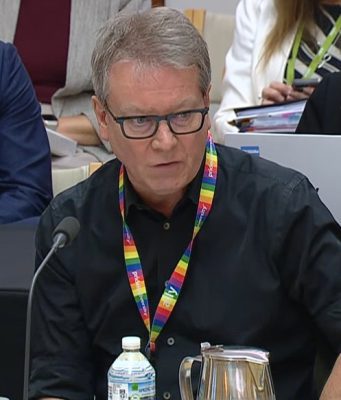
DITRDCSA Secretary Jim Betts
With construction beginning in December 2018, this would mean the project would take almost twice as long to complete and cost more than four times its initial estimates.
Both business cases and the findings of the 2023 Schott review were key pieces of evidence cited by government officials during Senate estimates earlier this month.
Department of Infrastructure, Transport, Regional Development, Communications, Sport and the Arts (DITRDCSA) secretary Jim Betts cited the business case as a key benchmark behind the decision to axe the project.
“I think we might…go back to the original benefit-cost ratio on this project, which was extremely marginal when it was costed at $10B,” Mr Betts told Estimates.
“It’s now four-and-a-half times that figure; so, the overall economics of the project no longer stack up in the way they did when the original investment decision was taken, unfortunately.”
He argued that money saved from stopping the project “would have a higher productivity impact per dollar” elsewhere, for example, by investing in the ARTC network.
IA chief executive officer Adam Copp referred to the business case during Estimates, saying the government’s decision “was not based on the merit of the project, but more where the cost was heading”.
“We assessed Inland Rail literally 10 years ago this month and we found that it had a tight economic case as 1.1 to one,” Mr Copp said.
“We outlined a range of deliverability risks at the time, some of which was that if costs increase, it will affect the BCR.”
ARTC views on Inland Rail
Project leads Inland Rail Pty Ltd and ARTC also fronted Senate Estimates earlier this month.
While accepting the project’s escalating costs, the teams struck a more positive tone about the prospects for a full Inland Rail build.
Senator Bridget McKenzie asked ARTC managing director and chief executive officer Wayne Johnson if the organisation still considered the project to be “a nationally significant freight infrastructure priority”.
“It’s about time period,” Mr Johnson said.
“We believe that there is capability in the existing network to manage the first decade of growth that the Inland Rail was forecast to achieve.
“As you’ve heard…preservation of the corridor means that future decisions can be made around the future of Inland Rail at a different point in time.
“They’re still viable; there is a point where, with the freight demands between the states, particularly on the east coast, that is likely the case.”
Grain Central: Get our free news straight to your inbox – Click here
HAVE YOUR SAY