
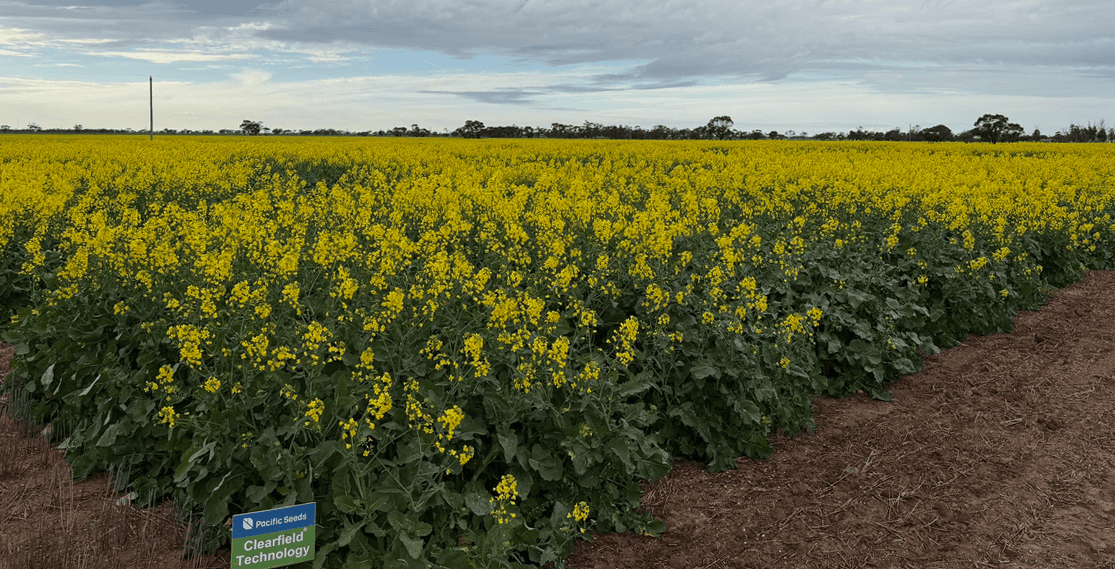
A canola trial site near Birchip in Victoria. Photo: Justin Kudnig, Pacific Seeds
THE FEDERAL Government has today released two consultation papers to help shape its $14.8 billion Fuel Security and Resilience Package.
Designed to protect Australians from global fuel shocks, put downward pressure on costs and accelerate the transition to home-grown, sovereign fuels, the package was announced in May in the 2026-27 Budget.
The Securing Australia’s Cleaner Fuels Industry (SACFI) Consultation Paper, seeks feedback on options to grow the domestic Low Carbon Liquid Fuels (LCLF) industry and reduce reliance on imported fuels.
It has been released alongside the Strengthening Australia’s Fuel Security and Resilience Consultation Paper, and feedback on both papers can be submitted up to September 15.
Chance for canola
The SACFI paper said developing a domestic LCLF industry could strengthen supply chains and create economic opportunities, while helping reduce emissions in sectors where liquid fuels remain difficult to replace.
These include aviation, heavy transport, mining, agriculture, and defence.
Government analysis suggests demand policies can support investment in domestic LCLF production.
“Biofuels rely on agricultural and forestry feedstocks, while synthetic fuels require inputs such as renewable electricity, hydrogen and captured CO2, resulting in different supply chain and regional development implications,” the SACFI paper says.
“Development of a domestic LCLF industry could expand markets for agricultural and forestry products, create additional income streams for regional producers, and support productive uses for waste and residue streams.
“Australia’s agricultural sector is also recognised for strong sustainability performance under existing LCLF certification frameworks, especially for canola.
“As global demand for LCLF grows, these characteristics may improve the competitiveness of Australian feedstocks in international markets.”
Behind Canada, Australia is the world’s second-biggest canola exporter, with the European biofuel market its major customer.
Australia crushes around 1.2 million tonnes (Mt) of canola per annum, and has in recent years exported upwards of 4.5Mt.
The paper acknowledges difficulties currently faced in Australia by the prohibitively high cost of LCLF, constrained appetite from investors, and uncertain demand.
“At present, LCLF are materially more expensive to produce, with some estimates suggesting production costs are two to five times higher than fossil fuels (based on prices prior to the current Middle East conflicts).
“However, CSIRO and Boeing project that production costs will decline as the market matures.”
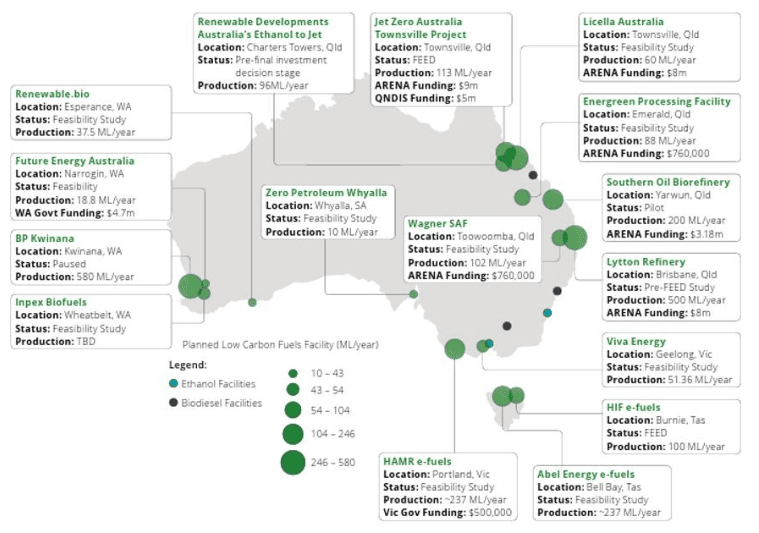
Figure 1: Announced LCLF projects. Source: 2025 Deloitte Refined ambitions report to the Clean Energy Finance Corporation.
The consultation is seeking views on a potential demand mechanism, including the level of ambition and how it could be implemented, impacts for businesses and consumers, and the evidence required to inform key policy decisions.
“Currently, we export up to $6 billion of feedstocks each year, including canola and tallow, for global markets,” Minister for Infrastructure, Transport, Regional Development and Local Government Catherine King said in a statement accompanying the announcement.
“By building a LCLF industry right here, we will create more jobs, build regional economies, strengthen our fuel security and future-proof our transport industries.”
Minister for Agriculture, Fisheries and Forestry Julie Collins said fuel security was about making sure Australians including farmers, have access to a reliable supply of fuel.
“Building more domestic fuel production creates an exciting opportunity to add value to Australian feedstocks bringing more opportunities for our farmers and foresters,” Ms Collins said.
Welcomed by GrainGrowers
GrainGrowers general manager of policy and advocacy Zachary Whale said the organisation looked forward to working with government and industry throughout the SACFI consultation process.
“A well-designed demand mechanism is a critical step in establishing a competitive and sustainable domestic LCLF industry in Australia,” Mr Whale said.
“A domestic LCLF industry presents a significant opportunity for Australian grain and oilseed growers, creating new markets for crops, strengthening regional economies, and enhancing Australia’s fuel security.
“It is critical that Australia’s LCLF industry is built on domestic feedstocks, including Australian-grown grain and oilseeds, ensuring we do not simply replace dependence on one imported fuel source with another.”
Paper for fuel security
The Strengthening Australia’s Fuel Security and Resilience Consultation Paper seeks feedback on key design features of three major measures that underpin the government’s approach to fuel security, namely:
- establishing the Australian Fuel Security Reserve;
- increasing the Minimum Stockholding Obligation backed by co-investment in fuel storage; and,
- supporting the continued operation of Australia’s two remaining domestic refineries beyond 2030.
The government is investing $3.2B to establish the Australian Fuel Security Reserve, creating a government-owned strategic reserve of 1B litres of diesel and jet fuel.
The reserve will provide an additional safeguard against international supply disruptions and fuel market volatility, helping ensure Australians have access to the fuel they need when global markets come under pressure.
The government has also committed to increasing mandatory industry fuel stockholding requirements by an additional 10 days for diesel, petrol and jet fuel by 2030.
Click here to access the SACFI consultation paper on a demand mechanism and click here to access the Strengthening Australia’s Fuel Security and Resilience consultation paper.
Grain Central: Get our free news straight to your inbox – Click here
HAVE YOUR SAY