
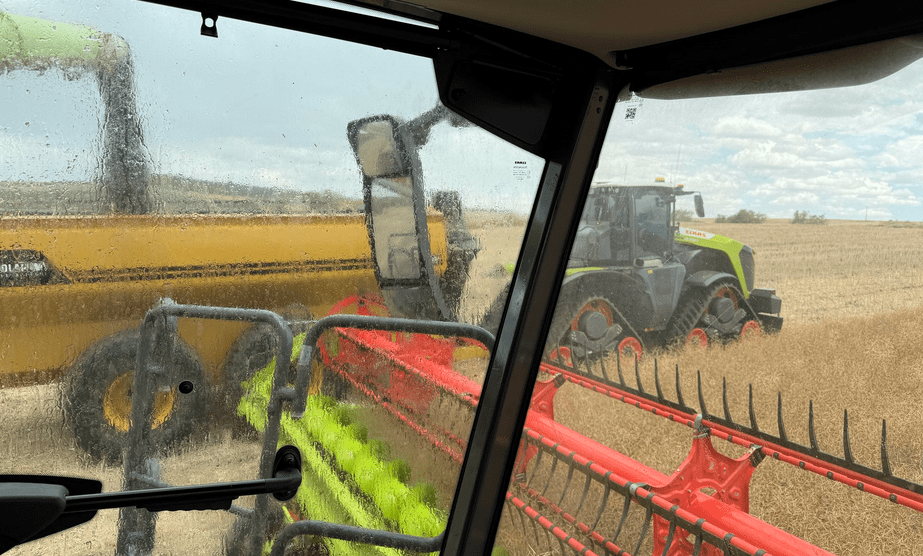
A mild spring has provided a soft finish for many WA crops, but is bringing rain which has slowed harvest progress. Photo: Amery Drage, Northampton
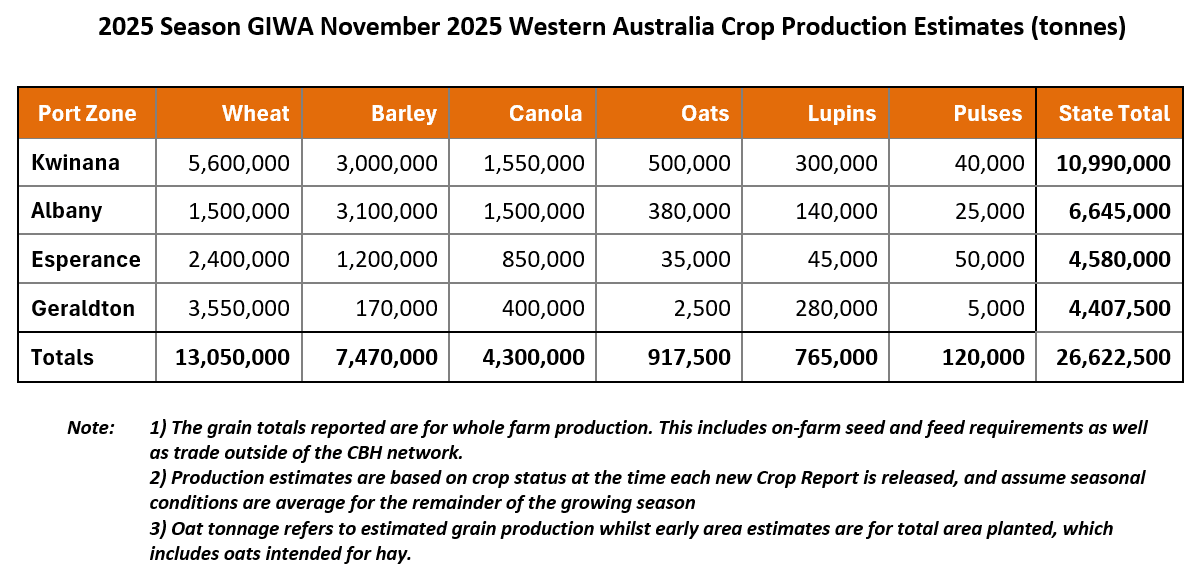
A RECORD Western Australian crop is coming into view, with the Grain Industry Association of WA today lifting its estimate for the crop now being harvested to 26.62 million tonnes (Mt).
This is up from 25.46Mt forecast by GIWA in its October estimates, and would break the record of 26.06Mt set in 2022-23.
“While the state’s harvest still has a long way to go, it is looking fairly certain that 2025 will be a record year for total grain tonnage produced in Western Australia,” GIWA monthly crop report author Michael Lamond said.
In the report, Mr Lamond said indications from the start of harvest are that crops are yielding more than expected, and are well above pre-harvest estimates in parts of the grainbelt.
“The mild temperatures in spring have pushed yields to record highs in those areas where moisture was not limiting, and the areas where moisture was limited are still likely to hit recent averages.”
Harvesting is further advanced in the Esperance and Geraldton port zones, and in the report, Mr Lamond said if grain keeps coming in at the current rate, both zones are on track for record grain production of close to 4.5Mt each.
“Harvesting in the Albany port zone is well behind the other zones, with less than 20 percent of the crop off.”
Crops across the zone are estimated to achieve similar yields to those of 2022-23, when more than 5Mt was grown.
“Since then, the area in crop has increased by 20pc for many shires in the zone and based on this increase in area, it is likely the total production out of the Albany port zone will exceed 6Mt this year.”
Mr Lamond said harvest in the Kwinana North and South port zones has a long way to go and while current estimates indicate they will have a good year, some areas have not fared as well as other parts of WA, and records are therefore unlikely to be broken.
Barley, canola yields high
Barley yields have been very good with plenty of 5t/ha paddock averages in all zones, and quality is good, with high retention and reasonable protein levels.
“Canola yields are better than expected everywhere, even in the central regions where the season was more patchy than other areas.”
Canola oil levels have been above 46 percent in many paddocks, adding significant value to the crop.
“Wheat has and will probably continue to be very mixed in quality across the state within and across zones.
“Wheat screenings are on the edge in many areas, where the finish to the season was dry during the grain-fill period.”
 Protein dilution occurs when grain yields are very high, and this has not been as significant as expected, considering how high yields have been so far.
“Oat grain yields have been good in most regions and the total tonnes produced will probably nudge 1 million for the first time since 2016, where there was a spike in plantings.
“The oat area has been steadily pushing up in recent years and even though the tonnage has increased considerably, demand is still there from traders.”
“Lupin yields are mixed so far with some crops pushing everything into growth rather than grain.”
Mr Lamond said pulse yields have again been good again for faba beans, field peas, and lentils.
“Reports from growers who have put in trial paddocks of lentils in the central regions indicate they have gone reasonably well across a range of geographical regions and soil types.”
Source: GIWA
Further detail on crop conditions in individual WA port zones can be found as part of the full report on the GIWA website.
HAVE YOUR SAY