
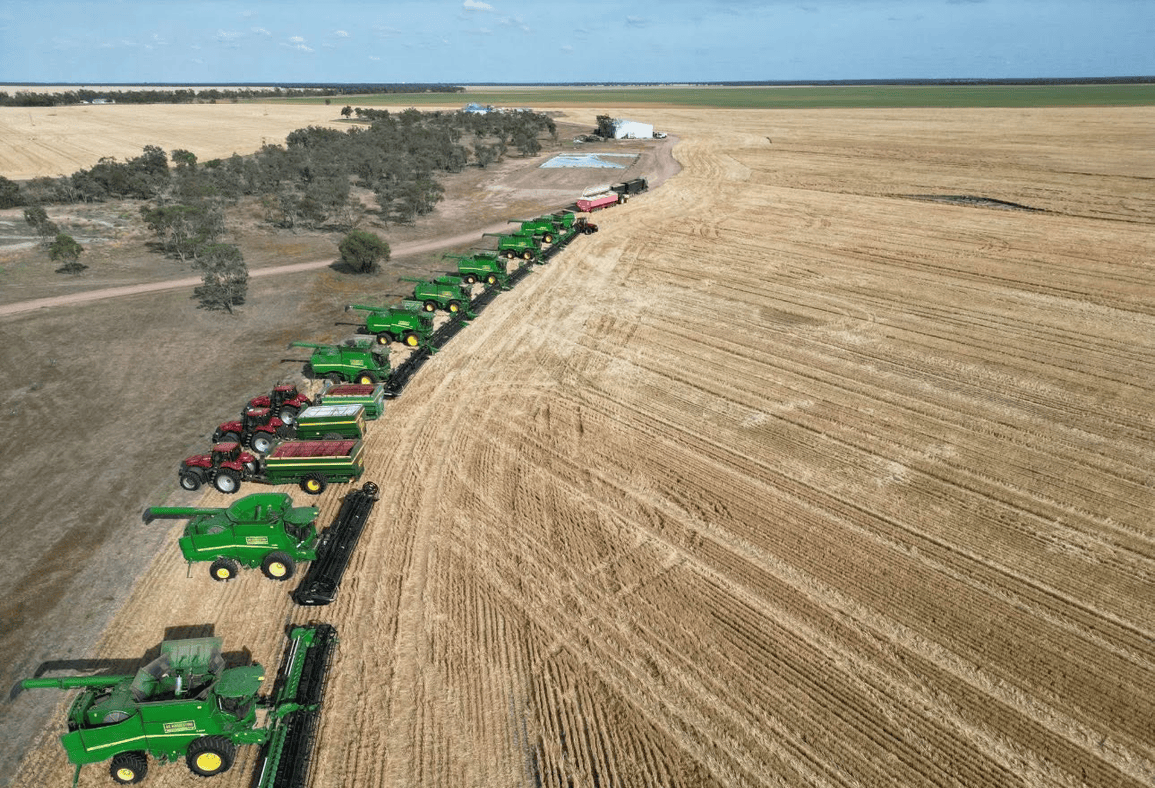
BB Harvesting last year had its fleet working on the northern harvest but is this year sending up only one header. The imbalanced season has given the company time to wait for visa approvals and engage extra local staff. File photo: BB Harvesting
GROWERS and contractors are having mixed success in fast-tracking the processing of 417 and 400 visas ahead of harvest.
Following an unexpected change in Federal Government priorities, the National Farmers Federations on behalf of its state members and federal MPs have been submitting lists of visas needing approval to bolster Australia’s harvest workforce.
Others, including agricultural employment agencies, have been stating their case directly to the Department of Home Affairs as the clock ticks.
National voices mum on numbers
Neither the NFF or the Department of Home Affairs were able to divulge to Grain Central how many visas are on the list of urgent cases, and how many have been approved.
However, the NFF stated it has since September 24 been submitting a daily list to the department outlining details of visa applications lodged with harvest 2026 work in mind.
“The NFF will not be commenting on application numbers while the process is underway,” an NFF spokesperson said in a response received on Thursday.
“We are unaware of how many have been approved.
“Due to privacy limitations, the department cannot provide updates on individual cases; however, applicants will receive notification once the application has been assessed.”
Likewise, the department’s response offers no detail on numbers lodged or approved.
“Historically, the department has always received requests for prioritisation from multiple sources across multiple visa streams,” a departmental spokesperson said in a response received late Wednesday.
“Such requests do not guarantee an outcome.
“The government recognises the importance of ensuring regional employers can access the workers they need and will continue to monitor impacts on workforce availability in agriculture and other sectors, in line with government priorities, to ensure Australia has the skills we need, where we need them most.”
Movement in WA
Western Australian grower organisation and NFF member WAFarmers has been more forthcoming.
WAFarmers business support officer Tracey Mullan said has, via NFF, been submitting details of visa applications that WA growers are counting on for help this harvest.
“I’ve done a count and we’ve submitted 171 as of today,” Ms Mullan said.
While she is unsure of the number of approvals granted since the first list was submitted to the NFF around September 25, she said both feedback and silence from grower members indicates progress is being made.
“We’ve had some people saying “thank you, we’re getting them through”.
“One guy had 10 in and had all 10 go through.”
On the flipside, contact from members anxious about applicants getting visas approved in time for harvest has died away this week.
Contractors get MP support
Contract harvesting businesses are not members of state farming organisations, and have therefore sought other means of getting their visa applicant details before the Department of Home Affairs.
Speaking to Grain Central early last week, Australian Custom Harvesters president and Bourke Harvesting principal Matthew Bourke said he believed advocacy from Federal Member for Mallee Dr Anne Webster had assisted his cause.
Mr Bourke is among those who have also mentioned support from Federal Member for Nicholls and Shadow Assistant Minister for Agriculture Sam Birrell.
“Over the weekend I had quite a few of my guys approved, which was great,” Mr Bourke said.
Bourke Harvesting had lined up 14 visa holders in total from Canada and the United Kingdom for this harvest, and roughly the same number of locals.
Easing the pressure in the eastern states is a relatively small crop in Queensland and northern New South Wales, where harvest is under way.
For contractors like Victorian-based Bourke Harvesting and BB Harvesting, it means a much-reduced fleet is heading north.
“It seems like it has turned a corner.”
Following the government’s announcement in late July of changed priorities for visa processing, Mr Bourke paid an immigration lawyer for advice, and also paid for subclass 400 applications based on concerns that subclass 417 applications would not be forthcoming.
The subclass 417, or Working Holiday Maker (WHM), visa has been the popular choice for harvest staff, and allows up to three working holidays over a three-year period.
The 400, or skilled worker, visa allows a stay of up to six months in Australia.
While several thousand dollars out of pocket for the additional applications and the legal advice, Mr Bourke is grateful he has close to a full component of staff ready for the modest northern New South Wales harvest starting this week.
“This had potential to fold us as a business.”
BB Harvesting runs more than 20 headers and is based at Donald in Victoria, and expects to once again have visa holders as part of the harvest team.
“We had 10 [visas] about a week ago that weren’t approved, and we have had two come through that went in early July,” BB Harvesting operations manager Glenn Meulendyks said.
Last season, BB Harvesting sent its full fleet up to Queensland and then to northern New South Wales before moving south.
The low-yielding and low-area northern crop has taken early labour pressure off the harvest, and this year, BB Harvesting plans to send just one header to Coonamble for the northern component of its run.
BB Harvesting is employing some harvest casuals who are available because of the light northern crop, which has opened up some staffing options ahead of the bumper crop expected in the south.
“We’ve got some coming down from CQ and…I’m confident we’ll be able to rip them out of somewhere,” Mr Meulendyks said with regard to filling harvest vacancies.
‘No substitute’ for reform: NFF
In a statement released today, the NFF has called for urgent reform of Australia’s regional workforce and migration settings, warning the recent emergency process for critical farm worker applications is only a short-term pressure valve.
NFF president Hamish McIntyre said the Federal Government’s cooperation on urgent Working Holiday Maker cases was welcome, but did not address the deeper workforce pressures affecting agriculture and regional communities.
“The government has given agriculture a pressure valve and that is helping some farm businesses facing genuine and urgent workforce shortages, but we need a long term solution,” Mr McIntyre said.
“Farmers had the rug pulled out from under them when Working Holiday Maker processing changed without consultation, just as they were heading into peak planting and harvest periods.
“We cannot rely on emergency measures to harvest crops, care for livestock, and keep food and fibre moving through the supply chains.”
The current process allows the NFF to refer eligible cases from its members where a worker has been identified for a specific agricultural role and their timely arrival is critical.
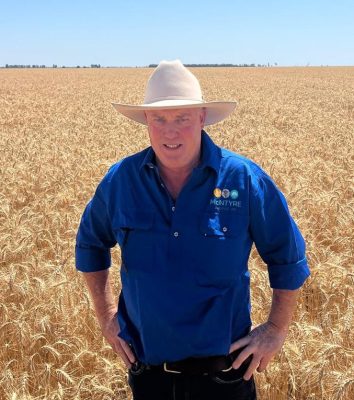
NFF president Hamish McIntyre
Mr McIntyre said the disruption extended well beyond farm gates, with tourism, hospitality, accommodation and small businesses also relying on WHMs.
“When farms, pubs, cafés, accommodation businesses and tourism operators cannot find workers, it impacts the whole community.
“These pressures are hitting at the same time as record-high diesel prices and rising business costs.”
Mr McIntyre rejected suggestions that the Pacific Australia Labour Mobility (PALM) Scheme could simply replace WHMs.
“PALM is valuable and important, but it is not a like-for-like substitute for Working Holiday Makers.
“Farmers cannot be told simply to switch programs when those programs have different purposes, requirements and operating models.”
The NFF is calling for the government to:
- Revert to regular processing under the WHM program;
- Improve PALM while recognising it is not suitable for every business;
- Make skilled migration pathways more practical and accessible for regional employers;
- Work with industry on a purpose-built agricultural visa that complements existing workforce programs;
- Ensure strong worker protections through employer accreditation, compliance and enforcement; and
- Consult agriculture, tourism, hospitality, small business and regional communities from the beginning of the reform process.
The NFF’s longstanding policy supports a dedicated agricultural visa that is purpose-built, responsive to industry needs, fair to workers and employers, and flexible enough to meet seasonal demand.
“We are not asking the government to announce a model tomorrow; we are asking it to begin genuine, urgent work with the people who understand how regional labour markets operate.”
Grain Central: Get our free news straight to your inbox – Click here
HAVE YOUR SAY