
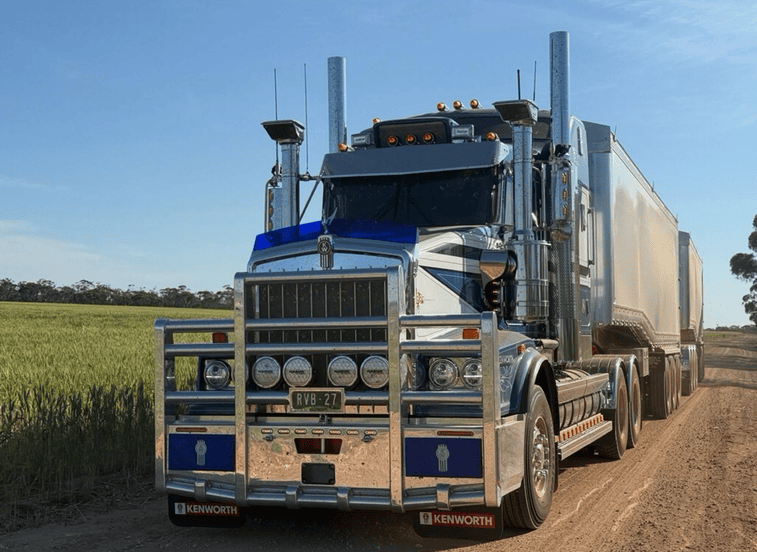
Owners and operators of combinations like this one photographed recently at Balranald in south-west NSW are being asked to check them for safety and compliance ahead of harvest, and heed compliance regulations in the states in which they will operate. Photo: CHS Broadbent
A BUMPER winter crop is on the way in South Australia and Victoria, and the National Heavy Vehicle Regulator is reminding primary producers of their compliance obligations ahead of harvest.
It has already kicked off in SA, and will start this month in Vic, and NHVR’s southern region director Paul Simionato has common and tailored messages for both states.
“During past South Australian harvests, we saw a lot of overloading, mass breaches and maintenance and vehicle defects, which can be avoided,” Mr Simionato said.
While the NHVR reported a high compliance rate in Vic in its 2025-26 harvest, Mr Simionato said interstate combinations could be operating in Vic as well as SA this harvest because of the relatively small crop in Queensland and much of New South Wales.
Mr Simionato has therefore warned operators to make sure combinations are compliant across borders.
“Operators need to familiarise themselves with the regulations for each state and identify and reduce risks associated with the transportation of grain.
“This includes factors like monitoring the mass and load of the heavy vehicle and ensuring it is mechanically sound.”
In SA, Mr Simionato said the high-volume harvest was likely to create pinch points at locations like Dublin, north of Adelaide, and at Port Adelaide’s Outer Harbor.
Shared responsibility for safety
Across SA and Vic, Mr Simionato’s messages are aimed at those driving grain trucks and agricultural machinery this harvest, and other road users.
“This is a very busy time for grain producers and there will be an increase in large, slow-moving trucks and farm machinery travelling between farms on rural and regional roads in these grain-growing areas.
“We encourage all drivers – both of light and heavy vehicles – to slow down and leave space for large trucks; everyone deserves to arrive home safely.”
Mr Simionato said it was also important operators kept on top of vehicle maintenance to ensure their equipment was roadworthy, both at the beginning of harvest and throughout.
“Any potential defects are preventable through effective maintenance planning and regular inspections..
“Operators should be conducting pre-season checks, as well as schedule daily vehicle pre-start checks throughout harvest season to avoid any non-compliance issues.”
Mr Simionato said drivers and transport operators needed to be aware of driver fatigue to ensure they are not driving longer than allowed.
“The pressure to move this amount of product can tempt operators and drivers to take risks around fatigue, but no load is worth someone’s life.
“Our final message to drivers is don’t rush because that’s when the safety of all road users can be at risk.”
Message supported by industry
Louis Dreyfus Company national origination manager for grains and oilseeds Oliver Reid said favourable growing conditions mean Vic has the “potential for strong volumes of wheat, barley and lentils”.
“As the industry prepares for harvest, strong collaboration between growers, transport operators and local communities will be important to ensure grain moves safely and efficiently from farms to domestic and export markets,” Mr Reid said.
“We encourage growers, carriers and other industry participants to prepare ahead of harvest.
“This includes making sure vehicles and equipment are harvest-ready, fatigue risks are appropriately managed and safety and compliance requirements are factored into harvest and transport planning from the outset.”
Grain Producers SA chief executive officer Brad Perry said SA’s “bumper grain harvest’ is expected to ramp up in coming weeks.
“Moving that crop safely will be a major task, with more grain to transport and sustained pressure on growers, drivers and the supply chain,” Mr Perry said.
“When the crop is ready and the weather window is tight, the pressure to keep moving is real.
“Planning ahead for driver rest, checking vehicle maintenance and knowing your load limits will help keep everyone safe through a busy harvest.
“A bigger crop means more loads to move and every load needs to be within the applicable limits, and every truck and trailer needs to be fit for the job.
“Taking time to check brakes, tyres, lights and couplings before harvest can prevent breakdowns and serious incidents when things get busy.
“Safety is a shared responsibility across the grain supply chain.
“Realistic schedules, clear communication and allowing drivers the time they need to rest will help ensure a successful harvest means everyone gets home safely.”
NHVR has issued the following safety tips for drivers:
- Slow down – reduce your speed when approaching farm equipment or heavy haulage trucks;
- Keep your distance – always maintain a safe distance so the heavy vehicle driver can see you in their mirrors;
- Wait for a clear view – only overtake when you are certain it is safe to do so; and,
- Be patient – allow extra travel time for your journey during peak harvest periods.
Operators can understand any Heavy Vehicle National Law changes that affect them and there is also an updated Grain Transport Safety Network (GTSN) Truck Handbook.
The handbook explains how industry should load grain vehicles legally, manage compliance risks and promote the safe and efficient movement of grain on Australian roads.
Source: NHVR
HAVE YOUR SAY