
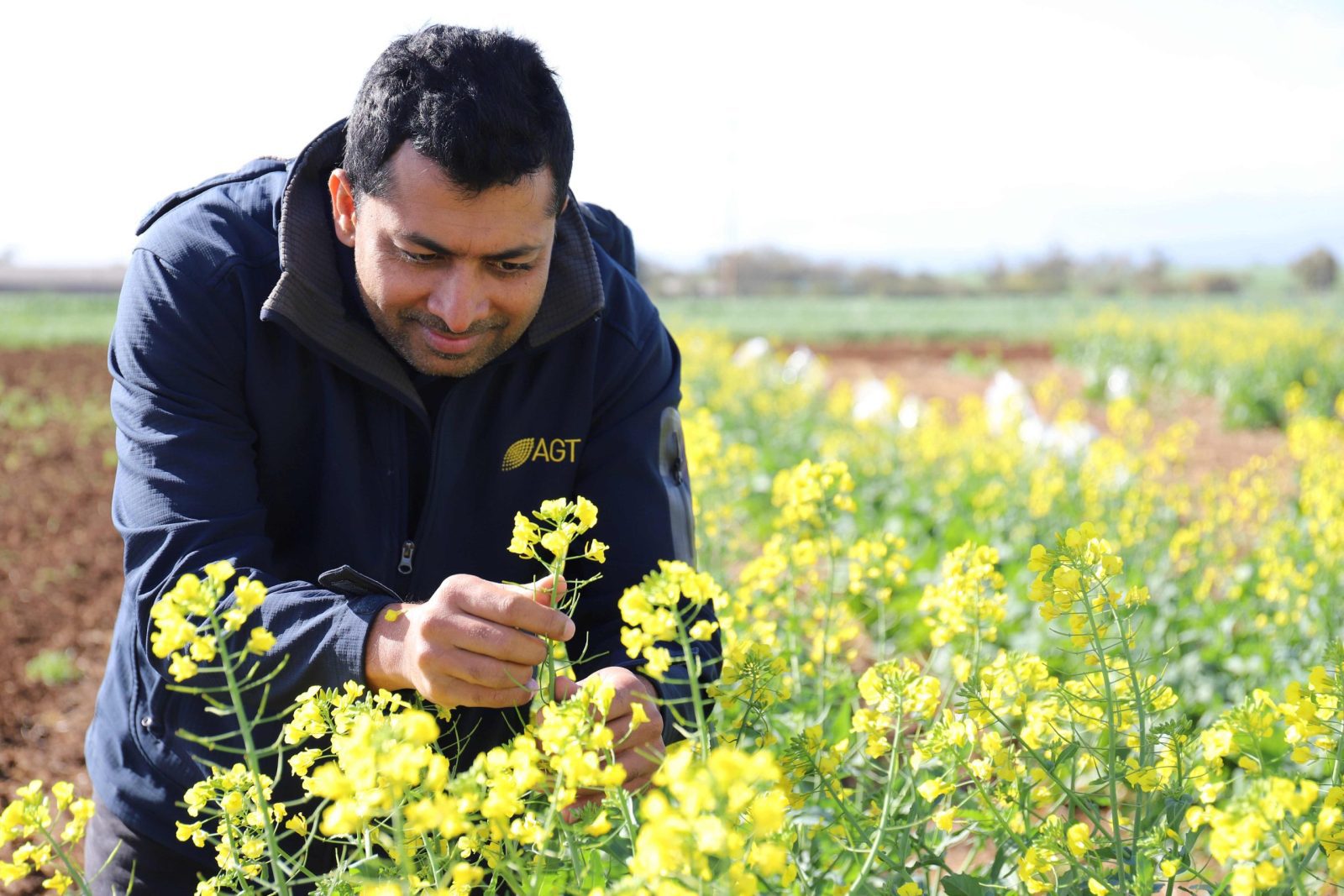
AGT breeder Sami Ullah launching Insurgent TT, a recently released variety of canola, Australia’s biggest oilseed crop by far. Photo: AGT
THE Australian Oilseeds Federation has released a strategic plan to give direction to Australia’s oilseeds industry and advance the sector’s competitiveness and position it for continued growth across food, feed and fuel markets.
It comes amid heightened interest in developing a large-scale domestic biofuel industry following a hike in diesel, petroleum and aviation fuel prices as caused by ongoing conflict centred on the Persian Gulf.
Canola followed by cottonseed are Australia’s two major oilseeds, and the plan seeks to grow total production to 12 million tonnes (Mt).
Australia’s current annual oilseed production is seen at less than 10Mt.
“The industry has a long track record of strategic activity and planning to steward growth and adaptability,” AOF chair Rosemary Richards said.
“This plan builds on that maturity to pursue the next phase of growth, setting a clear ambition including a pathway toward 12Mt of oilseed production, while maintaining the systems, standards and credibility that underpin market access.”
Developed through consultation across the value chain, the AOF Strategic Plan 2026-2030 focuses on three core priorities:
- Market access, market development and demand growth;
- Sustainable production and value chains for market assurance; and,
- Industry capability, coordination and delivery
AOF and sustainability manager Courtney Draper said the strategy is deliberately focused on the key levers that underpin industry performance and is focused on delivering tangible impact for the sector.
“This strategy is about ensuring Australian oilseeds continue to meet the needs of global markets while building capability domestically.
It brings together clear priorities across market access, sustainable production and industry capability, and focuses on translating market requirements into real outcomes for growers and the value chain.”
The AOF will support implementation through its role in stewarding industry systems and connecting participants in the oilseeds value chain.
“AOF’s role is to steward the industry systems that sit behind market access, from standards and quality frameworks to technical capability and coordination, ensuring Australian oilseeds continue to be trusted and valued in global markets.”
While investments are already occurring in Australia with relation to oilseeds with potential to supply the domestic biofuel market, namely carinata and pongomia, the AOF plan concentrates on established oilseeds, with a summary as follows:
Canola
The AOF plan said Australian canola production now averages 6.5Mt per annum, with the record 2022-23 season producing more than 8Mt, and last season at 7.8Mt being the runner up, to support Australia’s position as the world’s second-largest canola exporter.
It said the canola industry supplies high-quality products to major export destinations across Europe and Asia, with canola seed, oil and meal contributing to food, feed and fuel systems domestically and globally.
“This export orientation has been a defining feature of the industry and continues to shape its strategic priorities.”
The plan said maintaining reliable market access, responding to evolving customer requirements and maintaining Australia’s reputation as a trusted, sustainable supplier remain central to the sector’s success.
“While oilseeds have long been associated with food and feed markets, their role in low-carbon liquid fuels is not new, having supplied into established biofuel markets in the EU for many years.
“As global momentum accelerates to decarbonise hard-to-abate sectors, this demand is now expanding rapidly.”
Governments are introducing policies aimed at reducing greenhouse gas emissions from sectors where electrification remains challenging, including aviation, marine and heavy road transport.
These policies are accelerating the development of fuels such as renewable diesel and sustainable aviation fuel (SAF), which rely on sustainable feedstocks including vegetable oils.
The plan said Australian canola, combined with readily deployable hydroprocessed esters and fatty acids, or HEFA technology, is well positioned as a near-term, scalable feedstock.
“Accordingly, there is growing policy and commercial interest in canola’s role in low carbon liquid fuel supply chains.
“This shift has important implications for the Australian oilseed industry.
“It reinforces the role of oilseeds as a multi-purpose crop, contributing not only to food and feed systems but also to the broader bioeconomy and global energy transition.”
Cottonseed
As a by-product of lint production, cottonseed is Australia’s second largest oilseed crop and has undergone a strong period of growth over the past few years on the back of large cotton crops.
Cottonseed is primarily used in cattle feedlot rations, both domestically and internationally.
It is valued for its high energy content, protein and fibre characteristics.
Cottonseed is also used as a drought-feed alternative for pastoralists during less favourable seasons, and in some instances within dairy feed rations.
In addition, cottonseed supports a well-established crushing industry, where it is valued for its high-quality oil characteristics that enable the production of premium frying oil, as well as high-protein animal feed and fibre products through meal and hulls.
All three products are highly valued by their respective consumer bases.
In the last five years, larger production years and favourable seasonal conditions have meant that average production has exceeded 1Mt and cottonseed exports have increased, averaging around 550,000t in the same periods, with China the major market.
“Export volumes fluctuate depending on competition from the domestic feed industry and recently the increase in cattle on feed has seen growth in local demand for cottonseed.”
Soybeans
The plan said the Australian soybean sector, represented through its peak body, Soy Australia, is focused on expanding production and strengthening market opportunities through research, industry development and collaboration.
The plan said the Australian soybean industry has the opportunity to grow, with soybeans playing an important role in dryland and irrigated cropping systems.
The industry is focused on soy food markets and Australian soybeans are non-GM with a reputation for high quality.
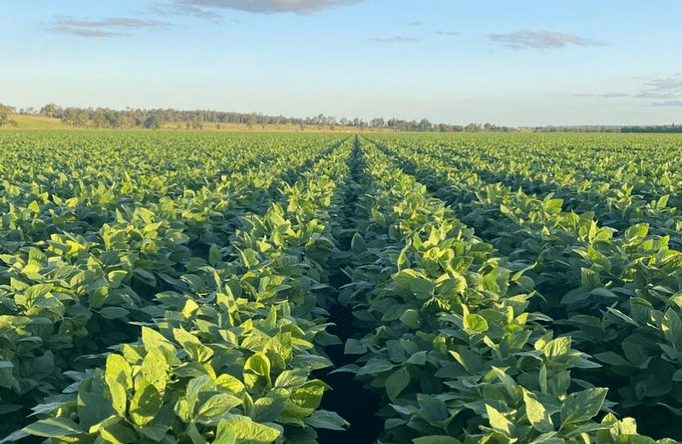
Soybeans growing in north-eastern NSW. Photo: Mara Global Foods
Australian production fluctuates between 30,000 and 60,000t per annum, which may grow with GRDC’s recent reinvestment in soybean breeding with the University of Adelaide.
The plan said growing demand exists in the Australian food industry for soy foods and soybean-derived products with further emerging opportunities from increasing demand for protein isolates and textured proteins as replacement for traditional protein sources such as red and white meats.
“Despite this there continues to be imports of protein isolates for the food market along with substantial volumes of protein meal imported for the feed sector.”
Sunflower
The Australian sunflower industry is represented through the Australian Sunflower Committee which includes researchers, agronomists, advisors and marketers.
The plan said the sunflower industry has declined significantly over the past decade with the lack of crushing facilities limiting the sectors participation in oil and protein markets.
Annual production of sunflower has had an established production of around 20,000ha for the last five years.
“The sunflower industry is stable but constrained, servicing domestic birdseed and stockfeed markets, and is seeking new end use application opportunities in confectionary.”
Source: AOF
HAVE YOUR SAY