
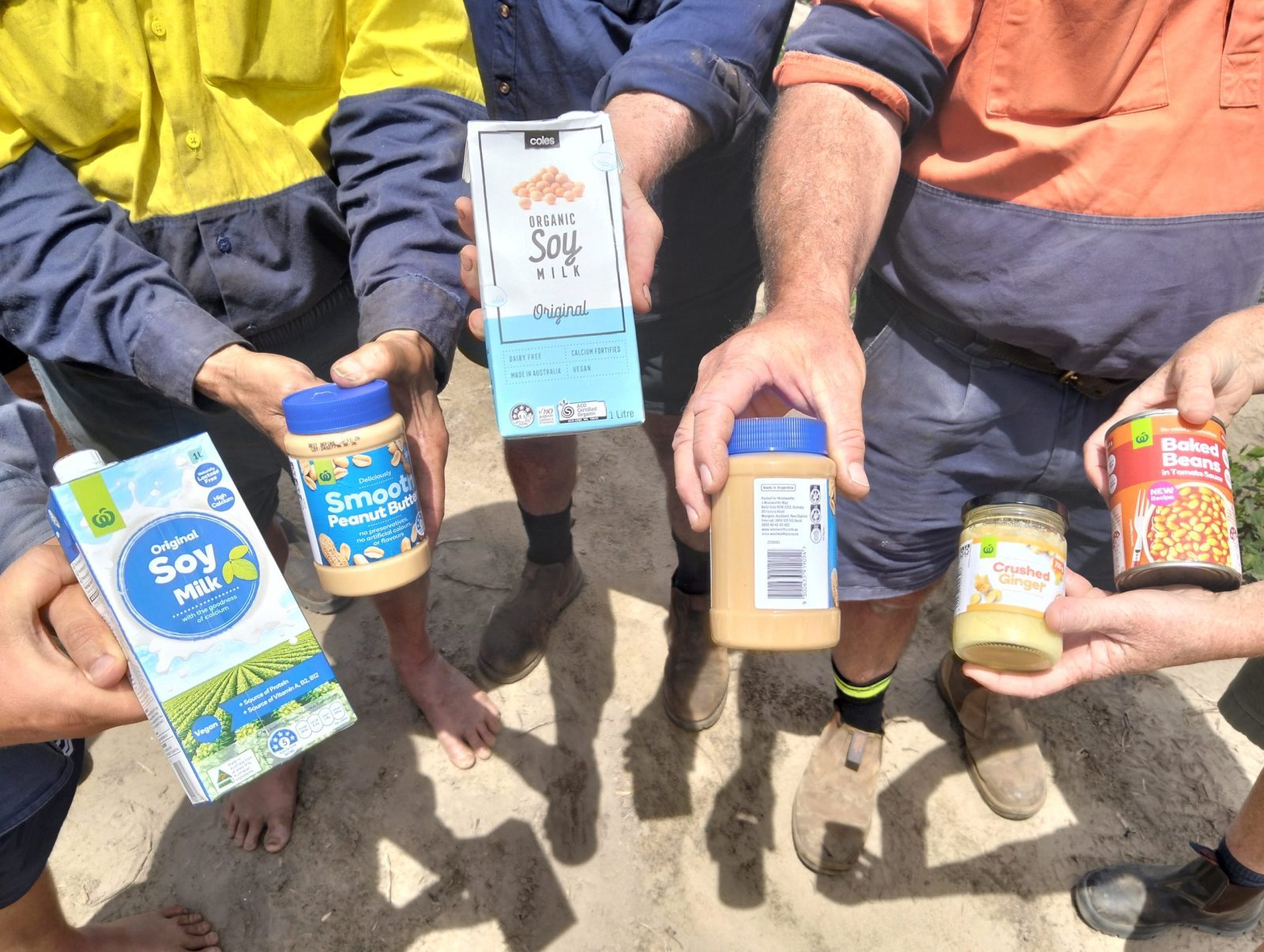
Peanut and soybean growers in the Bundaberg region hold own-brand products which they say use imported rather than Australian key ingredients. Photo: Supplied
PEANUT and soybean growers in Queensland’s Wide Bay-Burnett region are accusing Australia’s two supermarket majors of undermining their viability by using imported product in their own-label brands.
They say competition from Coles’ and Woolworths’ soy milk and peanut butter lines has come at a time when both legumes should be celebrated for their carbon-smart benefits.
Former Kumbia peanut grower Peter Howlett said he exited the peanut industry two years ago because he could see the writing on the wall.
“I’m sorry to say I was not surprised when Bega announced they were getting out of their peanut facilities in Kingaroy and North Queensland,” Mr Howlett said.
“The competition from imported peanuts from Argentina and China being used in the Coles and Woolies private-label peanut butter was just too much for Bega to compete with.”
While Bega has found an Australian buyer for its peanut-related assets, Mr Howlett said the pressure from cheap imported peanuts would continue to undercut Australian-grown product.
“Queensland farmers grow some of the best quality peanuts in the world, yet we are expected to compete with…countries like Argentina and China, who do not have the same cost pressures or regulatory obligations that Aussie farmers do”.
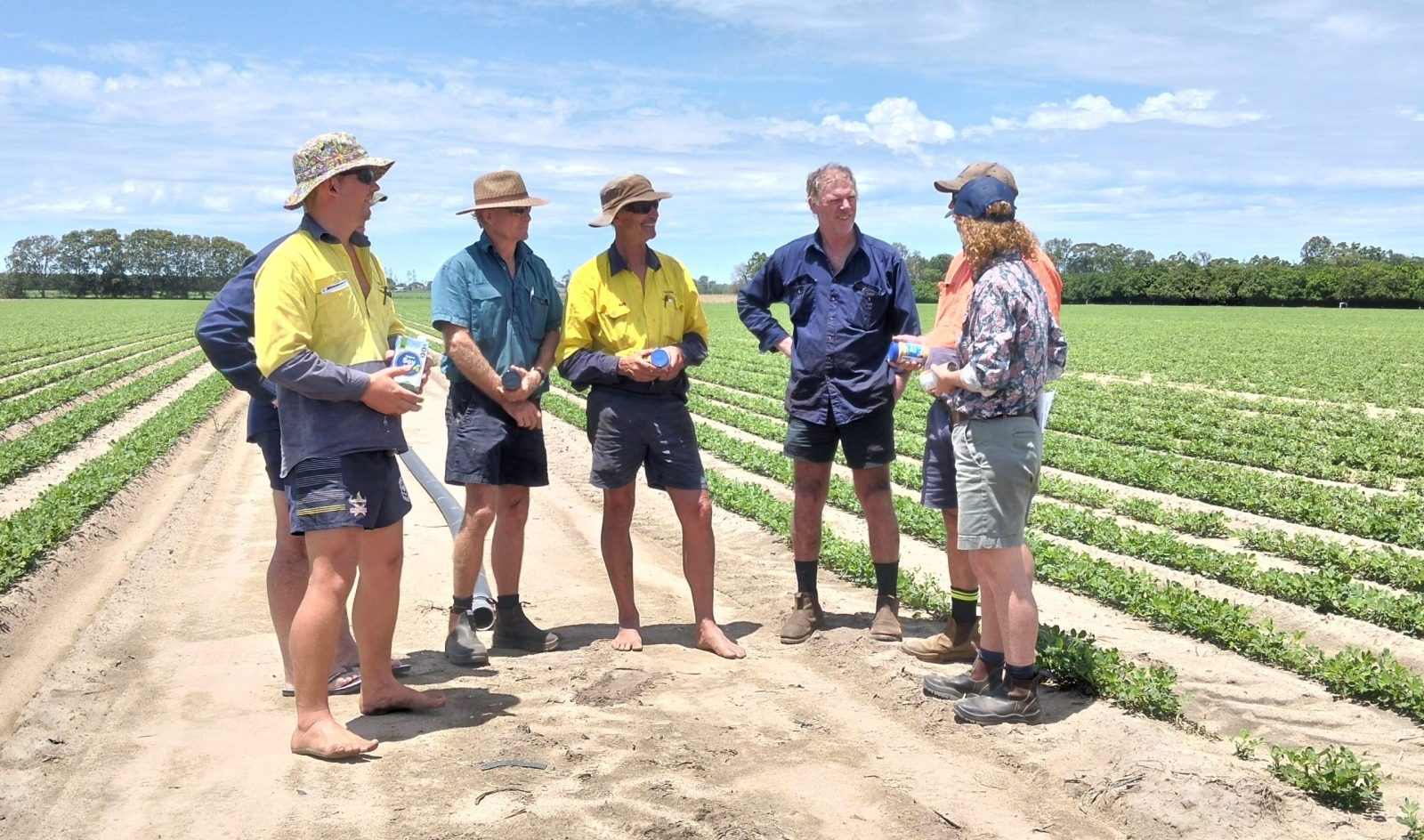
Soybean and peanut growers gathered today in Bundaberg to draw attention to Coles’ and Woolworths’ use of imported product in lines that compete with brands which support Australian farming. Dean Cayley (obscured) is next to Judy Plath at right. Photo: Supplied
Mr Howlett grew peanuts in the Kingaroy district for decades, and his great grandfather was an early supplier to Kingaroy’s original Peanut Company of Australia, bought by Bega in 2017.
“Making the decision to exit the peanut industry…was absolutely gut-wrenching, but I could not see how Bega could compete with the inferior imported peanut butter that Coles and Woolies were selling, so I made the tough decision to leave the industry before it collapsed.”
Same struggle for soy
According to Bundaberg region soybean grower and agronomist Judy Plath, the soybean industry is facing similar challenges from Coles and Woolworths, which use imported soy in their soy milks, which sell for less than product made from Australian soybeans.
“Australian soy milk is being undercut by the private label soy milk sold by Coles and Woolies, which directly undercuts hard-working Aussie farmers,” Ms Plath said.
“Considering Coles and Woolies are always advertising that they support Aussie farmers, I find their cheap imported soy milk very hypocritical.”
Ms Plath has pointed to other own-brand lines which use imported product, including baked beans packed in Italy and canned baby carrots from France, as well as peanut butter from China.
She said a labeling loophole has enabled Coles and Woolworths to give the impression their soy milks are made in Australia with Australian ingredients.
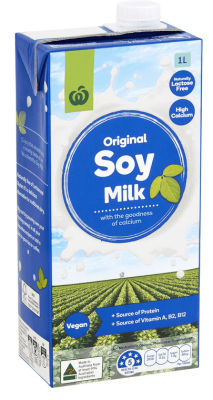
Woolworths Soy Milk is labelled as containing 91 percent Australian ingredients.
“When you read the label on the Coles and Woolies soy milk, it would be easy to think it’s made with Australian soybeans, but it’s actually the Australian water in their soy milk that makes it Aussie, not the soy.”
Bundaberg’s Dean Cayley has been growing peanuts since 2009 after exiting the crisping potato industry when it became unprofitable due to stagnating prices and rising production costs.
Mr Cayley is concerned the peanut industry could go down the same path if imported peanut butter continues to compete with Australian-grown peanuts.
“Australian farmers are expected to compete with Coles’ and Woolies’ private-label peanut butter from China or Argentina, even though our labour costs are much higher…and our regulatory environment is so much more expensive to navigate,” Mr Cayley said.
“I’d be willing to bet that those Chinese or Argentinian farmers are not being asked to prove they pay their staff legal wages, provide a safe working environment or meet the same strict chemical-safety rules we do, and I bet they don’t have to prove they’re not hurting the Great Barrier Reef every time they jump in a tractor.
“I’ve always grown soybeans or peanuts because they are such high-performing legume crops which really deliver improvements to my farming system, as well as providing another income stream.”
“But these days it’s getting very hard to consider growing a crop that doesn’t make a profit because it’s good for the soil and good for the reef when we’re dealing with high power costs, skyrocketing insurance bills, ever-increasing fertiliser costs, and labour costs on the rise.”
Ms Plath echoed Mr Cayley’s statement about the benefits to soil health from growing soybeans and peanuts, and said as a soybean agronomist, she has seen first hand the benefits a summer-grown legume can deliver to the soil.
“The Wide Bay-Burnett region has grown a lot of Queensland’s soybeans and peanuts over the last 20 years and both crops have added immense value to our farming systems,” Ms Plath said.
“Farmers can use less nitrogen fertiliser and capture more carbon in our soils with soybeans and peanuts than any other legume out there, yet Coles and Woolies are doing their best to prevent us selling our crops for a profit by undercutting Aussie farmers with their imported private-label range.”
Supermarkets respond
Coles and Woolworths were contacted for comment.
Woolworths said its two Woolworths Own Brand peanut butter products are sourced from Argentina and made from peanuts grown in Argentina.
Its two long-life soy milk products are made in Australia, with soya protein from China going into Woolworths soy milk, and soya protein made in Australia and China going into Macro soy milk.
“We’re a strong supporter of Australian farmers across fresh food and the thousands of products we sell that include ingredients produced in Australia,” a Woolworths spokesperson said.
“With a focus on delivering value and quality for our customers, our extensive Own Brand range covers more than 6000 everyday food and other essential products and wherever we can, we use Australian ingredients.
“Some customers might pick Australian made and sourced first, while others might focus on value with their shop.
“We always provide country of origin labelling on our Own Brand food products to help customers make an informed choice.”
Coles said soybeans used in its Coles Organic UHT Soy Milk are primarily sourced from Australia.
“Depending on availability, we may also source from other major soybean-producing countries,” a statement from the company said.
“All Coles soy milk is manufactured and packed in Australia.
“Coles Peanut Butter is manufactured in India.”
Coles said its Organic Peanut Butter and cashew and almond butters are produced in Australia.
“The almonds used in our almond butter are exclusively Australian grown.”
Grain Central: Get our free news straight to your inbox – Click here
I cant believe the lack of support for our quality Australian industries. Cheap imports should be stopped. Who’s looking after us….we have amazing quality products to consume ….we all need to Buy 100% Australian Cant believe Bega amongst others are using cheap imported products and selling to us We thought they were Australian!