
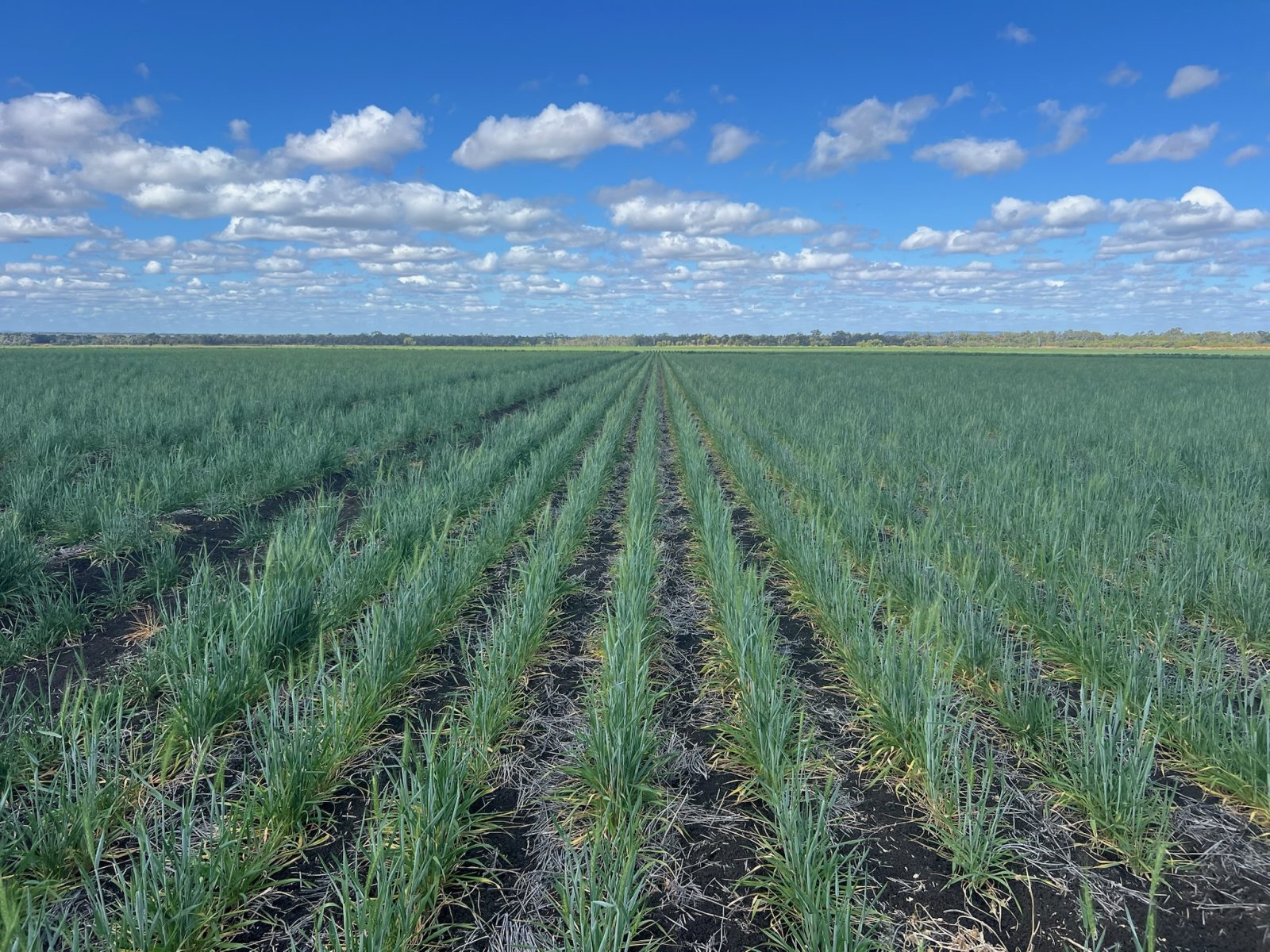
Wheat crops over much of CQ are running to head, with the earliest to be harvested next month. Photo: Josh Bell, JB Ag Services
A LACK of in-crop rain is expected to see most Queensland cereal crops return an average at best yield ahead as growers in Central Qld gear up for what could be a fast harvest starting in the third week of August.
This reasonably early start reflects the early planting, made by growers wishing to make the most of summer rain, and a lack of in-crop rain.
In southern Qld, growers are on the look-out for mice in some districts, and subsoil moisture levels vary from full in pockets to minimal in others, with crops generally requiring at least 25mm of rain to shore up average yield prospects.
Yields seen down in CQ
In CQ, JB Ag Services principal Josh Bell said chickpea crops are looking “pretty handy”.
“Most will be better than average because we built good subsoil moisture over summer,” Mr Bell said, adding that 1.5-2 tonnes/ha could well be the norm this year, up from the regional average of 1.2-1.5t/ha.
“In the past three weeks, chickpea crops have doubled in size; conditions have been so mild, and they’re pretty water efficient.
“Wheat’s a bit of a different story; some crops will be 60-70 percent of their average yield.”
He said wheat looks like yielding 1-2t/ha, so less than chickpeas in a rare turn of events, and down from 2.5-3t/ha as can be expected in a good year.
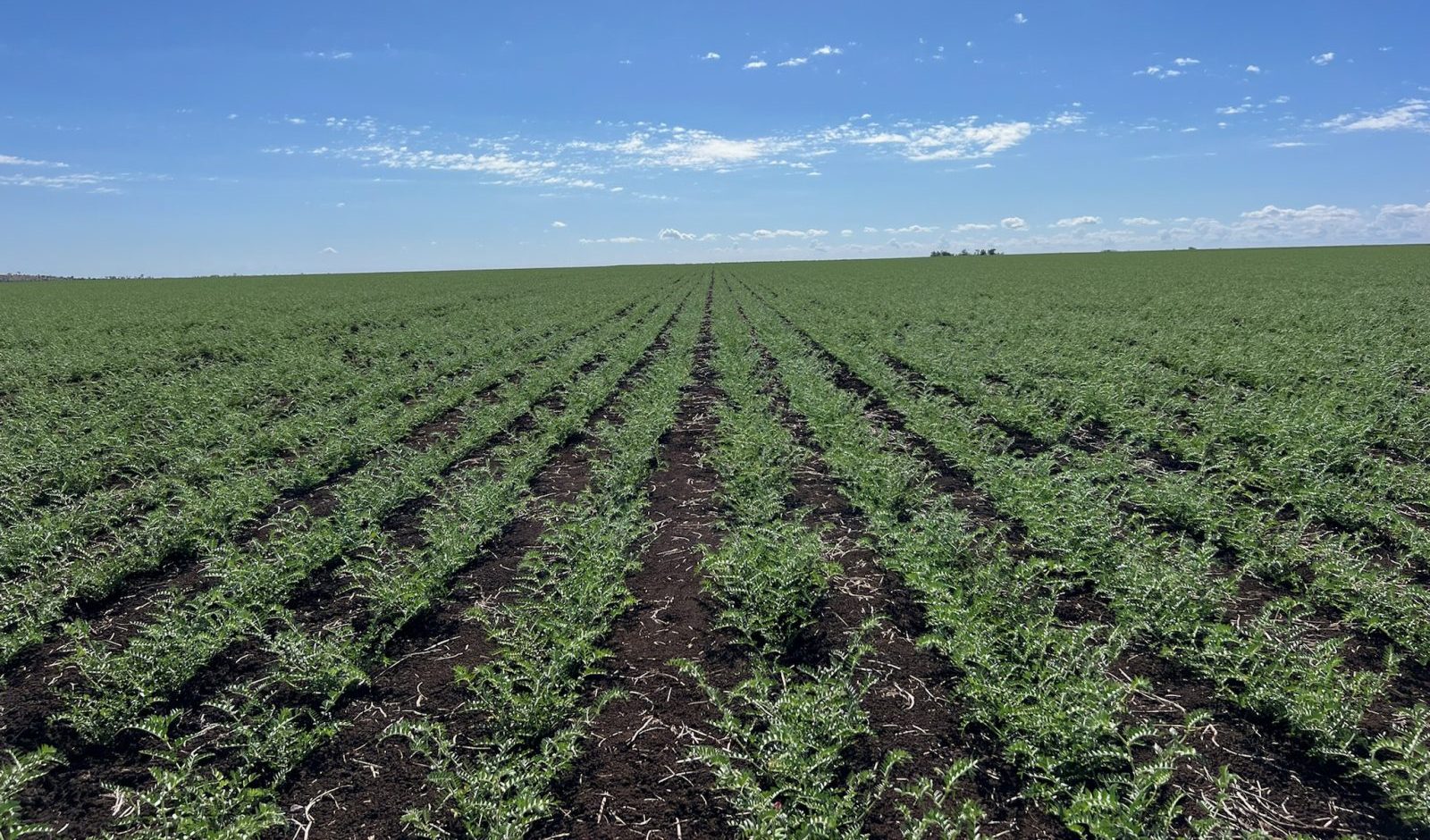
CQ chickpeas are into subsoil moisture and enjoying the mild winter to date. Photo: Josh Bell, JB Ag Services
Mr Bell said CQ’s earliest wheat crops were expected to come off from the third week of August, and the region’s harvest should be going full tilt by mid-September, which is often when harvest starts.
“Wheat’s variable; it’ll all be below average.”
Mr Bell said some crops have had very little in-crop rain, and are therefore well advanced.
CQ’s sorghum harvest is still going, with humid and mild conditions preventing them from drying down in the field.
At around 3.5-4.5t/ha, sorghum yields are above average, which has also slowed harvest progress.
“Yields have been excellent.”
Mr Bell said growers had generally applied urea before the US-Iran conflict hiked prices and limited spot supply, so lack of in-crop rain rather than urea is seen as the yield-limiting factor for wheat.
Less area, more barley in southern Qld
In southern Qld, crop conditions are variable across the Darling and western Downs and down to the New South Wales border.
AgForce grains president and Warra grower Brendan Taylor said after the break in the second half of May, regular changes have been bringing mostly showers.
“The common theme is we need rain very soon, and we’d love 25 or 30mm,” Mr Taylor said.
His property, 50km west of Dalby, got 150-200mm of rain from the system which flooded parts of the northern Downs in March, but other crops across southern Qld were planted on as little as 50mm.
“Anywhere that started with iffy subsoil moisture are feeling it pretty bad now.”
However, some wheat and barley crops look to be on track to comfortably achieve average yields.
Talk of El Niño abounds, with agencies including the Bureau of Meteorology acknowledging the potential for it to intensify to a strong event by September.
“If we get really hot in August, it’ll put crops short on moisture to the sword.”
Mr Taylor said southern Qld does not by and large have wheat crops that were under-fertilised due to urea’s expense in autumn.
Instead, it has a greater proportion of barley in the winter-cereal mix.
“The cost of nitrogen was a factor in that; you can grow more barley with less nitrogen than you can wheat.
“Also, barley’s been outyielding wheat for some time, particularly in these tougher seasons.”
Price is also a factor, with feedlots and piggeries across southern Qld showing a preference for barley over wheat, which means it often trades at parity or a premium.
Watching for mice
Mr Taylor said growers in southern Qld were on the look-out for mice.
“They’re looming; they’re starting to be observed in a few different regions.
“Currently they’re being noticed in sorghum fallows and sorghum and mungbean paddocks.”
Mice are nibbling on residual sorghum and mungbeans, and isolated cases of them eating planted or shooting chickpeas have also been reported anecdotally.
While ZP50 mouse bait can be used in Western Australia and South Australia following the Australian Pesticides and Veterinary Medicines Authority May 18 decision, its use in other states requires approval on a needs basis.
“You’ve got to have a moderate number of mice before you can apply…so we’ll start observation and the consultancy piece if things start to increase.”
“In some regions, they’re certainly seeing holes, and in some thermal imaging being done for pigs, you can see mice as well.”
Border on the border
B&W Rural Mungindi-based agronomist Jo Weier said anecdotes have come in of some mouse holes around Goondiwindi, but pressure did not appear to be building.
“Any paddocks that had sorghum last summer is where they’re keeping an eye out for them,” Ms Weier said.
Lack of moisture for the winter crop is a wider concern.
“Crops were all planted a bit late, a lot of them are not on fantastic moisture.
“There was a fair bit of a punt taken, and wheat area’s right back.
“There’s a fair bit of barley and chickpeas in, and more barley than I’ve normally seen; barley’s…a bit of a tougher crop.”
Grain Central: Get our free news straight to your inbox – Click here
HAVE YOUR SAY