
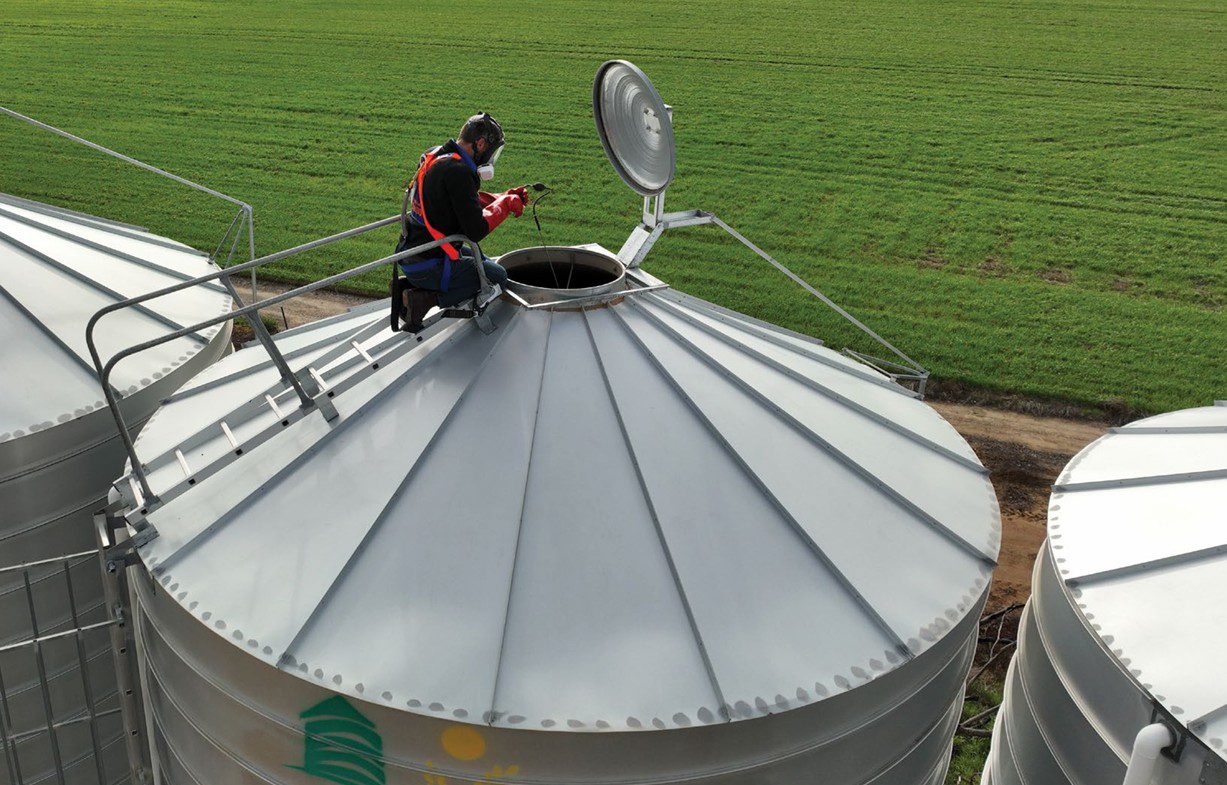
Low-range phosphine meters are used to ensure storages have been vented adequately after fumigation. Photo: Jonathon Kerr via GRDC
THE QUEENSLAND Government has yet to commit to supporting Safe Work Australia regulations that stand to significantly reduce workplace exposure limits (WELs) for phosphine from December.
The position leaves the door open for Qld to become the second state to defer implementation of the regulations, as the Victorian Government has done.
Last month, Victoria announced it would delay the changes until December 2029, citing concerns about implementation costs, monitoring capability, access to occupational hygiene expertise and the impact on small and medium-sized businesses.
The move comes as the New South Wales regulator steps up an awareness campaign ahead of implementing the lower limits from December 1.
Safe Work Australia has set a new workplace exposure limit for phosphine of 0.05 parts per million (ppm), down from 0.3ppm, with the change to take effect on December 1 under the Workplace exposure limits for airborne contaminants regulation.
Grain Central understands Australia’s impending phosphine limit is lower than those in place in other major grain-exporting countries.
While the national body has set the incoming phosphine limits, responsibility for adopting, regulating and enforcing them as part of workplace health and safety laws ultimately rests with Autralia’s state and territory regulators.
Qld indecision
A spokesperson from Workplace Health and Safety Queensland said the state regulator was still contemplating its options for transitioning to the new levels.
“The Queensland Government is still considering the options for transitioning to the new workplace exposure limits, including whether longer transition periods are required for certain chemicals,” the spokesperson said.
“Any change to workplace exposure standards, if implemented, will be clearly communicated to ensure industry understands what is changing and when.
“Workplace Health and Safety Queensland will work with all industry sectors that require further support in understanding compliance as part of its education and awareness activities.”
Based on the statement, if Qld does not implement the reduced limits by December 1, its regulator would appear likely to consider a deferral rather than reject the changes outright.
NSW awareness, enforcement
South of the Qld border, NSW SafeWork appears to be moving forward with the changes and is hosting a webinar on October 27 to prepare industries for changes to WELs to more than 200 different chemicals and substances.
The regulator said employers could prepare for the changes by reviewing safety data sheets and talking to workers to ensure they understood what was changing, as well as knowing when to undertake air and health monitoring and engage an occupational hygienist.
A spokesperson for SafeWork NSW encouraged all businesses to start preparing for the transition to new WELs for airborne contaminants before December 1.
“Preparing early ensures businesses are ready for the new requirements and are better able to protect workers from harmful airborne contaminants,” the spokesperson said.
“To support businesses ahead of the 1 December transition, SafeWork NSW is engaging with businesses across NSW offering resources, business toolkits and awareness information to better understand what is changing when industry moves to workplace exposure limits.
“This includes a stakeholder kit available for businesses and information sent directly to businesses via SafeWork NSW’s monthly newsletter, as well as resources and information published on the SafeWork NSW website and social media channels.”
The spokesperson did not provide details about enforcement of the new phosphine limits from December, commenting that SafeWork NSW takes “targeted actions to prevent or reduce the risk of death, injury and illnesses in workplaces across the state”.
“This includes unannounced proactive visits to workplaces focused on SafeWork NSW’s regulatory priorities to ensure businesses and duty holders comply with their obligations under work health and safety laws.
“These visits also allow SafeWork NSW inspectors to engage with workers, health and safety representatives and duty holders and build a relationship with them based on mutual respect, understanding and a shared commitment to safety.”
To register for the SafeWork NSW webinar, click here.
SA update, WA motion
The South Australian Government has maintained its stance from last month that the changes have been under discussion and consultation for several years.
“South Australia is part of the harmonised national work health and safety framework which is intended to maintain consistent WHS standards across Australia,” a government spokesperson said.
“Changes to workplace exposure limits have been on the horizon for several years, and were the subject of public consultation by SafeWork Australia between 2019 and 2021, and were approved by national work health and safety ministers in 2024.
“The government has met with representatives of the grain industry regarding the changes to the exposure limit for phosphine and to hear their concerns.”

The Nationals WA member for the state electorate of Central Wheatbelt Lachlan Hunter.
SafeWork SA did not provide an update on any specific education campaign for phosphine, but outlined the regulator’s general work ahead of policy changes.
“SafeWork SA provides a range of education information to employers, workers and industry stakeholders to help them prepare for any changes to WHS rules,” a SafeWork spokesperson said.
“This can include fact sheets, webinars, videos and website updates to assist them understand their obligations.”
Following last week’s update on the growing debate over phosphine policy in Western Australia, Central Wheatbelt Nationals MLA Lachlan Hunter has continued to raise the issue in state parliament.
Mr Hunter on September 17 flagged that he would move a motion in the Legislative Assembly at the next sitting date seeking to defer implementation of phosphine limits.
The full motion reads:
“That this house calls on the Cook Labor government to delay the implementation of new workplace exposure limits for phosphine until the government can demonstrate that the changes can be practically implemented without compromising worker safety, grain quality, biosecurity or the international competitiveness of Western Australia’s grain industry.”
The next sitting date for WA’s Legislative Assembly is October 13.
Grain Central: Get our free news straight to your inbox – Click here
HAVE YOUR SAY