
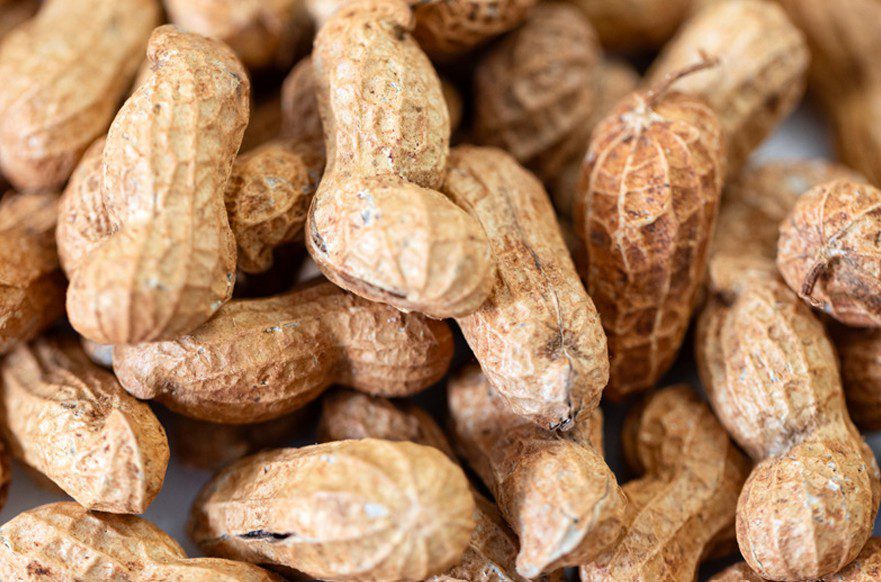
QUEENSLAND peanut growers are calling for an urgent investigation after independent testing found imported peanuts sold in Australia were capable of germination, raising questions over whether products labelled as roasted had in fact been sold raw.
Raw peanuts cannot legally be imported into Australia without a Department of Agriculture, Fisheries and Forestry import permit and processing at an Australian Quarantine and Inspection Service-approved quarantine facility.
By contrast, roasted and other processed peanut products are not subject to the same level of biosecurity controls.
South Burnett peanut grower Peter Howlett believes the importation of raw peanuts could wipe out the entire peanut production in Australia.
“Countries like Brazil carry Peanut Smut, a devastating soil-borne disease currently not present in Australia, and which can slash peanut yields between 40 and 70 percent” Mr Howlett said.
“Once it’s in Australian soil, it’s almost impossible to eradicate.”
Federal Member for Maranoa David Littleproud said importers appear to be deliberately miscoding products on customs documentation to avoid biosecurity requirements placing the nearly 100-year-old Australian industry at risk.
He said he has written to Federal Agriculture Minister Julie Collins urging an immediate investigation by the DAFF.
“This is a serious biosecurity breach. These peanuts are being sold Australia-wide, and independent testing has confirmed they are raw,” Mr Littleproud said.
“The government must act before the it’s too late.
“The imported raw peanuts need to be recalled immediately and destroyed.”
A DAFF spokesperson said the matter was being assessed by the Department.

David Littleproud.
“All imported goods must meet strict biosecurity import conditions, and reports of potential non-compliance are thoroughly investigated,” the spokesperson said.
“We are taking this report seriously, and will take strong enforcement action where non-compliance is identified.”
Peanut products are subject to testing under the Imported Food Inspection Scheme and are classified as a risk food due in part to the potential presence of aflatoxins.
Aflatoxins are highly toxic, cancer-causing toxins produced by certain moulds that can contaminate crops, including peanuts.
According to DAFF’s Failing Food Reports, over the past six months there have been several cases of peanut products being refused entry into Australia due to excessive levels of aflatoxins.
The products have ranged from roasted, blanched, salted and coated peanuts to peanut butters and confectionery, and have originated from China, Vietnam, India, Taiwan, Argentina, the Philippines and Uganda.
Peanut crop in decline
A recent Peanut Crop Improvement Plan report by the Grain Research and Development Corporation says Australia produces an average of 12,000 tonnes of peanuts annually, with 2026 farmer stock forecast at 8000-9000t.
The figure has been in decline since production peaked in the late 1970s and was forecast to fall further.
“Production is highly concentrated in Queensland and is vulnerable to climatic variability, particularly in dryland systems, despite a historical shift toward irrigated production to improve reliability,” the report said.
“At the same time, domestic demand continues to grow modestly, driven by consumption of peanut butter and snack products, creating a widening gap between local supply and consumption.”
With domestic demand for peanut products “significantly exceed[ing] local supply” this has reinforced Australia’s reliance on imports.
The report estimates that Australia imports about 40,000t per annum “with growth driven by lower-cost international supply, consistent quality (including high oleic varieties), and declining domestic production capacity because of inability to compete from import price”.
It said the Australian industry was “not well positioned to fully capitalise” on the opportunities of the strong “global market fundamentals for peanuts”.
“Declining production, increased reliance on imports, limited agronomic support, and a historical shift toward lower value market segments have constrained the industry’s competitiveness and growth potential.
“As a result, it is most likely that the gap between domestic supply and demand is likely to persist or widen, further entrenching reliance on imported product despite favourable global demand conditions.”
The report highlighted opportunities for growth, including through increased coordination and investment in production capacity.
“However, such challenges also present opportunities, with great coordination and collaboration across the value chain, investment in production capacity and capability and a strategic focus on higher-value market segments and alternative uses, the industry has the potential to strengthen its position and capture a greater share of both domestic and export market growth.”
Grain Central: Get our free news straight to your inbox – Click here
HAVE YOUR SAY