
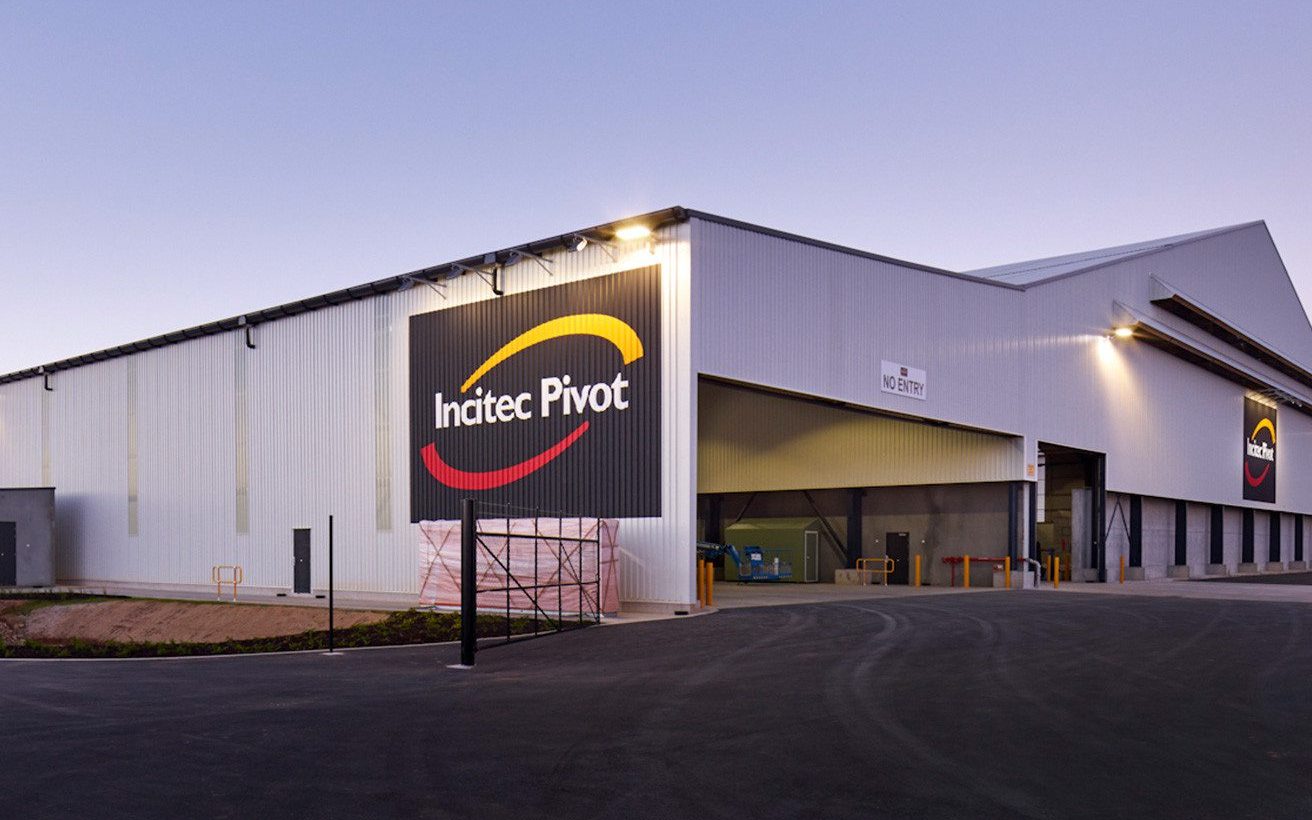
Incitec Pivot Fertilisers Port Adelaide facility. Photo: IPF
RIDLEY has confirmed that the integration of the recently acquired Incitec Pivot Fertilisers distribution assets is on track, seven weeks after the purchase was completed.
In May, the ASX-listed agribusiness announced it would purchase IPF’s distribution business for $300 million.
The network includes 13 primary distribution centres supported by seven regional service centres, and three Easy Liquid distribution sites.
Ridley managing director and CEO Quinton Hildebrand
The deal also featured the option to purchase the IPF’s North Shore site, formerly a single super phosphate (SSP) fertiliser plant and distribution facility, in Geelong for an additional $75M.
During the company’s annual general meeting held on Wednesday, Ridley managing director and chief executive officer Quinton Hildebrand said work was progressing to move the operations into a pure-play distribution business.
“We are midway through conducting a thorough review of Incitec Pivot Fertilisers and have a dedicated project management office to accelerate this process,” Mr Hildebrand said.
“This involves the transition of the business from a manufacturing business into a distribution-only business and the migration of this business on to the Ridley systems, which we are calling ‘integration’.
“Within these changes we have the opportunity to drive efficiency and a greater customer orientation.”
The integration phase also includes the consideration of capital-efficiency opportunities and the development of a profit-improvement plan.
“This business is the market leader in its sector, with the benefit of a strong brand, well-located port and distribution assets, and technical competence.
“It is off this solid foundation we see the opportunity to streamline the operations and enhance customer service.”
Mr Hildebrand said the company would operate across three business units: bulk stockfeeds, packaged feeds and ingredients, and fertilisers.
He said these divisions will be operated “as a separate business unit” and will have “their own growth agenda”.
“They will be supported centrally by effective shared service teams, instilling a culture of performance, commerciality and growth.”
Geelong, Phosphate Hill
During the AGM, shareholders questioned Mr Hildebrand and Ridley chair Mick McMahon about key uncertainties surrounding the fertilisers business unit.
One shareholder questioned the impact of the potential closure of Dyno Nobel’s only remaining phosphate production facility, Phosphate Hill, in north-west Queensland.
Formerly an integral part of Dyno Nobel’s fertiliser operations, the site is scheduled to cease production by September 2026 if a new owner is not found by March 2026.
Mr Hildebrand said the company had “foreshadowed” the impact of the closure in its equity-raising documents.
“The contribution to the fertiliser distribution business from having access to their Phosphate Hill production was about $8M per annum.”
He said these documents had worked on the assumption that Ridley would lose this contribution by September.
Another shareholder asked whether Ridley had any concrete plans around the potential acquisition of the North Shore site.
Mr McMahon said the company had “some years to work through that” and would be consulting all stakeholders “as to future uses of that site”.
Mr Hildebrand said analysis was ongoing as to whether the North Shore facility, and the other Geelong site, Oyster Cove, would be required by Ridley’s fertiliser operations.
“We do not expect to take ownership of North Shore for a few years, given that Dyno Nobel is obligated to remediate the industrial factory part of that site.
“We are just doing preliminary work to assess its requirement and, thereafter, whether we need that facility or not.”
Business update
Mr Hildebrand said the company had been performing as expected since its financial year 2025 results were handed down in August.
He said a growth in earnings for the bulk stockfeeds business had offset the impact of selling the Wasleys Feedmill.
“This has been through continued supplementary feeding of beef and sheep, broiler and layer volumes returning to historical growth rates and ongoing contributions from Ridley Direct.
“In the packaged and ingredients segment, ingredient recovery has endured margin pressure from continuing low protein meal prices and short-term supply constraints impacting OMP ovine raws linked to lower industry slaughter numbers as evidenced by the graph.
“[IPF] is contributing in line with expectations following a strong first month of trading in a low seasonal demand period.”
NovaqPro progress
Mr Hildebrand also gave a brief update on the progress of its NovaqPro product, following a shareholder question.
Developed by the CSIRO, NovaqPro is a prawn “booster” supplement designed to increase growth, disease resistance and overall health.
The product is the sole remaining part of Ridley’s aquafeed operation, from which it has been slowly stepping away.
He said Ridley hoped this “lower-volume, higher-value product” would “be better suited for the global market”.
“In the last 12 months, we’ve gained market access in India, Thailand and Indonesia and we’ve commenced making modest sales in those markets and are getting the results that we would like to have.
“So that’s showing some promise.
“However, it is a long journey to commercialise a product in overseas markets, so it’s a bit early to say whether NovaqPro will fulfill our aspirations but at this stage we’re comfortable with the progress made.”
Grain Central: Get our free news straight to your inbox – Click here
HAVE YOUR SAY