
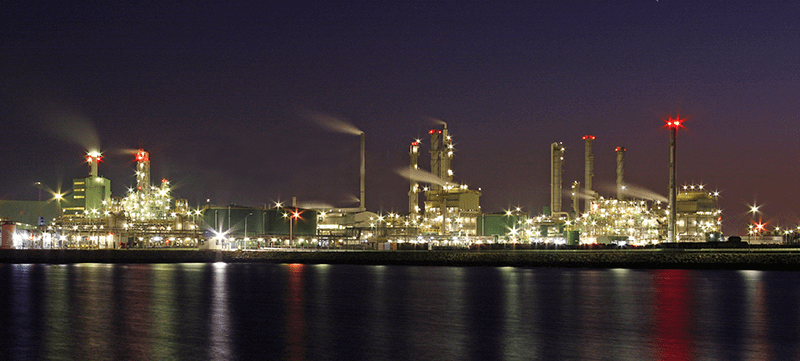
Urea manufactured in Middle East nations including Bahrain cannot be exported amid the current conflict between Iran and US-Israeli forces: Photo: Gulf Petrochemical Industries Co.
PRICES for urea have jumped by around A$150/t in recent days in response to the Middle East conflict, which has closed the Strait of Hormuz to shipping, halting the movement of urea to Australia from its key supplying region.
While phosphate for Australian winter-crop planting from next month has mostly arrived from the Middle East and Morocco, sources have told Grain Central there is little unsold urea in the country ahead of the in-crop demand period from May.
What does become available is likely to cost at least $1000/t, up from around $850/t this time last week.
Shipping has stopped largely because of the threat of drone strikes, part of the conflict between Iran and United States-Israeli forces.
If vessels carrying urea can secure escorts to protect them through the troubled zone, exports may be able to resume in the the face of conflict.
However, this appears highly unlikely in the immediate future, and uncertainty about urea supply stretches all the way to summer crop, which will be planted from August.
Australia can source urea from manufacturers in Brunei, Indonesia, and Malaysia, but availability and pricing to compare with what was available out of the Middle East last week may be a challenge.
Sources have told Grain Central some urea cargoes bound for Australia are on their way, but that resellers were not taking orders for unpriced product until the vessels berth or discharge.
Peak body Fertilizer Australia has been contacted for comment.
Costly urea vs cheap grain
Queensland’s AgForce grains president and western Downs grower Brendan Taylor said growers were already “crunching the numbers” on growing barley at $300 per tonne on farm, a high-end projected yield of 5t/ha, and urea which could get up to its COVID-years high of $1200/t.
“The break-even line goes backwards quickly at those kind of prices,” Mr Taylor said.
Urea rates of 100-400kg/ha for cereals are common, and canola can require more.
In contrast, pulses like chickpeas, faba beans, and lentils require little or no urea, which may help to counter their low-decile pricing at present in growers’ minds.
“Chickpeas are certainly a big option for winter crop around here.”
Looking further ahead, cotton and sorghum’s big appetites for urea may curb summer-crop area.
“It will have a drastic impact on summer crops that people will start preparing for in August-September.”
Mr Taylor said the urea price hike and throttling of availability was already putting Australia’s vulnerability to supply chain shocks in the spotlight.
“That revolves around our oil and gas policies.
“What do we need to encourage manufacturing in Australia?”
Third major supplier gone
Australia has in the past imported large volume of urea from China, which currently has an export ban in place, and Russia, which has sanctions against it in response to its war on Ukraine.
This means Middle East suppliers like Bahrain, Kuwait, Qatar, and Saudi Arabia have become key sources, and none of them can export following the escalation of hostilities over the weekend.
“What we’re trying to work out is the length of the war; is it short, or medium to long-term?” Marnco managing director Mark Been said.
Marnco is an importer and distributor of fertiliser in Australia and New Zealand.
“Globally, the price of urea has gone up, the cost of gas has gone up, and major exporters of urea are unable to export.”
“Supply chains are so tenuous at the moment.”
“If there was one takeaway from this, it shows we’ve relied on consistent supply from the Middle East.”
The fob price of urea last week was around US$480/t; it has now risen to a $580/t, a nominal price only because urea ex Middle East is not available.
Riordan Grain Services chief commercial officer Mark Lewis said DAP and MAP requirements were largely covered for the grower, but urea was a different story.
“We need to see what happens with urea,” Mr Lewis said.
“If the manufacturing can’t come out of the Middle East, there are other regions it can come from, but at what cost?”
Upper SA growers eye market
In South Australia, soaking rain has fallen in the past week in a number of marginal cropping areas across the Upper Eyre Peninsula, and the Upper North.
It points to their best start to the season in years, and at EP Integrated Commodities, Kimba, Steve Whillas said growers have mostly got their seeding requirements covered.
If rain keeps falling, those growers will be looking for urea to top-dress and maximise yield potential in cereal crops, and possibly canola.
“I’m pretty sure growers will be looking for urea…and a lot will be concerned if they can’t get it, and about petrol and diesel prices too.”
“There are a lot of questions, and I don’t think there are too many answers out there yet.”
“Resellers are probably getting inundated with inquiry.
“If it’s a short-term issue, hopefully it settles down before we need urea.”
Grain Central: Get our free news straight to your inbox – Click here
all Fertilizer Prices hit too high levels under impact of Iran War … huge confusion in all markets …
you can source Urea from Kazakhstan or from Southeast Asia … Southeast Asia it’s better for Australian Markets …
Regards
Noorchem40.blogspot.com