
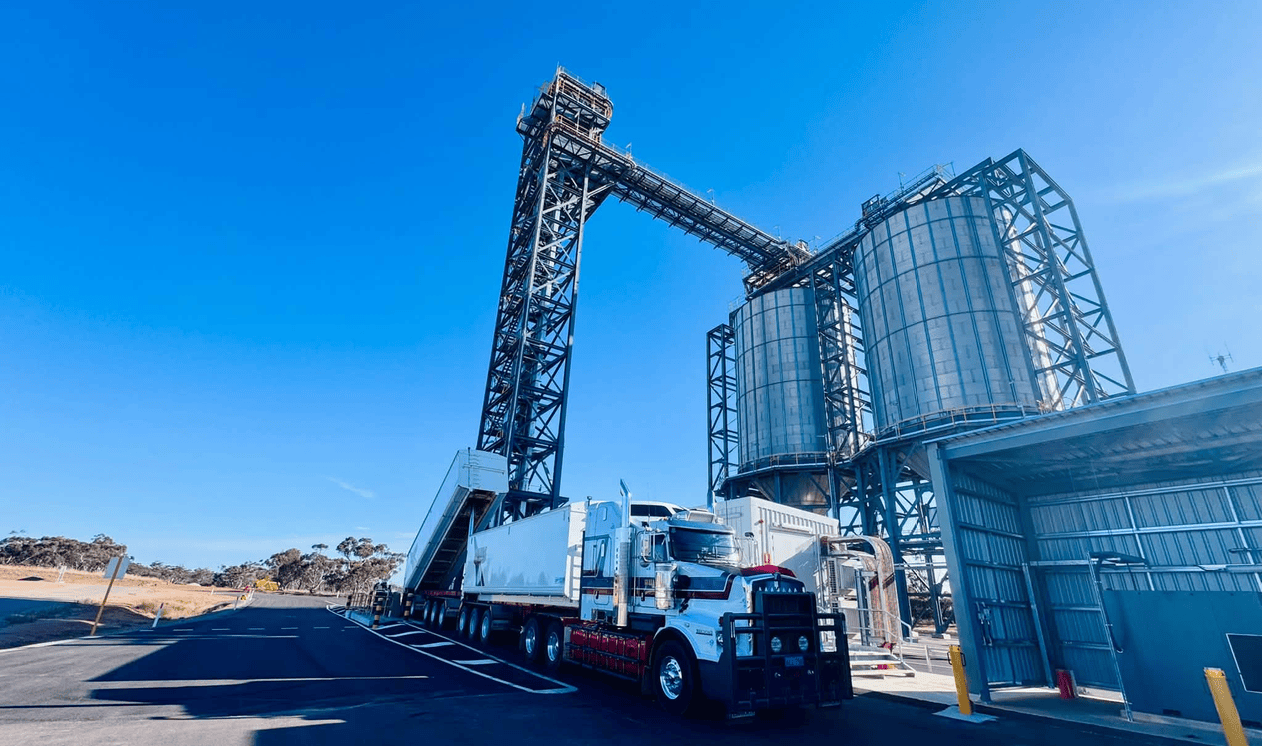
Deliveries from the 2026-27 harvest into WA bulk-handling sites, including CBH Group’s Konnongorring, have started. Photo: Auhl’s Transport, Wongan Hills
THE Western Australian Government has today announced it will extend the timeframe for implementation of tougher workplace exposure limits (WELs) for phosphine by three years.
The announcement, made by WA WorkSafe and Industry Relations Minister Simone McGurk, has been warmly welcomed by Grain Producers Australia.
It follows in the footsteps of first Victoria and then South Australia, which GPA said have already suported the grain sector by not implementing tightened limits on the grain fumigant as of December 1, in line with tougher restrictions set by Safe Work Australia (SWA).
Although the SWA mass review of contaminants of more than 600 airborne contaminants has been under way for several years, GPA said news of the tighter limits has seen the Australian grains sector scramble to establish what is changing and that can be managed.
“GPA are deeply committed to safe workplace standards, but this new phosphine exposure limit would have seen a real risk to Australia’s biosecurity and trade,” GPA chair and northern New South Wales grower Matthew Madden said.
“With these delays from Western Australia, South Australia and Victoria, we’re hoping that the other remaining states now follow suit.
“The new standard would make Australia’s phosphine exposure standard out of touch with the rest world, including the EU, UK, USA, Canada and Argentina.
“There isn’t really a viable alternative for grain growers to fumigate stored grain against pests, and support our biosecurity and trade, so this looming change has been deeply concerning to our growers.
“The Australian grain sector has been facing monumental challenges recently, including fuel and fertiliser supply and price challenges caused by the Iran war, we don’t need any further undue burdens.”
Ms McGurk said she acknowledged the concerns raised about practical measurement of the revised phosphine limit and the possible impacts on grain holding times, storage capacity, and supply chains.
“We have listened to industry and while worker health and safety is paramount, the government recognises that there are practical challenges in bringing in the lower phosphine limit in December,” Ms McGurk said.
“In recognition of these challenges, and consistent with the approach being taken in Victoria, the government has determined to provide the extended transition period.
WA’s Agriculture and Food Minister Jackie Jarvis said phosphine plays an important role in protecting grain from insect pests and maintaining access to markets.
“We have listened to growers and the grain industry, who have raised concerns about whether the new exposure limit can be reliably measured and practically implemented under the current timeframe,” Ms Jarvis said.
“The further three-year period should provide sufficient time for the practical issues to be resolved, so it is important that industry uses this time to make all necessary preparations.”
Source: WA Government, GPA
HAVE YOUR SAY