
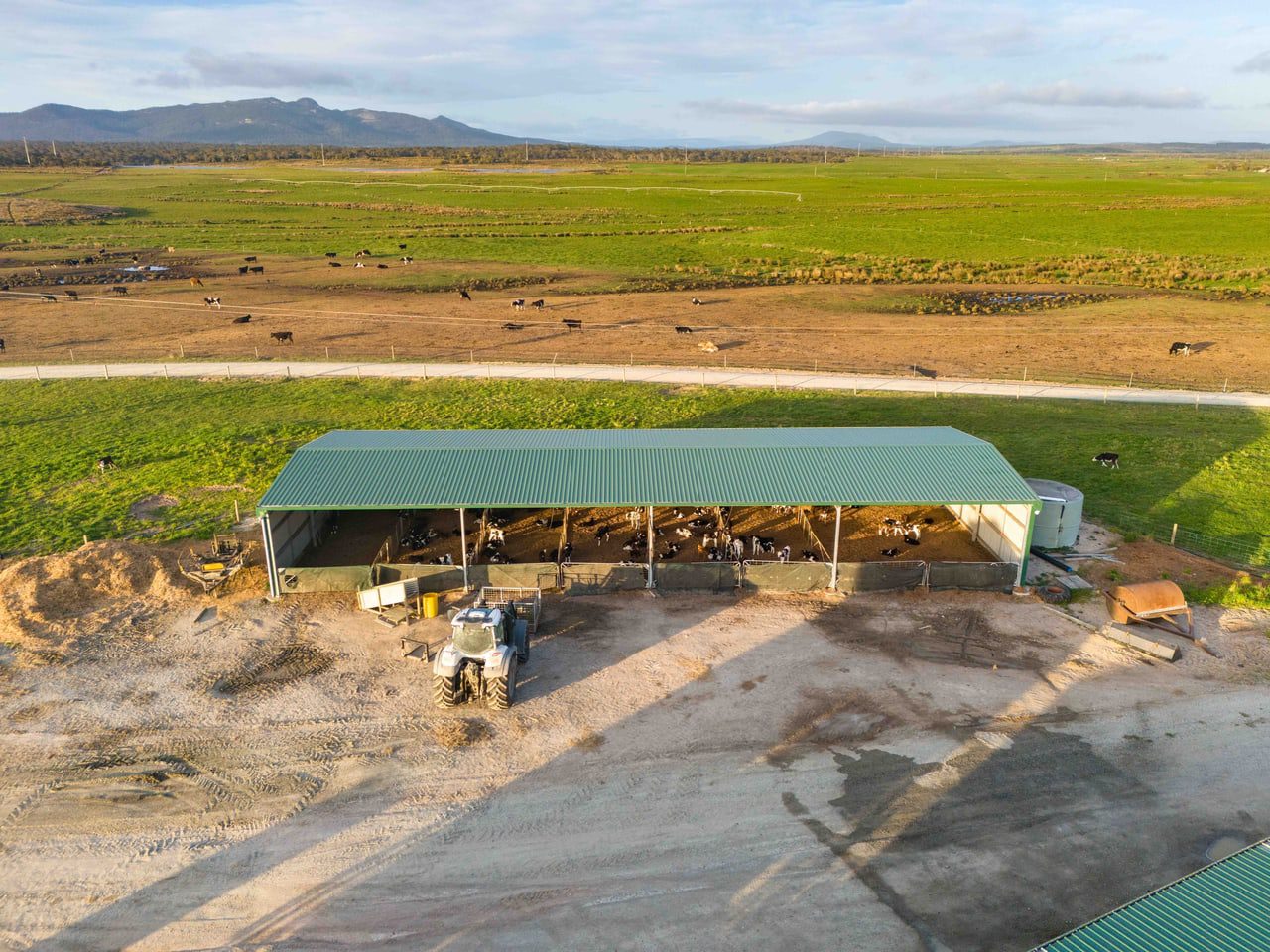
Rushy Lagoon has been running as a dairy and beef operation, and is Tasmania’s largest farm. Photo: LAWD
TASMANIA’S biggest farm, Rushy Lagoon, appears set to be sold to Gresham House, one of the United Kingdom’s largest managers of forestry plantations.
The sale of the 21,744ha property is subject to approval from Australia’s Foreign Investment Review Board, and was the subject of questioning from Tasmanian Senator Richard Colbeck in the May 27 Senate Estimates hearing.
As part of the Regional and Rural Affairs Committee, Mr Colbeck probed Department of Agriculture, Fisheries and Foresty deputy secretary Matt Lowe about the potential impact of a change in the holding’s land use.
“What conversations or consultation is there with DAFF in consideration of the sale of Rushy Lagoon in north-east Tasmania?” he asked Mr Lowe, following similar questioning in a previous Senate Estimates session.
“The suggestion is that British forestry investment organisation Gresham House is seeking approval through FIRB to purchase it to grow trees,” Mr Colbeck said.
“I know it has the local Tasmanian farmers and the local agricultural community very concerned.”
The impending sale has been widely reported, and Mr Colbeck said a switch at Rushy Lagoon out of milk and beef production would have implications for the region.
“Potentially, the viability of dairy pick-ups into the north-east gets impacted if that milk volume is lost.
“It also runs a lot of cattle.”
Mr Lowe could give nothing away.
“Senator, I want to manage your expectations here,” Mr Lowe said.
“There will be quite severe limitations on what we’re able to comment on due to the commercial sensitivities associated with the matter.”
Mr Colbeck expressed concern about a knock-on effect to beef processing in Tasmania if Rushy Lagoon were to move out of livestock.
“Our meat processing in Tasmania has diminished significantly already, with most of the sheep going to the mainland to be slaughtered and processed; I don’t want to see that happen for beef as well.”
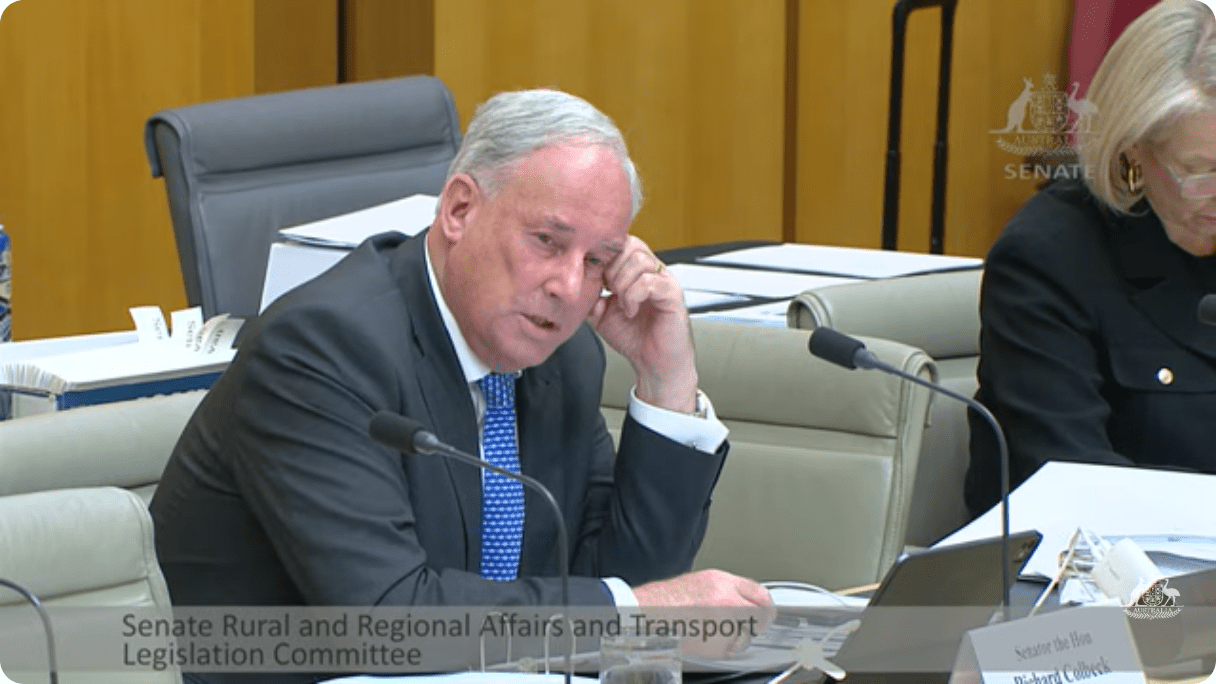
Tasmanian Senator Richard Colbeck questioning DAFF officers in Senate Estimates on May 27 over the potential sale of Rushy Lagoon.
Mr Colbeck said he understood that the FIRB has “pushed the decision back three times” over the sale of Rushy Lagoon to Gresham House.
“The catcalling I’m getting is that it relates to community concerns.
“I feel very legitimate in expressing that community concern that is coming to me from the ag sector more broadly in Tasmania.
Potential conflict of concern
Tasmanian agricultural advocacy group TasFarmers has been lobbying members of the Regional and Rural Affairs Committee about what it says are governance issues surrounding the proposed sale of Rushy Lagoon and the ongoing FIRB assessment.
It has also been vocal in its concerns about the impact the conversion of Rushy Lagoon to forestry may have, and a perceived conflict of interest.

CEFC chair and FIRB director Steven Skala. Photo: CEFC
This ostensibly pertains to Clean Energy Finance Corporation chair Steven Skala being a FIRB director, and CEFC providing incentives to carbon-farming investments.
In a statement released this week, TasFarmers said another extension of the FIRB review has intensified community scrutiny of the process, as have concerns that government-backed equity may be part of the project’s financing arrangements.
“If government entities have a financial interest in the project while government agencies are responsible for assessing the transaction, there must be absolute confidence that appropriate safeguards are in place.” TasFarmers chief executive officer Nathan Calman said.
While TasFarmers respected the role of the FIRB, and the importance of an independent assessment process, Mr Calman said “even the perception of a conflict can damage trust in the process.”
“Our concern is that public confidence in that process can be undermined where there are real or perceived conflicts that have not been clearly addressed, there’s no transparency, and the community has expressed there is no social license for the sale of Rushy.”
“Farmers, regional communities and the broader public deserve confidence that investment decisions are being made independently and solely in the national interest.”
TasFarmers said the proposed sale of Rushy Lagoon to Gresham House was likely to intensify scrutiny of the CEFC and the FIRB, and Mr Calman said TasFarmers’ message to the Senate Estimates committee members was simple: “This is about maintaining trust in Australia’s foreign-investment system.”
Mr Calman said a community impact survey of 329 respondents showed 99 percent of them did not support the subsidised sale of Rushy to a foreign-owned corporation.
“Whatever the final decision, regional communities need confidence that it has been reached in a fair, transparent and free from conflicting interests.”
Grain Central: Get our free news straight to your inbox – Click here
HAVE YOUR SAY