
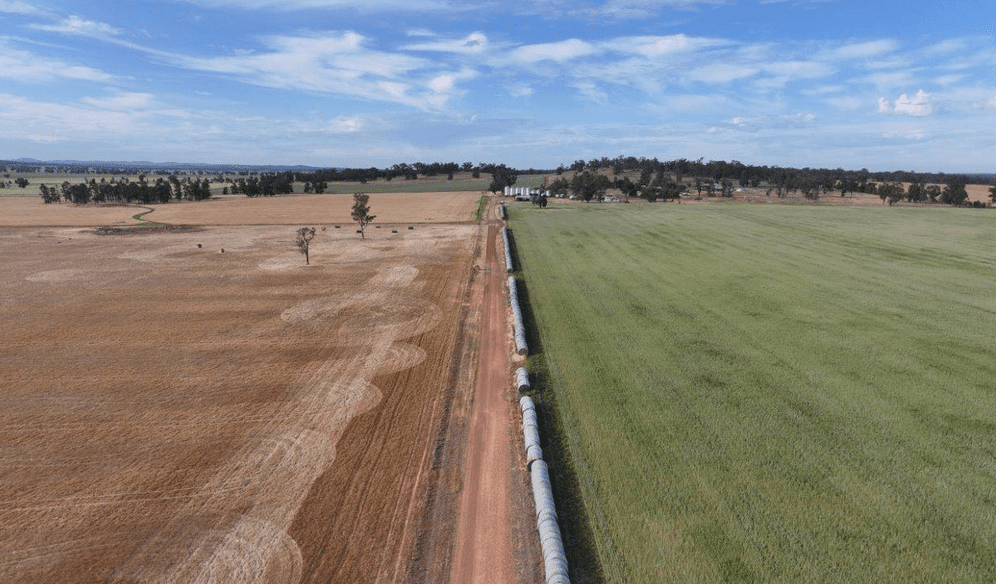
North-east of Temora in southern NSW, the 696ha Wyoming recently sold to two neighbours to indicate the appetite for expansion in reliable cropping areas. Photo: Miller & James
A NEW report has found grain production remains above average in most cropping regions of Australia, but soft commodity prices, and higher fuel and fertiliser costs and interest rates are shaping both grower margins and buyer behaviour.
In Herron Todd White’s latest month in review, agribusiness valuer Mitchell Boylan looks at what is happening on a state-by-state basis.
Northern NSW
Mr Boylan said northern New South Wales is closing out the 2025-26 season with a mixed but broadly positive production story.
“Winter grain production forecasts are around 18.3 million tonnes across New South Wales – down about 10 percent year on year but still comfortably above the long-term average.”
Mr Boylan said yield performance has been highly variable.
“Wheat, barley and canola have generally held up better in northern districts, while southern areas have been patchier, reflecting uneven spring rainfall.”
“Sorghum production is lifting on the back of good stored soil moisture and solid early returns, improving the gross margin mix for some northern operations.”
Mr Boylan said commodity values were relatively soft through the early part of the year, pressured by ample supply, a firmer Australian dollar and muted export demand.
Even so, he explained some northern NSW feed grain markets have traded firmer, supported by domestic consumption and pockets of tight local supply.
On the cost side, Mr Boylan said global fuel price rises linked to the Middle East conflict have lifted diesel and petrol prices and tightened availability in some areas, adding pressure to harvest and freight logistics.
“Higher fertiliser pricing and supply uncertainty are compounding the squeeze on margins.”
Seasonal conditions remain the key swing factor into 2026-27, according to Mr Boylan.
“Northern districts are carrying reasonable moisture, while parts of southern NSW have experienced drier spells.
“The next rainfall sequence will influence planting momentum and yield potential.”
Southern NSW
Mr Boylan said in early 2026, the southern NSW cropping property market was showing slower activity across most asset types.
“While there were some strong results late in 2025, listings are taking longer to shift as buyers and vendors factor in higher borrowing costs, patchy rainfall and rising fuel and fertiliser prices.”
Adjusted for inflation, Mr Boylan said grain prices remain modest and many operators appear reluctant to expand under current cost and interest rate settings.
“Where transactions have occurred, competition has been strongest for well-located arable country, with non-arable land showing a softer tone.”
“A handful of sales west of Wagga Wagga, many via auction, point to stabilising arable values and a clearer price discount for non-arable land classes.”
Mr Boylan said buyer feedback suggests limited allowance for farm improvements, particularly older infrastructure that is less functional or requires immediate capital spend.
“North and north-west of Wagga Wagga activity has been sparse, with most movement occurring through smaller, neighbour-to-neighbour off-market transactions.”
He said recent rainfall has been welcome but not yet decisive enough to be considered a full autumn break.
“It has supported pre-sowing weed control and allowed growers to hold off in anticipation of follow-up rain before committing to canola and barley programs.
“Overall, purchasers are adopting a wait and see stance, watching for rainfall confidence, any easing in fuel and fertiliser pricing and whether grain prices lift amid global disruption.”
Southern Queensland
Southern Qld has continued to show resilience, according to Mr Boylan, with well-located grain assets, particularly across the inner Darling Downs, remaining keenly sought after.
“Late 2025 market evidence indicates high-quality dryland cultivation country on the tightly held Bongeen Plains traded around $22,239/ha ($9000/ac) to $24,710/ha ($10,000/ac), reflecting strong demand for productive, strategically positioned holdings.”
“Secondary Darling Downs locations have also recorded firmer pricing, typically in the $11,120/ha ($4500/ac) to $14,085/ha ($5700/ac) range, although these markets remain more sensitive to broader macroeconomic settings.”
Recent auction outcomes from the balance of the One Tree Portfolio have reinforced this upward momentum.
Key external pressures persist, with Middle East instability affecting global fuel supply chains and critical inputs such as urea, keeping fertiliser pricing elevated and availability a near-term risk.
Mr Boylan said seasonal confidence has improved following late summer rainfall across key growing districts, lifting soil-moisture profiles ahead of the winter program.
“Wheat and barley values have edged higher since late 2025, offering some support – particularly for growers holding on-farm inventories.”
“Feedgrain demand remains robust, supported by sustained high use in intensive livestock sectors – estimated around 92 percent, including feedlots.”
While short-term volatility is expected given input-cost pressure and supply chain uncertainty, Mr Boylan said favourable moisture, improving pricing signals and strong domestic demand continue to underpin values for quality grain country across south-eastern Qld.
Western Australia
Mr Boylan said WA has delivered a sustained run of strong grain seasons over the past five years, driving demand for farmland, lifting values in many districts and supporting ongoing reinvestment in machinery and on-farm infrastructure.
“The 2025-26 season concluded with a record harvest of 27.35 million tonnes of grains, seeds and pulses.”
“It marks a 20Mt plus crop in four of the past five seasons and sets a new state benchmark for the third time in five years, surpassing the 2021-22 crop (over 24Mt) and the 2022-23 crop (over 26Mt),” Mr Boylan said.
A later start was offset by above average August rainfall across many regions, follow-up rain through September, and mild temperatures during key growth stages.
Mr Boylan identified margin pressure as a defining theme, with historically high input prices, elevated operating costs (including fuel), soft commodity values and a cash rate hike because of an upward trend in inflation which has been occurring since mid-2025.
“In pricing terms, wheat has been relatively stable but with limited upside given large global 2025-26 production estimates and values at some of the lowest levels seen in the past five years.”
“Price forecasts for barley are also soft due to a well-supplied market off the back of high local and good global levels of production; however, the outlook for canola is currently more positive due to trade tensions between China and Canada and an expected tightening in supply towards the end of 2026.”
Despite the headwinds, Mr Boylan said demand for property has largely exceeded supply over recent seasons, underpinning value growth across many regions after a period of limited transactional activity in some localities.
“Following the record harvest and a significant early February rainfall event across parts of the Mid-West, Central and Central West Wheatbelt, sentiment has improved, although buyers remain highly selective.”
“With a subdued price outlook and sustained high operating costs, currently being exacerbated by Middle East instability, cost efficiency will be central to profitability in the coming season.”
“While it is too early for definitive trends to emerge, the conflict has the potential to influence fuel, fertiliser and freight settings and, in turn, rural property markets over the next 12 months.”
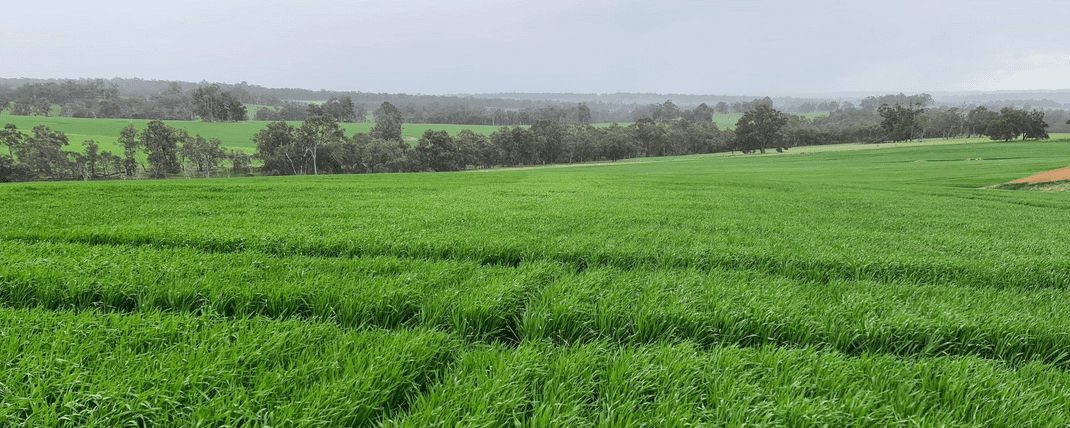
Kookaroo Farm at Frankland River in WA’s Great Southern recently sold for $15,926 per arable hectare. Photo: Nutrien Harcourts
Mr Boylan said across the Wheatbelt, Great Southern and Mid-West, buyer demand remains strong but segmented.
“Price outcomes are being shaped by local supply, recent sales activity (and pent-up demand), property quality and the total dollar amount rather than per arable hectare.”
While several transactions above $25 million have occurred in the past 12 months, Mr Boylan said the deepest buyer pool is for smaller, well-developed add-on holdings with desirable soil types and for tightly held districts with limited turnover.
Recent sales reflecting this trend include:
- 1322ha Charlies near Mallee Hill (1205 arable hectares) sold for $7.02M in October 2025, reflecting $5826 per arable hectare.
- 1882ha Kookaroo Farm near Frankland River (1350 arable hectares) sold for $21.5M, reflecting $15,926 per arable hectare.
- 405ha Rockdale near Walgoolan (385 arable hectares) sold for $1.625M in February 2026, reflecting $4195 per arable hectare.
- 351ha 1594 Qualen West Road near Talbot (300 arable hectares) sold for $6M in August 2025, reflecting $20,000 per arable hectare.
South Australia
In SA, Mr Boylan said cropping values continue to show clear regional differences.
“Reliable-rainfall areas with consistent production are maintaining strong buyer interest, in contrast to more marginal country where variable rainfall increases production risk and lengthens selling timeframes.”
After consecutive difficult seasons across parts of the state, ranging from well-below average to near-record low rainfall, Mr Boylan noted buyer appetite for marginal blocks has been restrained.
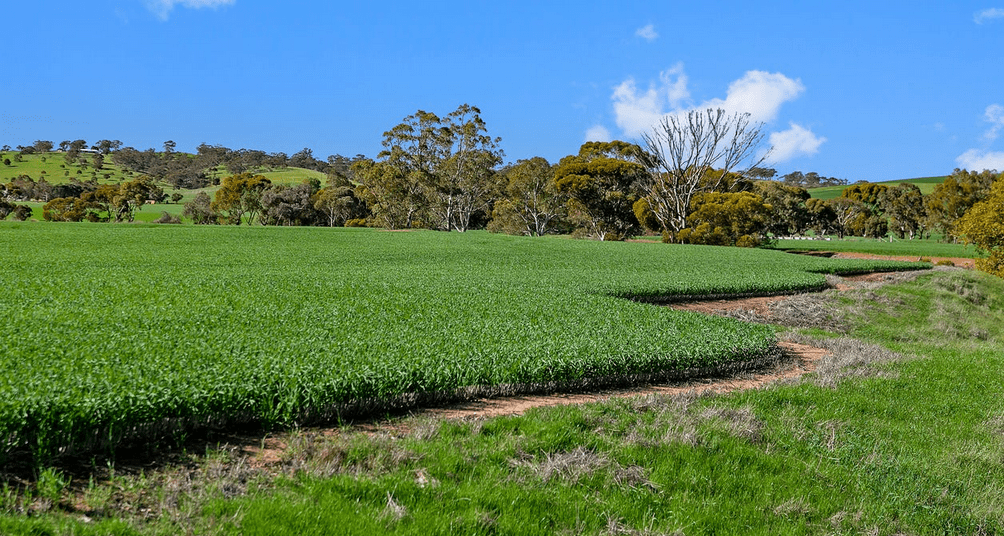
The 323ha Argyle Farm at Alma north of Adelaide set a district record last year of $37,152ha. Photo: Ray White Rural
Reliability continues to attract a premium. For example:
- In March, 37ha Ryans near Freeling sold for $1.64M or $43,815/ha, highlighting depth of demand for smaller, premium-end cropping blocks.
- Likewise, 323ha Argyle Farm near Alma sold late last year for $12m or $37,152/ha and set a district record at the time.
- On the Yorke Peninsula, the 143ha Masons near Arthurton sold for $5.922m or $41,441/ha.
Heading into the new season, Mr Boylan said growers will be watching fuel availability, fertiliser pricing and broader cost volatility.
“Recent rainfall events across parts of the state have improved confidence, but input costs remain the key watchpoint.”
Victoria
Widespread late February rainfall across much of western Vic and southern NSW has set up the prospect of a large 2026 cropping program, with many growers now reporting full moisture profiles.
With cereals and legumes still offering lacklustre pricing, Mr Boylan said maximising yield will be critical.
“Elevated input costs and lower commodity values have tightened margins over the past year.
“Some growers have carried a larger than usual portion of the 2025 crop into storage, waiting for a pricing improvement.”
Some suggest as much as 20Mt, or around 30pc of the national crop, may be stored on farm.
However, Mr Boylan said any short-term lift in grain prices may be offset by higher fuel and fertiliser costs linked to the Middle East disruption, potentially prompting some stored grain to be sold to fund sowing and in-crop nutrition programs.
“There have been few significant cropping farm sales in the past six months.
“Smaller parcels have continued to transact at comparatively firm levels, while larger holdings, particularly in traditionally safer rainfall areas such as the Wimmera, have shown some easing.”
Source: Herron Todd White
HAVE YOUR SAY