
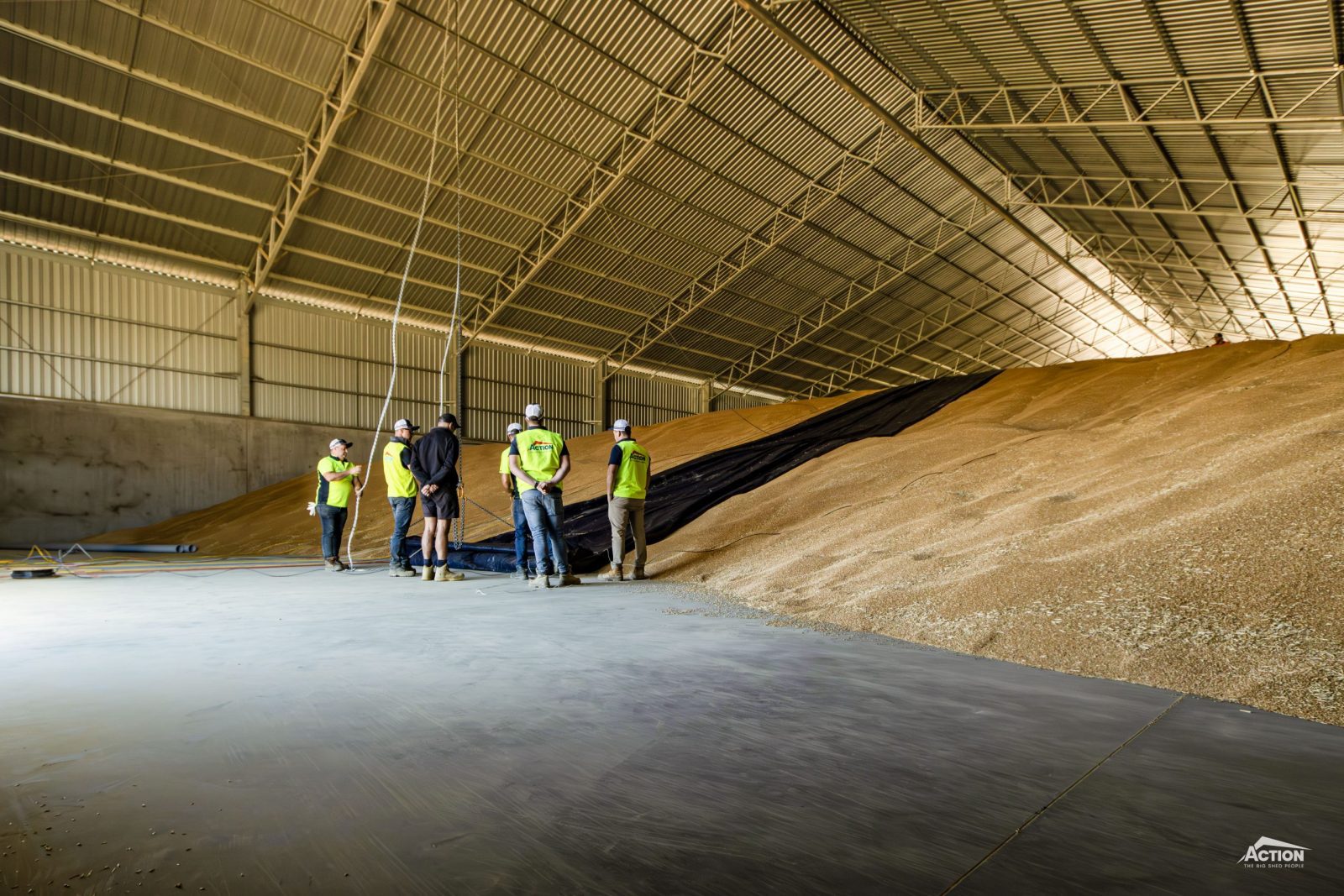
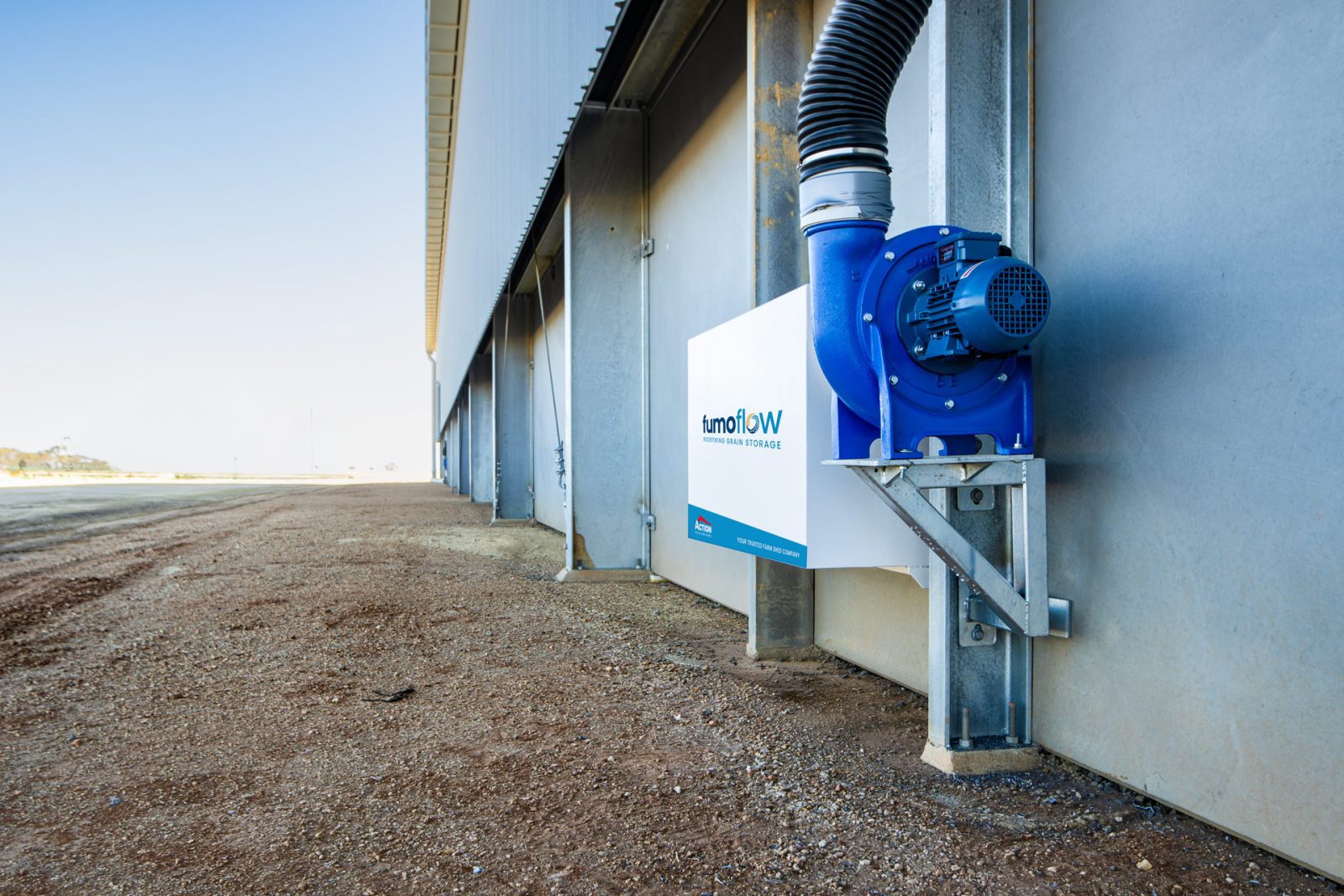
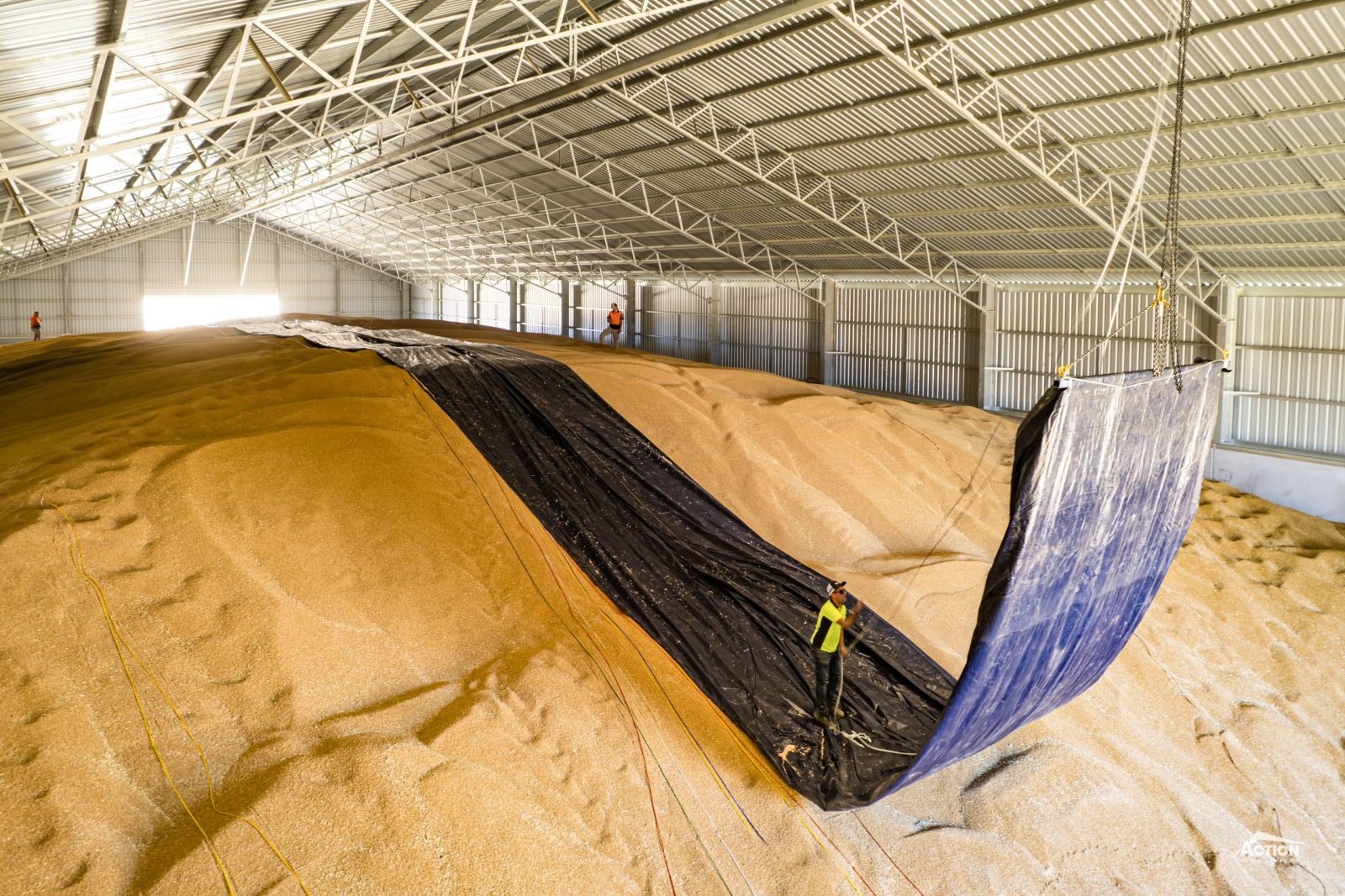
FumoFlow is Action Steel’s new grain shed, 18 months in the making. It’s a first-of-its-kind, patent-pending shed with a built-in fumigation system. Recirculation technology delivers proven fumigant distribution throughout the stack, and a dedicated ventilation system clears the shed faster and more safely once fumigation is done.
The results back it up. In a full-scale phosphine trial across 5,420 tonnes of wheat, every one of the 12 independent monitoring probes held above industry thresholds for the full exposure window, giving growers real confidence in the results.
The industry thresholds
Two thresholds are commonly referenced across the industry as fumigation targets: 200 ppm held for 10 days, to overcome susceptible insect populations, and 550 ppm held for 7 days, to address most phosphine-resistant strains.
Miss either one, even briefly, and you’re looking at surviving insects, resistance building in your population, or grain knocked back at receival.
The results
Across all 12 probes, spread through the stack at surface and floor level, phosphine concentration peaked at an average of 1,068 ppm within 49 hours of introduction.
Every single probe exceeded 550 ppm and held above it for the full 7-day window. Every probe also stayed above 200 ppm for the full 10 days. Not one dropped below either threshold during the required exposure period, including the probes furthest from the fumigation boxes and at floor level, where uneven distribution has traditionally been hardest to avoid.
See the full probe-by-probe breakdown at here.
Why floor level is where fumigations usually fail
In a silo or a passively sealed shed, phosphine can pool and stratify. Concentrations near the point of introduction run high. Readings further away, especially at floor level, fall short.
Back in faster, too
Fumigation is only half the job. Once it’s done, the shed needs to be cleared safely so staff can get back in and handling can resume.
In the trial, the shed reached safe clearance in 4 days, with the entire ventilation cycle managed from outside the shed. Traditional passive ventilation after tarp removal takes considerably longer, and typically needs someone back inside to get it started.
Phosphine Workplace Exposure Limits remain under regulatory review, and the broader trend across the industry is toward tighter limits over time. Faster, controlled ventilation isn’t just a convenience. It’s a way to stay ahead of wherever those limits land.
What it means for your operation
Resistance pressure isn’t going away. Regulatory scrutiny is increasing. And the cost of a failed fumigation, whether that’s rejected grain at receival or insects surviving to breed again, is a cost every grower would rather avoid.
FumoFlow was built with growers and fumigation contractors, and it’s proven on a commercial scale, not just a design claim. It’s part of the same family of Action Steel farm sheds trusted by grain growers across Victoria, NSW, QLD, Tasmania and South Australia.
Read the full trial results and see the data for yourself: FumoFlow Trial Results.
For more on FumoFlow grain sheds with patent-pending recirculation and ventilation technology, visit fumoflow.au, or explore Action Steel’s full range of farm sheds at actionsteel.com.au. To talk to the team about a FumoFlow shed for your operation, call 1800 68 78 88 or get in touch via our contact us page.
Fumigation for forward thinking grain growers.
FumoFlow is a product of Action Steel, The Big Shed People.
HAVE YOUR SAY