
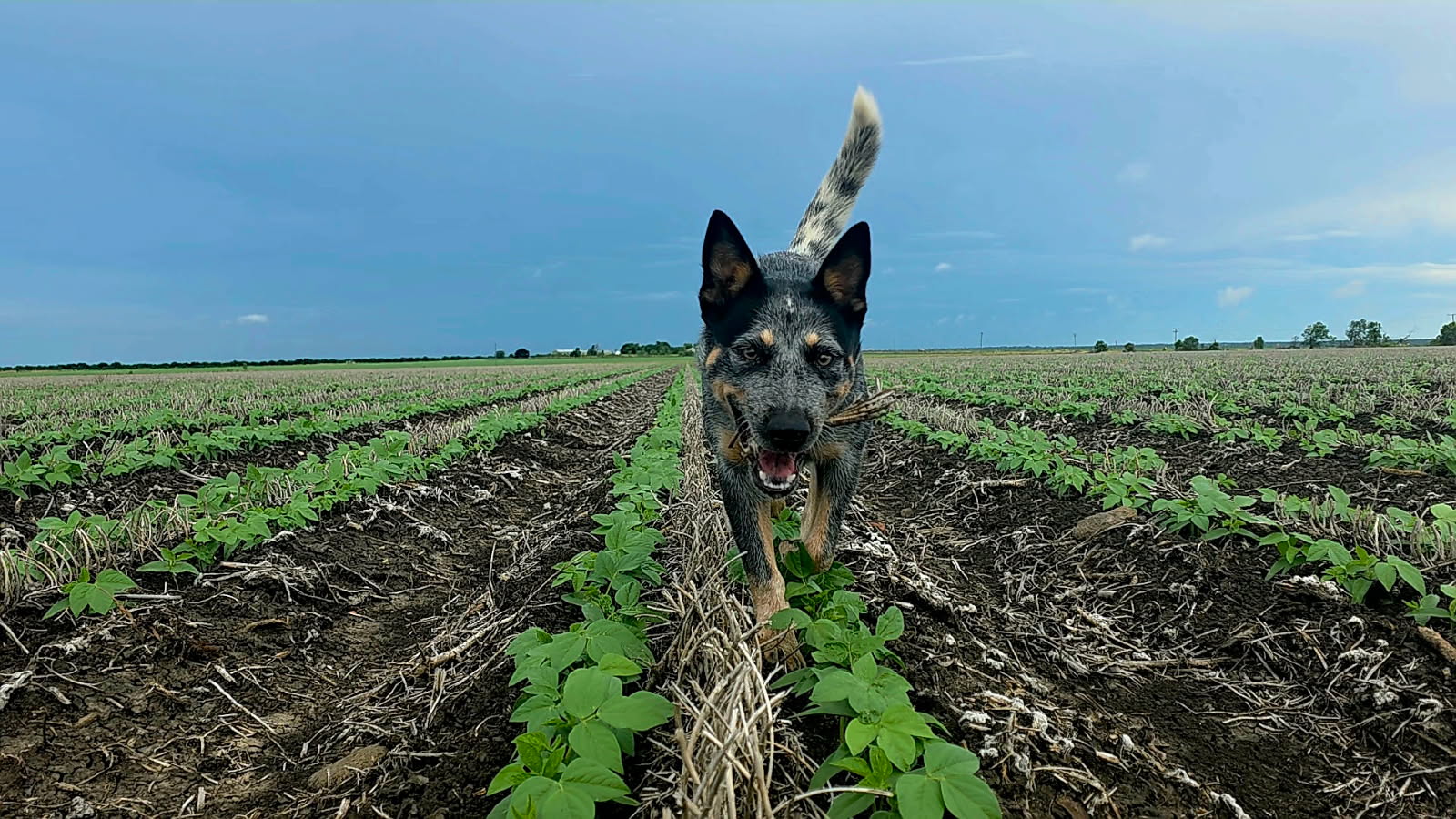
A crop of mungbeans planted in chickpea stubble in CQ’s Emerald district. Photo: Renee Anderson
LARGE mungbean hectares in Central Queensland are expected to underpin the national crop this season, planted on the back of rain last month from ex-Tropical Cyclone Koji.
Most CQ cropping regions received some rain in mid-January, with Clermont topping the totals with 260mm and Emerald and Springsure reporting 134mm and 107mm respectively, according to the Bureau of Meteorology.
The falls kicked off plantings in CQ, with little of anything, including sorghum and cotton, going in the ground before the weather event.
Across summer-cropping regions, prices of $1300-1500 a tonne have made mungbeans more attractive than the alternatives, with some northern New South Wales growers choosing them over irrigated cotton.
Australian Mungbean Association president James Hunt said between the high pricing and the large CQ crop, which has just been planted, the industry was positive about the upcoming season.
“Mungbeans are flying high at the moment,” Mr Hunt said.
“I would say there’d be at least 100,000 hectares planted.
“The potential is anywhere from 100,000 to 150,000t, depending on how the season pans out, with the vast majority of that to come from Central Queensland.”
Emerald grower Renee Anderson planted 500ha of mungbeans at the end of January after receiving 165mm from ex-TC Koji.
Ms Anderson said they would typically plant irrigated cotton but had no water allocation this season, and timely rain allowed them to sow mungbeans.
“They’re looking really good,” Ms Anderson said.
“We had had some rain Friday last week, about 46mm, then a few more millimetres over the weekend, so they’re absolutely loving life at the moment.”
Weedsmart northern extension agronomist Paul McIntosh said with the right amount of follow-up rain, CQ crops could yield “over two tonne and up to four tonne”.
“In the Central Highlands and Callide Dawson there are big areas of mungbeans; that’s going to hold up the Australian mungbean industry this year for supply,” Mr McIntosh said.
“If they get another inch or two of rain in about two to three week’s time, that’ll be extra fantastic.”
Downs, NSW mixed
Mungbean crops on the Darling Downs and in northern NSW would have benefitted from substantial rainfall received from last Thursday and Friday.
Qld rainfall registrations in the week to 9am yesterday included: Dalby 34mm; Emerald 29mm; Felton 62mm; Roma 103mm, and Springsure 71mm.
In NSW, figures dropped away south of the Qld border, and registrations for the week included: Moree 33mm; Mungindi 55mm, Pallamallawa 24mm, and Walgett 12mm.
Before the rain, most crops were struggling after an extended dry and hot period.
Mr McIntosh said it was a “mixed bag and most of the bag [was] not so good”.
“It’s been too hot and too dry.”
He said there were a few irrigated crops in NSW progressing well.
“In Moree, there’s been a few early crops because they had irrigation water…and that went pretty well.”
MRL concerns
Mr McIntosh said growers should be mindful of maximum residue limits (MRLs) for certain chemicals used to treat green vegetable bugs and redbanded shield bugs.
“Growers need to be on the ball for pesticide use, pesticide rates, use pattern and withholding periods.”
Mr Hunt said the issue had been central this season amid trade tensions between Myanmar, the world’s largest mungbean producer with annual output of about 650,000t, and China.
He said growers were benefiting from historically high prices as China restricted access to mungbeans from Myanmar.
“This situation has been driven by chemical residue issues from Myanmar.”
Mr Hunt said growers should “follow best practice” to ensure “Australia remains best placed to take advantage” of the current market conditions.
“The Australian Mungbean Association’s been quite vocal and on the front foot getting the message out there about best practice and withholding periods.”
These recommendations include adhering to application rates and intervals, avoiding specific high-risk treatments, completing accurate documentation, and seeking advice and discussing options when necessary.
HAVE YOUR SAY