
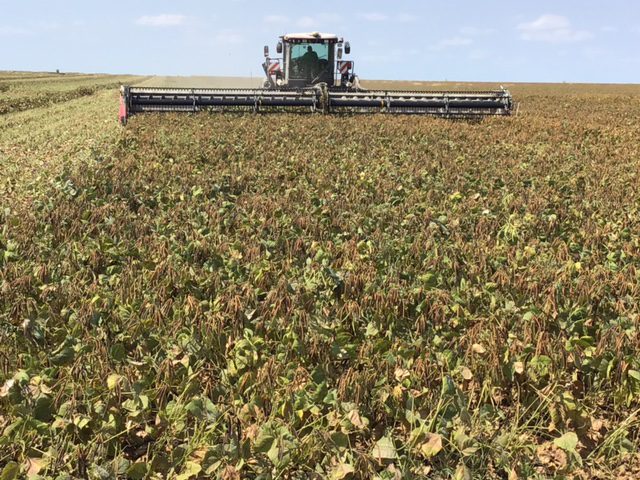
Swathing mungbeans in Queensland’s Central Highlands in April 2026. Photo: Paul McIntosh
HARVEST and shipment of Australia’s 2026 mungbean crop is drawing to a close as exports continue at pace into the buoyant Chinese market.
Speaking from China, Australian Mungbean Association president and Australian Choice Exports managing direct James Hunt said prices for this season’s crop have been “extremely high” at around $1500-$1700 per tonne to the farmer.
This is up $200/t on values in February, when much of the Central Queensland crop was planted after soaking rain from ex-Tropical Cyclone Koji.
“It’s been a really good season with good quality, and mostly out of Central Queensland,” Mr Hunt said.
The AMA estimates the harvest will come in at around 120,000t, around 10,000t above last year’s, with good yields more than compensating for the smaller area planted.
Mr Hunt said containerised exports of mungbeans were heading out of both Brisbane and Gladstone.
“There’s a bit of pressure to ship everything by the end of June.
“We’re furiously getting things out the door…to China, China, and more China.
“The market here is expected to decline after June because of the Indian crop coming in, and the sheer weight from Australia.”
Myanmar is typically the volume supplier of mungbeans to China, and China’s Xinhua News Agency last month reported Myanmar had exported 360,000t in the 2025-26 financial year.
As the world’s largest producer of mungbeans, or moong, India is expected to be exporting some of its pre-monsoon crop now being harvested to China, although it will keep most of the crop for domestic use.
Swathing finds favour
This year’s mungbean crops have come from northern NSW, southern Qld, and North Qld, but the powerhouse for production has definitely been CQ.
Mr Hunt said its crops were grown everywhere from “the Callide Valley to Dysart”.
Some of those primed to grow mungbeans grew a bigger area, which made for a marketer’s dream: less contracts and more grain.
Quality came in mostly the top two grades, No. 1 and processing, with very little going into the bottom manufacturing grade.
Swathing instead of direct heading may have been a contributing factor.
“There was quite a bit of swathing done and it was successful in the most part on the dryland, where they had a nice flat even seedbed.”
Irrigators did not have as much success.
“They couldn’t get the beans out of the furrows.”
Pulse Australia agronomist Paul McIntosh has been involved in trial work around swathing in recent years, and said some northern growers have been tinkering with the practice as an alternative to direct heading.
He said swathing “had a good work-out” this season.
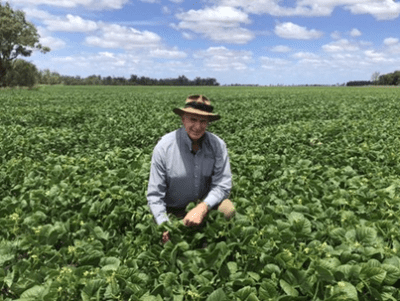
Industry Agronomist Paul McIntosh inspecting a rainfed crop of Jade mungbeans on Condamine River country on Qld’s Darling Downs in March. Photo: AMA
“I have been backed up by some large farmer friends in southern Queensland, and after this 2025-26 summer year, some even bigger farmer friends in CQ,” Mr McIntosh said.
“They have actually purchased swather machines and pick-up fronts and done their chickpeas as well.
“The one thing they have said [is] there are much-reduced losses from mechanical desiccation and pick up than the herbicide-driven process.
“Even though there are two slower machines across the paddock of pulse crops, farmer faith is increasing in swathing our pulse crops.”
Grain Central: Get our free news straight to your inbox – Click here
HAVE YOUR SAY