
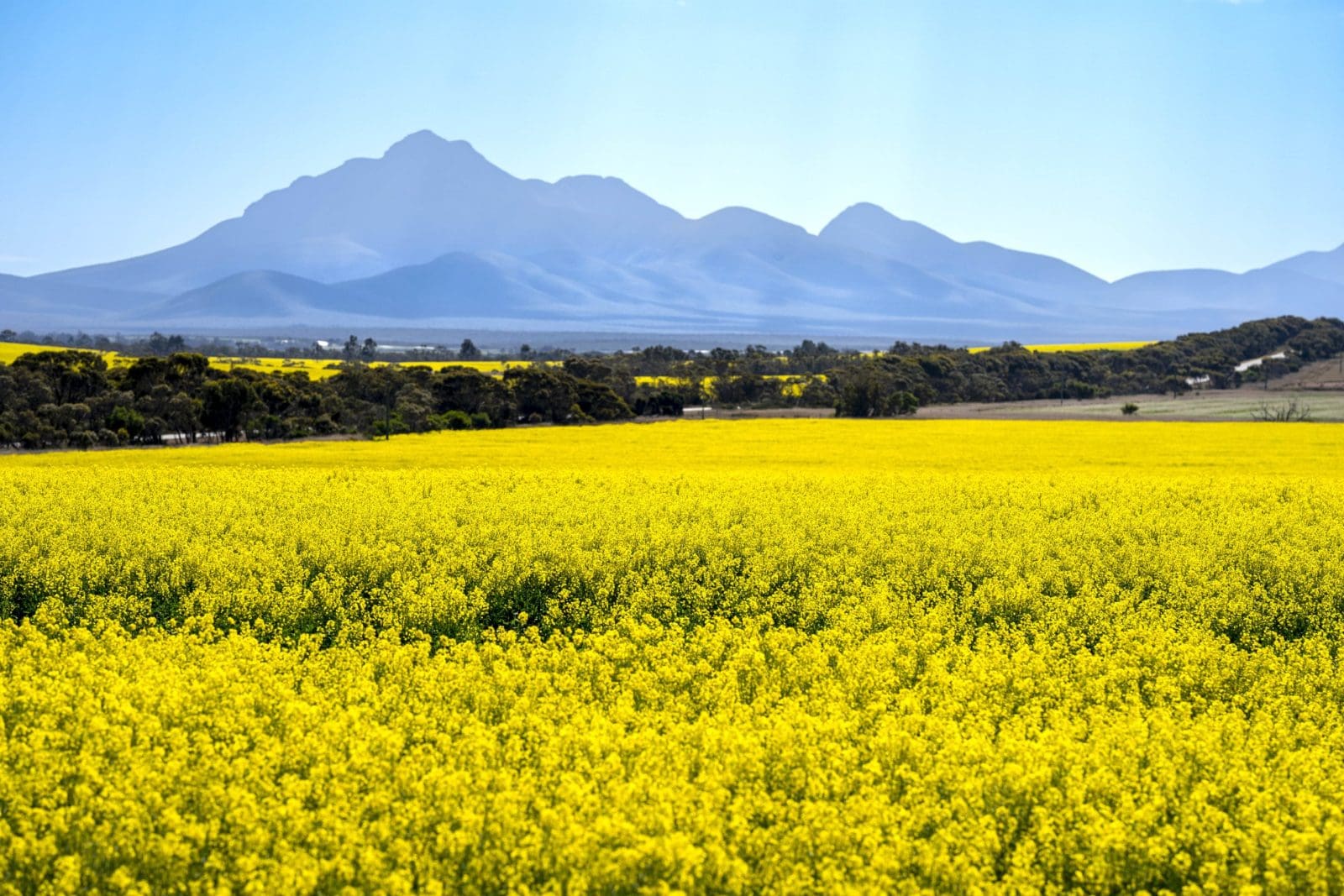
The Stirling Ranges in the WA’s Great Southern, a major producer of canola for export due to a lack of local processing capacity. Photo: Evan Collis
GROWERS in Western Australia’s Great Southern region are getting first dibs at the chance to invest in a new plant capable of crushing one million tonnes per annum of canola.
If approvals go to plan, the plant could be operational as soon as 2031, and aside from producing oil and meal for sale to domestic and export markets, it will offer biochar made from canola crop residue to use as a local farming input.
Being driven by Infrastructure Asset Group, the Australian Canola Oils project seeks to raise $10 million in its first round of investment to cover early-stage development costs, and expressions of interest have this week opened to WA growers.
Melbourne-based IAG director Enzo Gullotti told Grain Central the project has potential to expand its crush capacity, and refine sustainable aviation fuel beyond the initial stage.
Opening in WA
The project’s initial partner is Alan Richardson and family’s Commodity Ag.
The Richardsons are long-time and large-scale growers in the Great Southern, farming around 20,000ha.
Last year they moved into bulk exporting from Albany via their own supply chain, and have two handling sites close to Albany, Willyung and Drome.
The canola-crushing plant will be built on the Drome site.
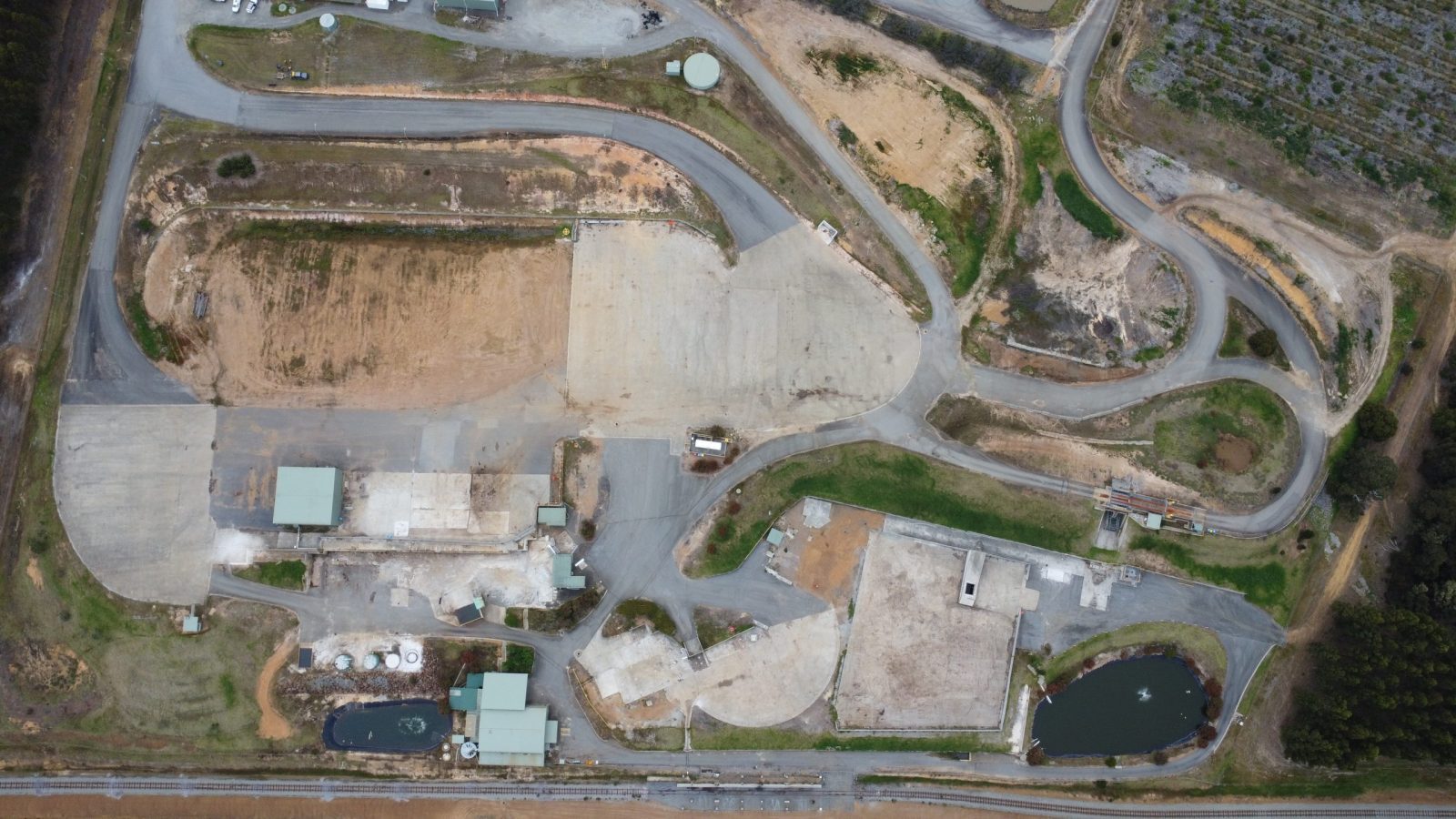
The site for the proposed canola-crushing plant at 162 Down Road West, Drome, includes rail access via the Mirambeena spur line. Photo: Commodity Ag
Mr Gullotti said IAG had already initiated discussions with the WA Government around DevelopmentWA land adjacent to the Commodity Ag site at Drome which could add scope to the development.
“The WA Government is generally very supportive, particularly in regional areas.
“Stage 1 will be a canola-crushing plant that will produce 40-percent oil and 60pc meal to be pelletised and sold as a commodity for feed in the region, or exported, and biochar to go back to farmers for regenerative cropping.
“We’re also talking to the state government about rolling out Stage 1 and Stage 2.
WA is Australia’s largest canola grower and exporter, and has a crushing capacity of roughly 60,000t, shared by GrainCorp’s Pinjarra plant and Aus Oils at Kojonup, against its production which this harvest is forecast by the Grain Industry Association of WA to yield 3.8Mt.
According to GIWA, the Albany port zone is forecast to produce 1.25Mt of that, behind only the larger Kwinana zone on 1.35Mt.
“We think for a whole raft of reasons, Albany makes the best sense.
“We think we’ve selected an optimum partner in Commodity Ag…and the next phase is engaging with other partners… around locking in supply, and testing appetite to see if they’d like to co-invest.”
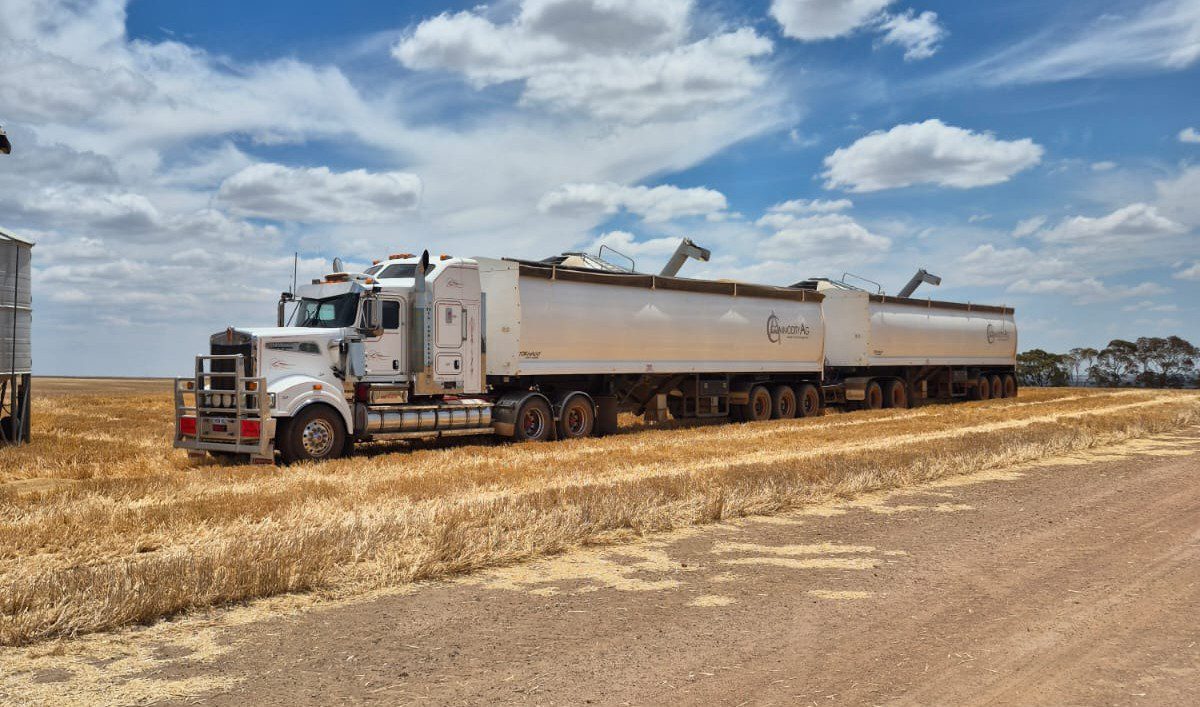
Commodity Ag is an established Great Southern grower and bulk handler with its own fleet, and is the strategic local partner in the Australian Canola Oils project. Photo: Commodity Ag
Following many months of speculation involving entities including BP, Cargill, CBH Group, and GrainCorp that a greenfield site would be built in WA to value-add canola and produce SAF, the ACO proposal is the first to come to market.
Rather than building competing crushing plants, Mr Gullotti said others who have already expressed interest in expanding WA’s crush capacity may opt to buy into ACO.
“We’d like to believe if we get enough interest…there’s nothing saying we won’t do Stage 2 for another 500,000-1Mt.”
Mr Gullotti said approvals for the plant could well take 18-24 months, with construction adding another three years.
“If today is day one, the project is five years away.”
Appeal for farmers
Mr Gullotti said the Albany plant offered growers the chance to deliver GM or non-GM canola year round for onshore value-adding, and an alternative to at least some of their requirement for synthetic fertiliser.
“The biochar puts back into the soil some of the carbon that’s been stripped out of it; we’re saying we can take that canola residue, and use pyrolysis to make biochar, and excess heat for a boiler to make steam as a renewable energy supply at the plant.
“We’re mindful from an environmental perspective about what we do.”
Mr Gullotti said investment in the plant would not lock growers into delivering their canola to it, and may well fit into the grower’s off-farm asset base.
“We’re giving farmers the opportunity to invest in downstream processing.
“We think the right thing to do is put it out to the locals first.”
Mr Gullotti has considerable experience in renewable energy in WA through being a founding director of New Energy, which developed the Rockingham project that annually turns 300,000t of municipal waste into power.
Grain Central: Get our free news straight to your inbox – Click here
HAVE YOUR SAY