
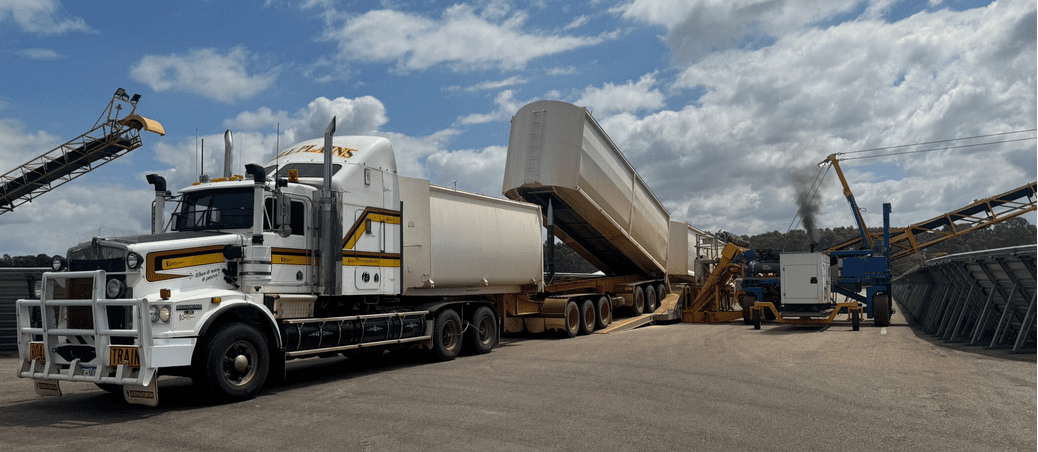
This load of 55t of feed barley delivered on Sunday to Chadwick on the outskirts of Esperance kicked off receivals for WA’s harvest. Photo: CBH Group
CROPS are turning fast over much of the Australian grainbelt, as headers start to roll in the west and harvest gathers pace in the north.
In Western Australia, Queensland, and northern New South Wales, plenty of crops are on track for better-than-average yields.
The reverse is true for the southern half of NSW, Victoria’s Mallee and Wimmera, and a number of South Australia’s cropping districts, where growers are looking at price and yield outlooks to determine whether some crops will be cut for hay or taken through to grain.
To aid in the decision, Agriculture Victoria has this week released a calculator to weigh up the gross margins of grain and hay production in dollars per hectare.
On paper, hay looks like a better option for many, but the hay market is softening as new-crop supplies hit the market, and barley has potential to be value-added through livestock as cereal prices languish in the lower deciles.
Also on growers’ minds is the potential for significant premiums to develop for high-protein milling wheat in southern NSW, Vic, and SA crops in response to the soft finish for the north, which looks like it is producing an abundance of ASW and APW.
Delivering in WA, SA
In WA, the state’s major bulk handler CBH Group on Sunday received its first load for harvest, 55 tonnes of barley delivered to its Chadwick site at Esperance.
In SA, major bulk handler Bunge has today advised it too has taken in the first load for the 2025-26 harvest, lentils into its Thevenard site on western Eyre Peninsula.
Yield outlooks for SA crops vary widely, with those on the Lower EP and Yorke peninsulas, and the South East generally on track for at least average yields.
In other regions, outlooks are generally not as bright.
Advantage Grain SA manager David Long said many crops were “on a knife edge”, and their fate would be decided after Sunday, when temperatures of around 35 degrees Celsius are forecast ahead of rain.
“You can see a few crops dying; they’re talking hot on the weekend, and up to 18mm on Monday and Tuesday,” Mr Long said.
For later crops, Mr Long said the rain will “stop the rot” of sliding yields, but many crops on the Upper EP, and in some other regions, have filled as best they can, and will be harvested this month.
“Some of those yields will be at least 25 percent down on average over a lot of that northern and central EP from Lock up to Kimba.”
In its latest crop report based on conditions as at September 14, Primary Industries and Regions SA forecast the SA wheat crop at 4.6 million tonnes (Mt).
Given the tough end to the growing season and lack of subsoil moisture in most areas, Mr Long said 4Mt was looking more likely for SA wheat.

Some crops in the Cummins district of SA’s Lower EP had 10-15mm of rain in early May to get them off to a strong and timely start and are still some weeks from harvest. Photo: Leighton Wilksch, Agbyte
Barley generally matures earlier than wheat, and has therefore been buffered somewhat from hot, dry and windy weather of late.
Mr Long estimates the SA barley crop at around 1.75Mt, against the PIRSA estimate of 2Mt.
He said grain width in heads is currently being examined as a determinant on bales versus bins.
“Wheat filling four [grains] wide won’t be cut; if it’s filling two wide, it will.”
Mr Long growers with their own haymaking equipment and shedding were much more likely to cut than those relying on contractors, and prices in the prompt cash market.
“We don’t have the same number of contractors around any more, so if you’re not set up for hay, it’s hard to switch into it.”
He estimates perhaps 5pc more hay than was initially expected will be cut in the struggling SA regions, which include the Murray-Mallee, but exclude the South East.
“Our Lower South East clients are saying it’s looking sensational down their way.”
Mr Long said growers underwhelmed by weak barley and wheat prices were showing interest in pooling through Advantage Grain, or storing on farm.
“There’ll be barley stored on farm for those that have still got sheep.”
Insights into WA’s season are due out on Friday through the Grain Industry Association of WA monthly crop report.
Harvest near in Vic
At Swan Hill, Flexi Grain general manager Jarrod Tonkin said Vic and south-west NSW yield outlooks varied widely, depending on how much subsoil moisture crops have been able to access, and in-crop rain.
Ballpark on-farm figures for wheaten hay are around $300/t versus grain at $280/t, with hay having the bonus of yielding considerably more than grain.
As is often the case, growers north of a line running east-west through the Hopetoun district are cutting cereals and vetch for hay.
“It’s a natural fit for them if they have sheds and balers; it makes the decision quite simple for those with markets,” Mr Tonkin said.
Being the earliest of Vic’s hay, it can also catch prices ahead of an expected softening as regions in the state’s south and centre start to offer up bales.
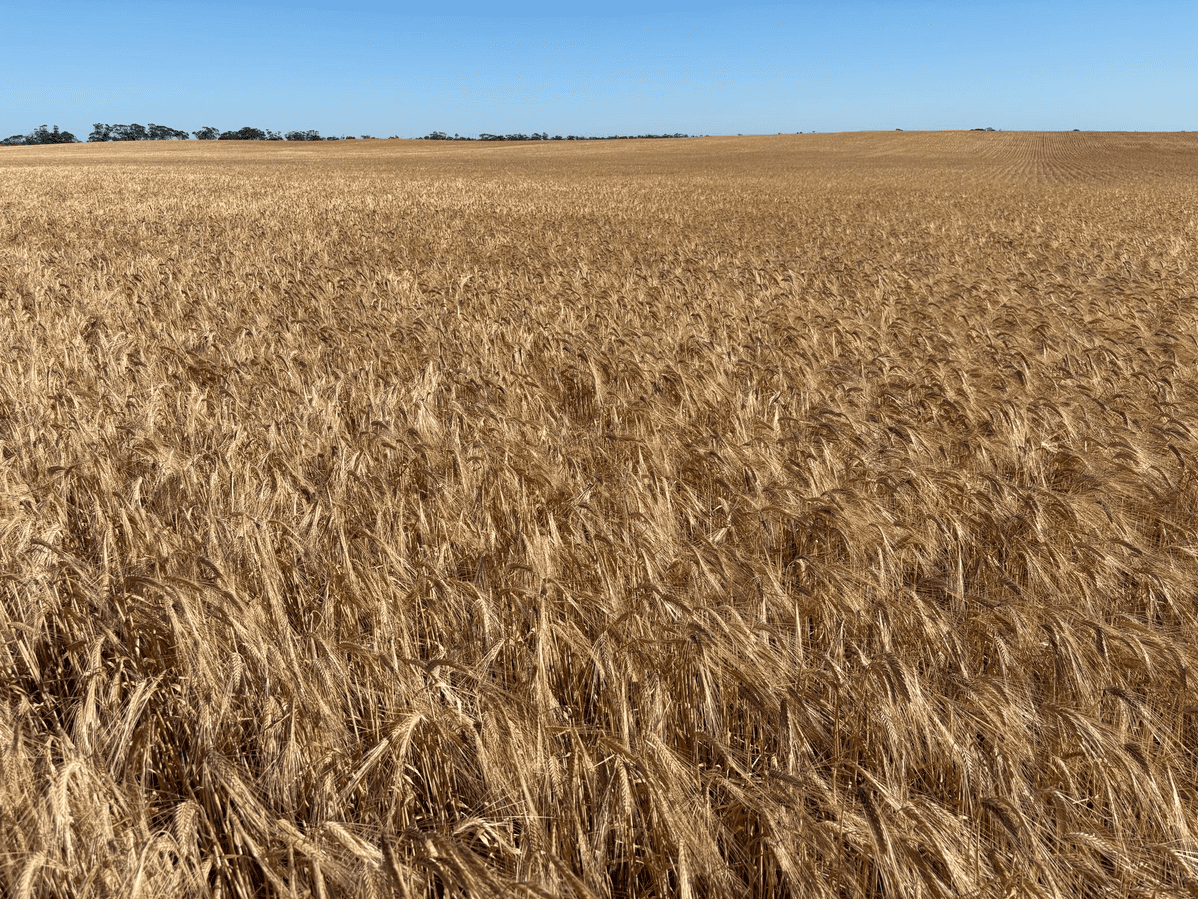
Commodus barley very close to harvest at Pira, north-west of Swan Hill in Vic. Photo: Matt Witney, Dodgshun Medlin
Mr Tonkin said the lack of subsoil moisture and the late break has made growers cautious all the way through about forward selling grain.
“The word in the trade is the crop is the most undersold we’ve seen in recent years, so it’s not going to be a year of washouts.”
Flexi Grain also runs pools, and some of its growers in the Wimmera have this week contacted the company about cutting for hay rather than taking through to grain, as is permissible under area contracts.
NSW mixed
In NSW, crops north of Dubbo are on track for above-average yields, while outlooks vary greatly for crops in the state’s southern half.
Some on the inner slopes are on track for high yields, but those on the plains and outer slopes south of the Lachlan River are quickly heading towards hay or harvest after a challenging growing season.
Riverina Independent Agronomy director Neil Durning said the early finishers look promising.
“Barley’s through and looks pretty good, and the shorter-season wheats are going well; considering the amount of rain they’ve had…most have held on pretty well,” Mr Durning said.
Cereals should not be cut for hay prior to coming out in head, and Mr Durning said grazing wheats “have a long way to go” in terms of being at that stage, when a decision could be made about hay versus grain.
“There’s quite a bit of hay going down now…but it’s a little bit ‘every man for himself’.”
Mr Durning said canola looked like being the cash crop over cereals, and barley looked like being the on-farm hold.
“There’s going to be some really cheap barley around, and barley’s a lot better to feed to sheep than hay.”
Throughout south-eastern Australia, mixed farmers are expected to cut enough hay to fill the sheds they emptied during the drought that spread into this year and drained the fodder reserves of entire regions.
“Animals are worth a fair bit, and sheds are empty.”
In northern NSW and Queensland, harvest is progressing well in fine weather, with growers selling some wheat and barley for cash, and the balance is being warehoused or storing on farm.
Grain Central: Get our free news straight to your inbox – Click here
HAVE YOUR SAY