
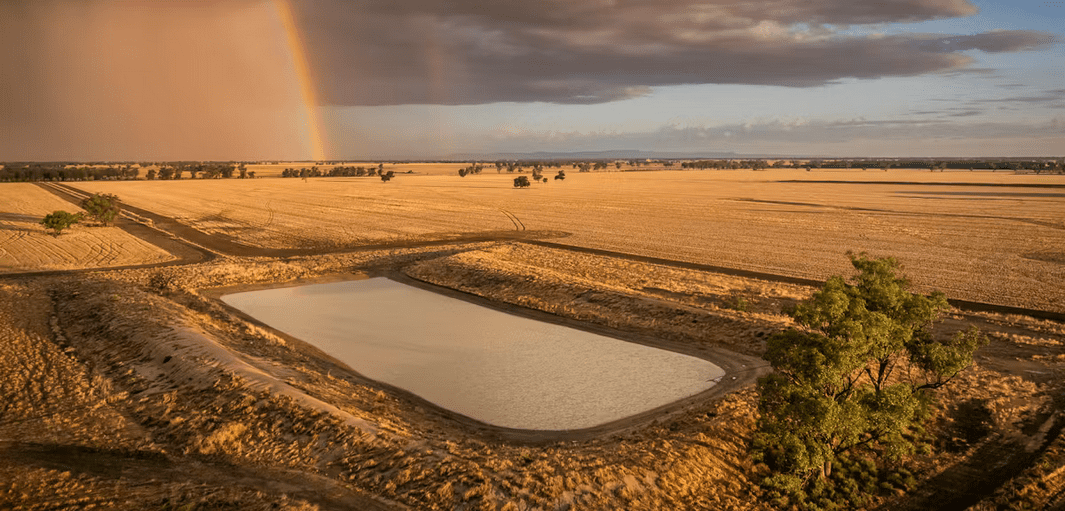
Narromine property Myalla sold locally at auction for $8.4 million. Photo: Elders
APPETITE for rural property is varying, depending on seasonal conditions, and what needs to be spent to maximise their potential, according to two agents in New South Wales and one in Queensland.
Matt Horne, Elders, Deniliquin, NSW
Deniliquin-based Elders agent Matt Horne says the rural property market has become more cautious, with buyers weighing seasonal conditions, rising input costs, and broader economic uncertainty before making purchasing decisions.
“The current market reminds me of conditions experienced around 2017 to 2019, when there was a reduced number of buyers and confidence was subdued.”
Mr Horne said properties are still selling, particularly where they match the requirements of specific buyers.
“Some vendors are also benefiting from progressive neighbours with long-term expansion plans, although that demand is not being felt across the board market.”
He said one corporate buyer, backed by a renowned global investment fund, was two-thirds of the way through an exclusivity period when the company paused all acquisitions because of global economic uncertainty, causing the deal to fall over.
While there is still activity in the market and a level of positivity, Mr Horne said seasonal conditions remain critical.
“Growers have faced significant upfront costs to get their crops in the ground this season.
Now they are relying on crucial soil-moisture and in-season rain to guarantee a yield before considering a farm expansion.”

Elders Deniliquin agent Matt Horne.
Mr Horne said that while values are reasonably firm in the Riverina, he is aware of softening across several markets.
He said recent federal budget changes have also prompted concern among some producers, particularly those operating with discretionary trusts.
“Producers are working with their accountants and advisers to better understand the impact.”
Mr Horne said despite those concerns, agriculture remains one of the stronger asset classes.
“For the most part, agriculture is exempt from those budget changes.
“The most immediate concern facing grain growers is fuel and fertiliser costs, which will hopefully ease once supply chains open up and margins start to increase.”
Looking ahead, Mr Horne said property sales are likely to occur on a case-by-case basis.
“Quality properties will continue to transact and transact reasonably well, and the market will identify these assets as better value propositions.”
In contrast, he said buyers are likely to discount properties requiring substantial investment in building and fencing infrastructure or soil-amelioration programs.
“Buyers will consider those costs against a turnkey, well-developed operation that can make money from day one.”
James Croft, Ray White Rural, Pittsworth, Qld
While the Goondiwindi region has received good rain, it is understood some farmers have decided to plant chickpeas and other legumes instead of wheat in a bid to reduce reliance on expensive fertilisers.

Ray White Rural Pittsworth principal James Croft.
Ray White Rural agent James Croft said in uncertain markets, well-located cropping and mixed-farming properties with reliable rainfall and diversified income streams tend to be the most resilient.
“Properties dependent on a single commodity, especially in lower-rainfall regions, require a more careful assessment of operating costs and profitability before acquisition.”
Mr Croft said the days of waiting for the spring surge are behind us.
“Over recent years, quality properties have been listed consistently every month, creating a more active and dynamic market that results in opportunities for buyers and sellers.”
Mr Croft is receiving numerous phone calls after widespread rain across New South Wales and Queensland.
“This year, due to the lack of quality properties coming to market, listings will be tighter this winter and heading into spring.”
Ashley McGilchrist, Nutrien Harcourts, Warren, NSW
Warren-based Nutrien Harcourts agent Ashley McGilchrist said the recent sale of Myalla, near Narromine, shows confidence remains strong in the Central Western NSW property market.
Following a keenly contested auction, a neighbouring landholder secured the 1055ha cropping enterprise for $8.4 million under the hammer.
Myalla is located 31km south of Narromine and 69km from Dubbo and is widely regarded as some of the district’s most sought-after farming country.

Nutrien Harcourts Warren agent Ashley McGilchrist.
During the marketing campaign, the property was promoted as a first-class cultivation and fattening opportunity with a strong reputation for producing high-yielding crops.
Mr McGilchrist described the result as strong, saying it came close to setting a record for dryland country in the Narromine district.
“The Myalla sale, combined with favourable seasonal conditions, has buoyed inquiry over the past six weeks.”
“Buyers are presently outweighing sellers, with interest coming from local producers, the central west around Forbes and Hillston, as well as the south, south-west, Riverina and border areas.”
Mr McGilchrist said the mixed farming region offers producers a full tool kit, combining geographic diversity with value for money.
“As far as value goes, the central west is still in the box seat for dryland and irrigated cropping, as well as livestock opportunities, giving people the ability to hedge their bets, depending on the season.”
Mr McGilchrist said the price achieved for Myalla demonstrated the area was on the front foot.
Mr McGilchrist is also marketing Nundah, a 1128ha property 4km from Narromine and 30 minutes’ drive from Dubbo, on behalf of Grech Cotton.
Renowned for its exceptional farming land, including cotton and wheat production, Nundah is being offered with an impressive water portfolio included in the sale.
Grain Central: Get our free news straight to your inbox – Click here
HAVE YOUR SAY